Lebanon at a Crossroads: A Nation Frays as Diplomacy Meets the Gun
There is a peculiar sound to Beirut these days — not just the keening of sirens or the dull thunder of distant strikes, but the low hum of a country trying to speak to itself amid the rubble. Streets that once carried the rattle of conversations, the clink of coffee cups and the chatter of shopkeepers now pulse with uncertainty. The latest spark: a US-mediated meeting between Lebanese and Israeli envoys that has set off a political firestorm at home, exposing the fault lines that have long run beneath Lebanon’s fragile surface.
Lebanon and Israel have been in a technical state of war since 1948, yet for decades the two sides have mostly been separated by diplomatic silence and the tense calm of unofficial rules. This week a breakthrough of sorts — a face-to-face exchange, brokered by Washington — was hailed by some as an awkward but necessary opening. For others, especially Hezbollah and its supporters, it was a betrayal.
“A national sin,” says Hezbollah — and why it matters
“This was not the voice of Lebanon,” said a senior Hezbollah politician, visibly angered. “It amounts to a national sin that widens the wedge between our people.” The remark, broadcast on television and repeated on local radio, captured the fury of a movement that has grown into a parallel state within Lebanon: armed, politically entrenched and backed by Tehran.
Hezbollah objects not just to the meeting but to what it sees as any overture that bypasses its role as Lebanon’s defender. “If the government thinks a handshake will end the strikes, they are mistaken,” another party official told me. “We want a comprehensive ceasefire — not the fragile pauses we have been sold before.”
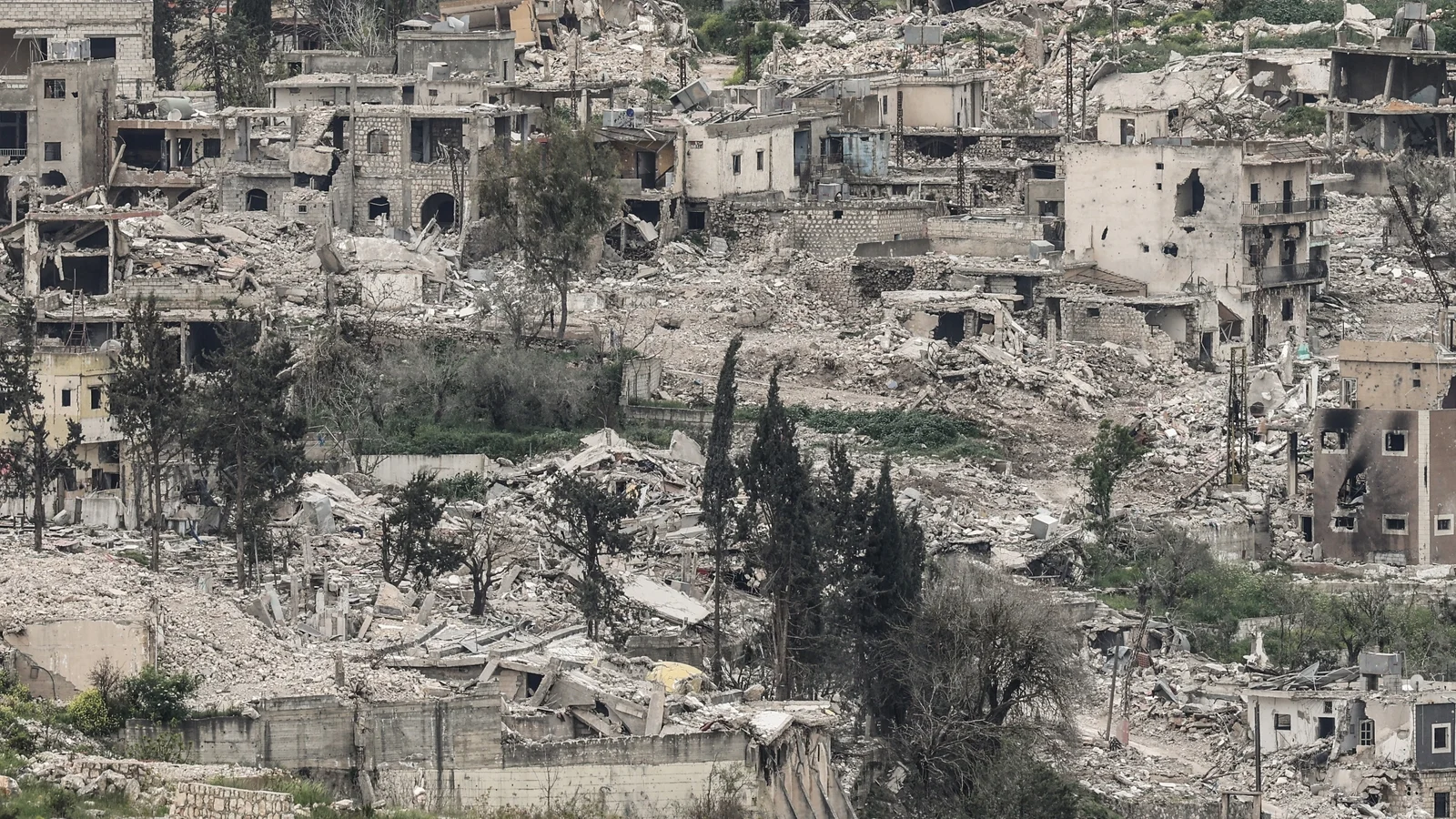
These are not hollow threats. Since fighting reignited on 2 March, when Hezbollah opened fire in an escalation linked to regional tensions involving Iran and Israel, Lebanon has paid a devastating price. Lebanese authorities report more than 2,000 killed and at least 1.2 million people forced from their homes — roughly one in five of the country’s population. More than 140,000 have sought refuge in government-run shelters. The numbers are stark, and the human stories behind them are devastating.
On the ground: tents, phones, and the smell of freekeh
In a makeshift camp on the outskirts of Beirut, families cook over small fires, trade news on cracked phones and try to find normalcy. Fatima, a schoolteacher who fled her home in the south, hands me a small bowl of freekeh and smiles — a moment of hospitality that feels almost defiant.
“We don’t know when we’ll go back,” she says. “Every night there are new strikes. Children wake up with nightmares. I tell them we will rebuild, but the city we remember is changing.”
Local markets that once pumped life into neighborhoods now sit half-empty. A fruit vendor wipes dust off a crate of oranges and says, “People have money, but they are afraid to buy. They think: why buy today if tomorrow the shop might be gone?” Small trade too often keeps the social fabric intact; when it frays, so do the ties that hold communities together.
Diplomacy amid ruin: what the talks achieved — and what they didn’t
The Washington-facilitated meeting was described by participants as constructive. Officials on both sides said the exchange was useful for clarifying positions and reducing the risk of unintended escalation. Yet key red lines remained in place: Israel reportedly refused to discuss Lebanon’s demand for an immediate ceasefire, and Hezbollah insisted on far broader terms than a simple halt to mutual strikes.
For many Lebanese, the optics were worse than the substance. “You cannot sit down with the enemy while your streets burn and call it progress,” said a Beirut-based analyst. “The government is trying to thread a needle between the demands of international partners and the realities at home. That is a tightrope act with no safety net.”
The Israeli military, for its part, reported striking over 200 Hezbollah targets in southern Lebanon within 24 hours of the talks — a reminder that diplomacy and military action can move in parallel, sometimes with deadly consequences.
History’s shadow: why disarmament is a powder keg
The question of Hezbollah’s disarmament has haunted Lebanese politics for decades. The state has long aspired to bring all armed groups under its authority — a tall order in a country scarred by a 15-year civil war (1975–1990) and frequent episodes of political violence, including a brief near-war in 2008 when moves against Hezbollah provoked armed confrontation.
“Any attempt to disarm Hezbollah by force risks igniting the whole country,” warns a former army officer. “Lebanon’s institutions are strained; social cohesion is fraying. A misstep could return us to a cycle we never finished dealing with.”
Humanitarian alarm: a displaced nation and an appeal that falls short
The United Nations’ refugee agency and other relief groups have issued urgent appeals. UNHCR chief Barham Salih, after meeting Lebanon’s prime minister, warned the international community: provide immediate help or watch a recovery become impossible. Of the $61 million requested to support Lebanese relief efforts so far, only a fraction has been received; the larger Lebanon Flash Appeal aims to raise $308 million to address needs across the country.
Lebanon’s financial woes compound everything. Since 2019 the country has spiraled through an unprecedented economic collapse, and the scars of the 2024 conflict were barely healing before this new escalation.
- Reported deaths in Lebanon (conflict-related): more than 2,000
- Estimated displaced: ~1.2 million (about 20% of the population)
- People in government shelters: over 140,000
- Lebanon Flash Appeal target: $308 million (with $61 million requested in a current tranche)
The wider picture: proxy wars, refugees, and the limits of diplomacy
This is not just a local quarrel. It is choreography on a regional stage where state and non-state actors — Iran, Israel, Hezbollah, and external mediators — shape moments that ripple far beyond Lebanon’s borders. When a meeting is convened by a third party, it is as much about signaling to Tehran and Jerusalem as it is about easing suffering in Beirut and Tyre.
So what do we want from diplomacy? Is it mere de-escalation, a pause to save lives, or a structural settlement that addresses why violence erupts again and again? “Short-term pauses are good, but they are not peace,” a conflict resolution expert told me. “You need institutions, economic recovery, and trust-building measures. That takes years, not days.”
Looking forward: choices, consequences, and a plea
Lebanon currently faces two paths. One winds toward continued fragmentation, where rival armies — state and non-state — set their own rules and civilians shoulder the toll. The other leads to painstaking, fraught negotiations that tie together security, governance and human needs.
Which path will the country choose? And how will the international community respond: with deep, sustained investment in relief and reconstruction, or with ad-hoc handouts and diplomatic gestures that paper over deeper grievances?
As you read this, imagine the family in a tent who can’t find a safe space to put their children to bed. Imagine the shopkeeper counting the days before his wares spoil. The numbers on a page are real people — teachers, bakers, fathers, mothers, and children — each with a story that resists easy headlines.
If Lebanon’s latest political rupture teaches us anything, it is that diplomacy cannot thrive without justice, and security cannot be imposed without the consent of the people it is meant to protect. The world can — and must — do better. Will it?