When the Sirens Kept Singing: A Day of Smoke and Loss in Ukraine’s Cities
They say a city’s true voice reveals itself in the sirens. On this day the chorus was long and relentless—air raid alerts stretching across Kyiv and echoing downstream in Dnipro, a grinding reminder that war still intrudes into ordinary life.
By the time the wail faded in some neighborhoods and continued in others, officials had tallied a grim count: three people dead, more than 20 wounded and several apartment blocks scarred by fire and falling masonry. Among the dead was a 12-year-old boy in Kyiv—a small, unbearable detail that seemed to sharpen the city’s grief into something almost physical.
Kyiv: Podil, Smoke, and a Mother Saved
In Kyiv, Mayor Vitali Klitschko, the city’s ex-boxer-turned-politician, shared the early casualties on his Telegram channel: a child and a 35-year-old woman among the dead, and dozens more injured. “Ten residents were wounded; six are receiving treatment in hospital,” he reported, while the capital’s military administration chief, Tymur Tkachenko, put another figure on the scene: 18 people injured, including a child.
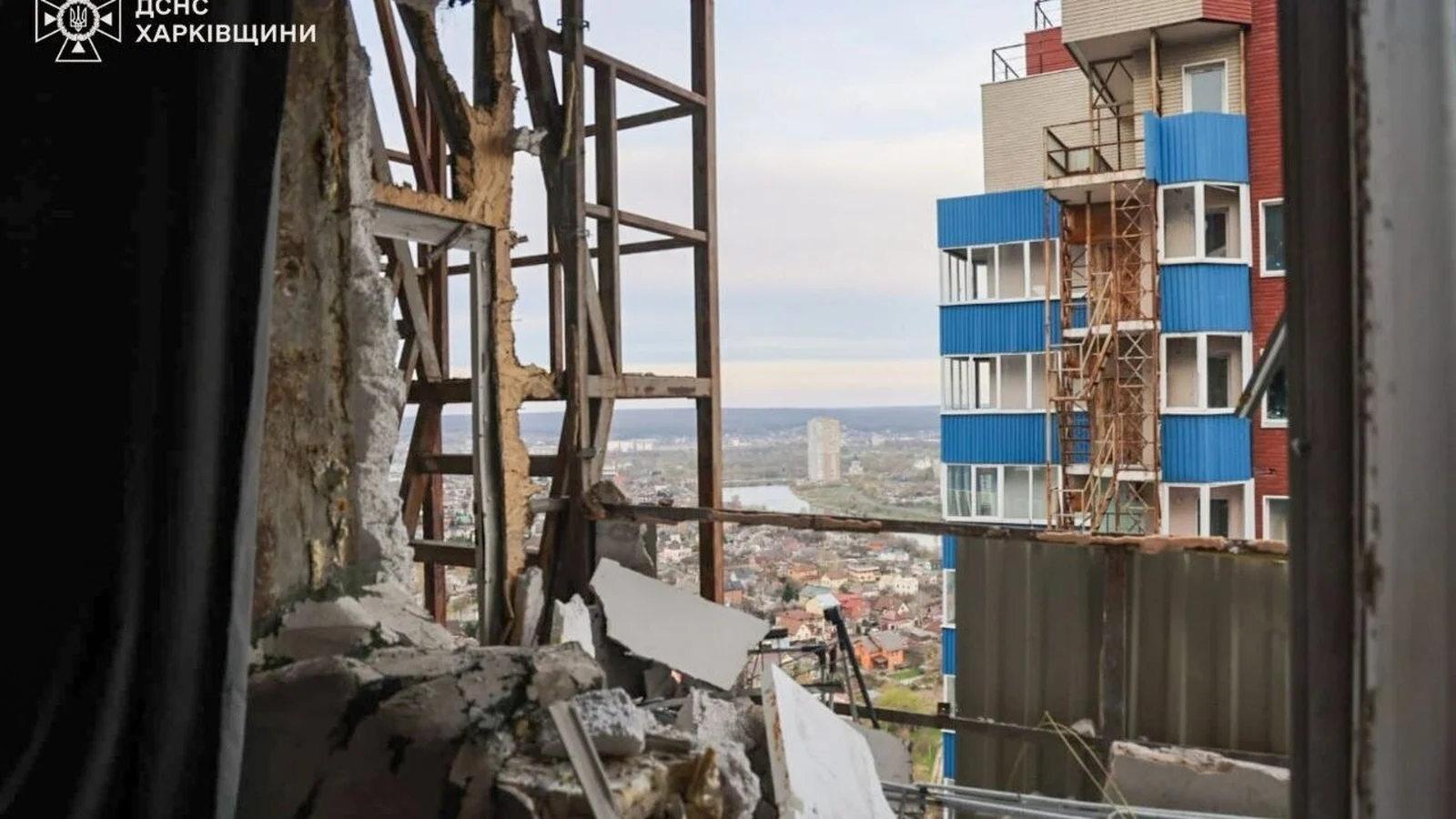
Walk through Podil—one of Kyiv’s oldest neighborhoods—and you can feel how history sits precarious beside modern life. A missile struck the sixth floor of an apartment building there, residents said, shattering windows and plunging families into darkness. Photos and video shared online show flames licking at façades, smoke threading into the pale sky, and rescue workers pulling people out from twisted stairwells.
“We were in the kitchen,” said Oksana, a Podil resident still holding a blanket around her shoulders. “One moment the radio talked about the alert, the next our windows broke. I grabbed my son and we ran downstairs. There was dust everywhere like winter ash. He kept asking if the city would wake up like this again.” Her voice trembled but her eyes were steady—an exhausted, defiant steadiness that Kyiv has learned well.
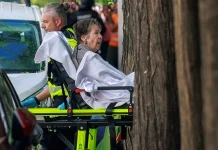
Rescue teams reported pulling a mother and a child from a building where the ground floor had been badly damaged. Elsewhere in the capital a large fire broke out in a northern district and four emergency medical workers sustained injuries while trying to reach the wounded—another reminder that helpers themselves are often in the line of fire.
Dnipro: Flames on the River
Hundreds of kilometers south, in Dnipro—an industrial city whose name mirrors the river that bisects Ukraine—regional governor Oleksandr Ganzha described residential blocks aflame after the strikes.
“One person was killed, and multiple others were injured,” Ganzha wrote on Telegram, posting pictures of blackened tower blocks and residents huddled in doorways. He listed 10 injured in the regional tally; local volunteers were already mobilizing food, blankets and hot tea for displaced families.
“When the rockets came, I thought of my parents,” said Ihor, a municipal worker who spent the afternoon hauling bottled water to an impromptu shelter. “We live with this fear now. But the city still breathes—people help each other. It’s what keeps us going.”
Kharkiv and the New Face of Attacks
Kharkiv, near the northeastern border, saw its own violence that day: drone strikes that officials say injured two people. Since 2022 the use of drones—both reconnaissance and weaponized variants—has changed the dynamics of urban insecurity. They are smaller, harder to detect and, for residents, unpredictably terrifying.
Dr. Marina Kovalenko, an emergency physician who has been treating blast victims for years, described the medical situation in blunt terms. “Our wards are filled with people whose injuries are not just physical,” she said. “There is trauma in their hands, and trauma in their memories. We patch wounds, but we cannot stitch back the night they woke to explosions.”
The Numbers Tell a Story—But Not the Whole Truth
Official tallies can feel like an attempt to make sense of chaos. The day’s counts—three dead, more than 20 injured—are important, but they are only the most visible shards of a much larger toll. Count the nights spent in basements, the shattered routines, the children who draw explosions in crayon when asked to draw home. Add the strain on hospitals and emergency services already stretched thin. This is the arithmetic of endurance: small numbers stacked into a mountain of sorrow.
Across the country, air raid alerts lingered for more than two hours after they began in the capital. For families, that meant cold shelters, interrupted schools, delayed hospital appointments and a constant hum of anxiety. For volunteer networks, it meant an immediate push to coordinate ambulances, firefighting teams and food distribution. For journalists, it meant listening—collecting fragments of life that are otherwise lost in official communiqués.
Local Color: Food, Faith and Community
Even in the shadow of strikes, local rhythms continue. Kyiv café owners tarp off glass and hand out free coffee to volunteers; in Dnipro, grandmothers offer knitted blankets to those arriving at relief centers; church bells ring for morning services resuming under tarpaulin shelters. These small acts of normality are sturdy bridges between the life people had and the life they must now navigate.
“We can’t let the city be broken down to just rubble and numbers,” said Yulia, a teacher who runs a makeshift after-school program in a basement. “We keep reading to the kids, making them laugh, even for an hour. It’s important. It keeps the future from being stolen.”
What This Day Reveals About the Larger War
On a broader scale, today’s attacks underline several hard truths about modern conflict: the blurred line between frontline and home, the weaponization of civilian areas, and the psychological warfare of continuous alerts. Beyond the immediate human cost, there is an erosion of confidence—people hesitate to return to apartments, businesses hesitate to open storefronts, children hesitate to sleep without a light on.
Analysts note that urban centers have become strategic targets because of their symbolic and logistical value. “Striking cities disrupt civic life and degrade morale,” said Oleg Petrenko, a security analyst. “But it also breeds resilience. Communities that organize quickly, that have strong volunteer networks, recover faster in practical ways.”
How You Can Respond
If you’re reading this from afar, you may feel a helpless distance. There are practical ways to channel concern into action—support reputable humanitarian organizations delivering medical care and shelter, donate to verified local relief funds, amplify reliable reporting to cut through disinformation, and press policymakers to prioritize civilian protection in diplomatic channels.
- Donate to established humanitarian agencies working on the ground.
- Share verified information from reliable local sources to counter rumors.
- Support refugee and resettlement programs accepting those fleeing conflict.
Questions to Carry Home
What does it mean when cities—the centers of memory and culture—are turned into battlegrounds? How do communities preserve childhoods when play spaces become shelters? As violence continues to touch ordinary lives, how should the international community balance responses between sanctions, diplomacy and humanitarian aid?
There are no easy answers. But if today taught us anything, it is this: amid smoke and sirens, human kindness keeps the light on. People in Kyiv, Dnipro and Kharkiv are living that truth in small, brave ways—handing out tea, bandaging wounds, reading to children in basements. That resilience is not a statistic. It’s a story. It deserves to be told, remembered and, wherever possible, supported.