Night of Orange: When Geelong’s Sky Turned to Flame
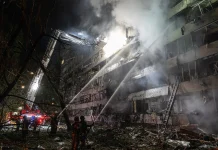
Around 11 p.m., as families in Corio were folding into bed and the city’s shoreline misted in cold sea-air, an urgent orange bloom lit the horizon. It started as a glare, then a roar: calls flooded dispatch, neighbours pressed faces to windows, and on the other side of town, shift workers at the Viva Energy refinery were ushered away from the plant that keeps much of Victoria moving.
“We heard two explosions — loud enough to rattle the windows,” said Lisa Nguyen, who lives three streets from the refinery. “Then there was this huge pillar of flame. For a moment it felt like the whole neighbourhood was under a bonfire.”
Fire Rescue Victoria arrived within minutes to what they called a “significant” blaze at the Geelong refinery in Corio. The fire was still not fully under control when crews reported in, though officials confirmed all staff had been accounted for — a small relief amid the uncertainty.
What Went Up in Flames — and What It Meant
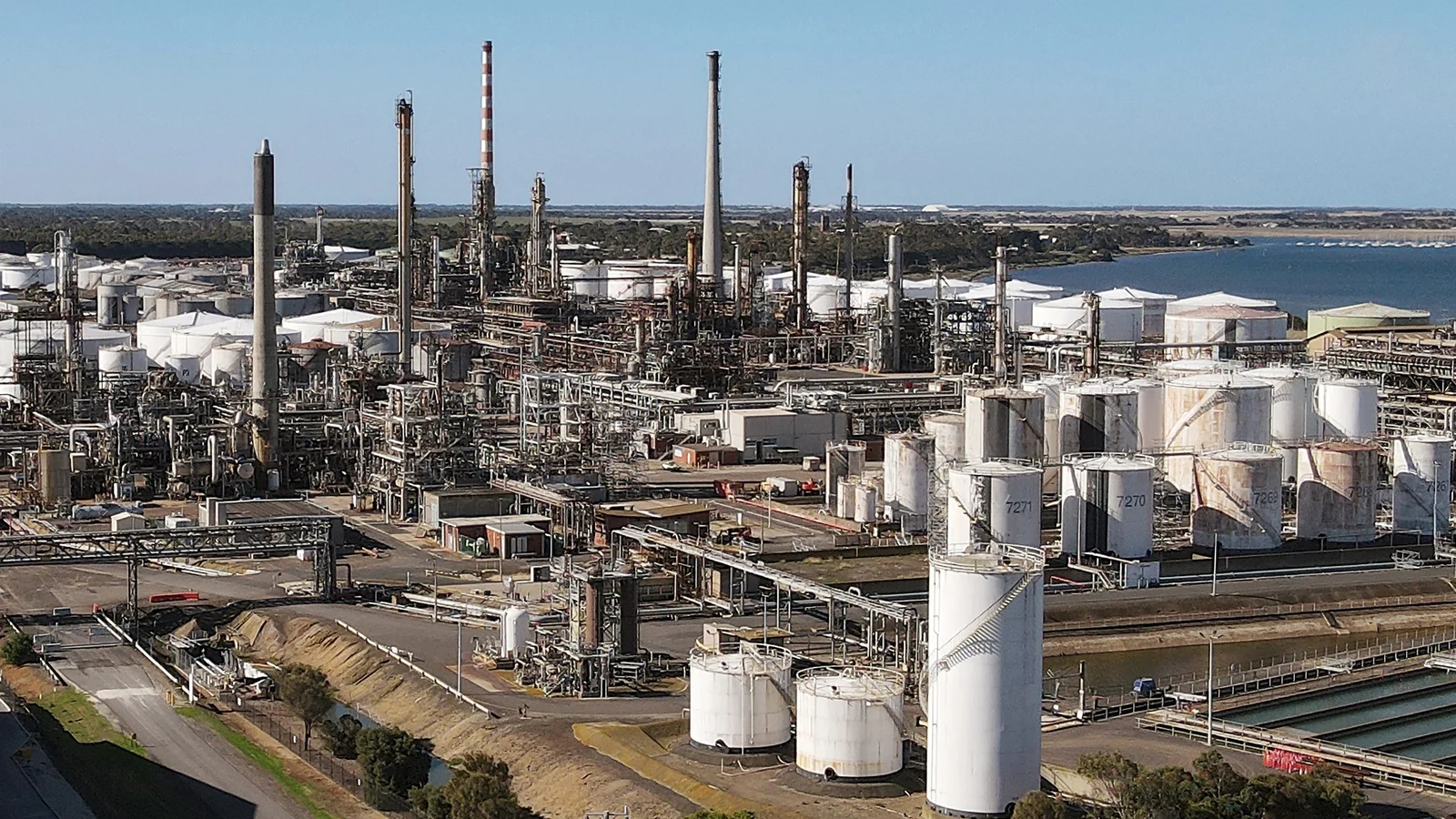
The Geelong facility is no minor operation. Viva Energy’s refinery can process up to 120,000 barrels of crude a day — a number that translates into fuel for cars, trucks, buses, and aircraft across Victoria and beyond. Viva’s public figures show the site employs more than 1,100 people and supplies over half of Victoria’s fuel and roughly 10% of national needs.
When an installation this central falters, the reverberations are felt far from the flames: at service stations, on logistics timetables, and on the kitchen tables of commuters already pinched by rising energy costs. “This place is part of the state’s circulatory system,” said Dr. Aaron Malik, an energy analyst who has tracked Australia’s refining landscape for 15 years. “Disruptions don’t just interrupt operations. They expose how thinly spread critical infrastructure is.”
Local Voices, Worry and Resilience
In Corio the refinery is as much a landmark as the pier or the playgrounds by Corio Bay. For generations, families have worked there. For others the site is a constant in their daily commute: a chunk of industrial skyline that quietly powers a state.
“My partner’s been there twenty years,” said Carmen Reyes, whose partner works on the early morning shift. “We’re just waiting for news. It’s terrifying but we’re grateful everyone’s safe. Still, what about the weeks after? How long before his job, our routine, is normal again?”
Near the waterfront, a fisherman named Tom West stood watching the smoke drift over the harbour. “You feel it in your chest,” he said. “Not just from the smoke but the idea that something that big, that central, can go dark in an instant.”
The Bigger Picture: Fuel, Politics, and Pressure
Australia’s refining sector has contracted dramatically over the past two decades, with just a few large facilities left to process domestic fuel needs. That shrinking footprint — a result of economics, global competition, and policy choices — turns each remaining refinery into a linchpin.
The timing is sensitive. For months, global maritime tensions near the Strait of Hormuz and supply disruptions in other parts of the world have sent oil prices and transport costs upwards. The Albanese government attempted to blunt the impact for Australian households last month by halving fuel excise and temporarily removing the heavy road user charge for three months, measures aimed at easing pump pain.
“Policy measures help in the short term, but they don’t substitute for supply resilience,” Dr. Malik said. “When a facility that supplies half a state’s fuel takes a hit, relief at the pumps only scrapes the surface.”
Numbers That Matter
- Refinery processing capacity: 120,000 barrels per day (Viva Energy figure).
- Employment: over 1,100 staff at the Geelong facility.
- Supply contribution: over 50% of Victoria’s fuel, around 10% of Australia’s national supply.
Those numbers are not abstract; they represent buses that must run, ambulances that must have diesel, and businesses that calculate margins by the cent. When supply tightens, price spikes follow — a familiar story across the globe as infrastructure ages and geopolitical strains stiffen markets.
Emergency Response and Environmental Concerns
Firefighters from across the region converged on Corio — a choreography of hoses, cranes, and command vans. “Our crews are working through the night,” said an on-scene spokesperson for Fire Rescue Victoria. “Safety of personnel and containment of the fire are the primary objectives. We are also coordinating with environmental agencies to manage potential impacts.”
Air quality and coastal contamination are immediate worries. Refineries contain volatile hydrocarbons: when they burn, smoke and runoff can carry toxins into communities and waterways. Locals reported a sour smell that lingered well after the initial blaze was tamped down.
“We’re monitoring air and water at multiple points,” said an environmental officer assigned to the incident. “We will publish advisories if there are risks to public health or to the Bay.”
What Comes Next — and What It Reveals
There are practical questions that will shape weeks to come. How quickly can the plant be assessed and repaired? Will fuel distributors need to import more refined product to bridge a gap? How will this affect prices at the pump during an already fraught period?
There are also deeper questions: how prepared are cities and nations for single-point failures in critical systems? How do workers and communities recover when the livelihoods tethered to a site are disrupted?
“This is about more than insurance and repair schedules,” said Dr. Priya Menon, a sociologist who studies industrial communities. “It’s about the social contract between employers, governments and the people who live next door. When an industrial heartbeat stutters, the whole community can feel unmoored.”
Reflections for a Connected World
As dawn broke over Corio Bay, a thin line of smoke still threaded the sky. Residents stepped out, not in the stunned silence of stranger tragedy, but with an editorialized hope — worry threaded with solidarity. Neighbours checked on neighbours. Cafés filled with conversations about pumps and paychecks and the fragility of modern life.
What does it ask of us, this blaze at a refinery we all depend on in ways we rarely name? Maybe it’s a reminder that energy security is not just a line item in a budget but a communal lifeline. Maybe it’s an invitation to think about redundancy, resilience and the human cost when infrastructure fails.
Do we invest more in local refining capacity? Do we diversify supply chains? Or do we accelerate the move to cleaner, more distributed energy systems that reduce dependence on mono‑facilities? There are policy choices, and there are personal choices — and both are bound together in nights like this.
For now, Corio watches, waits, and counts its blessings: that the staff were safe, that emergency services leapt into action, and that conversations about the future have finally found the urgency they deserve. As repairs begin, as regulators probe causes, and as communities stitch the edges back together, one question lingers: what will we learn when the smoke clears?