When Trust Cracks: A London Scandal, a Washington Posting, and the Quiet Machinery of Security
On a damp Paris morning, as flags fluttered in the cool air and cameras hungrily tracked every handshake, Britain’s prime minister stood beside Emmanuel Macron to talk about reopening a fragile shipping lane in the Strait of Hormuz. Inside the diplomatic choreography, however, a domestic cyclone was gathering—quiet, bureaucratic, and corrosive.
Word leaked that a once-powerful political operator, offered the plum post of UK ambassador to the United States, had been granted the highest tier of Britain’s security clearance—against the explicit recommendation of senior security vetting officials. The decision has triggered resignations, fury in Downing Street, and a cascade of questions about judgment, process, and the often-invisible gatekeepers who decide who can be trusted with the nation’s secrets.
From Boardrooms to Back Channels
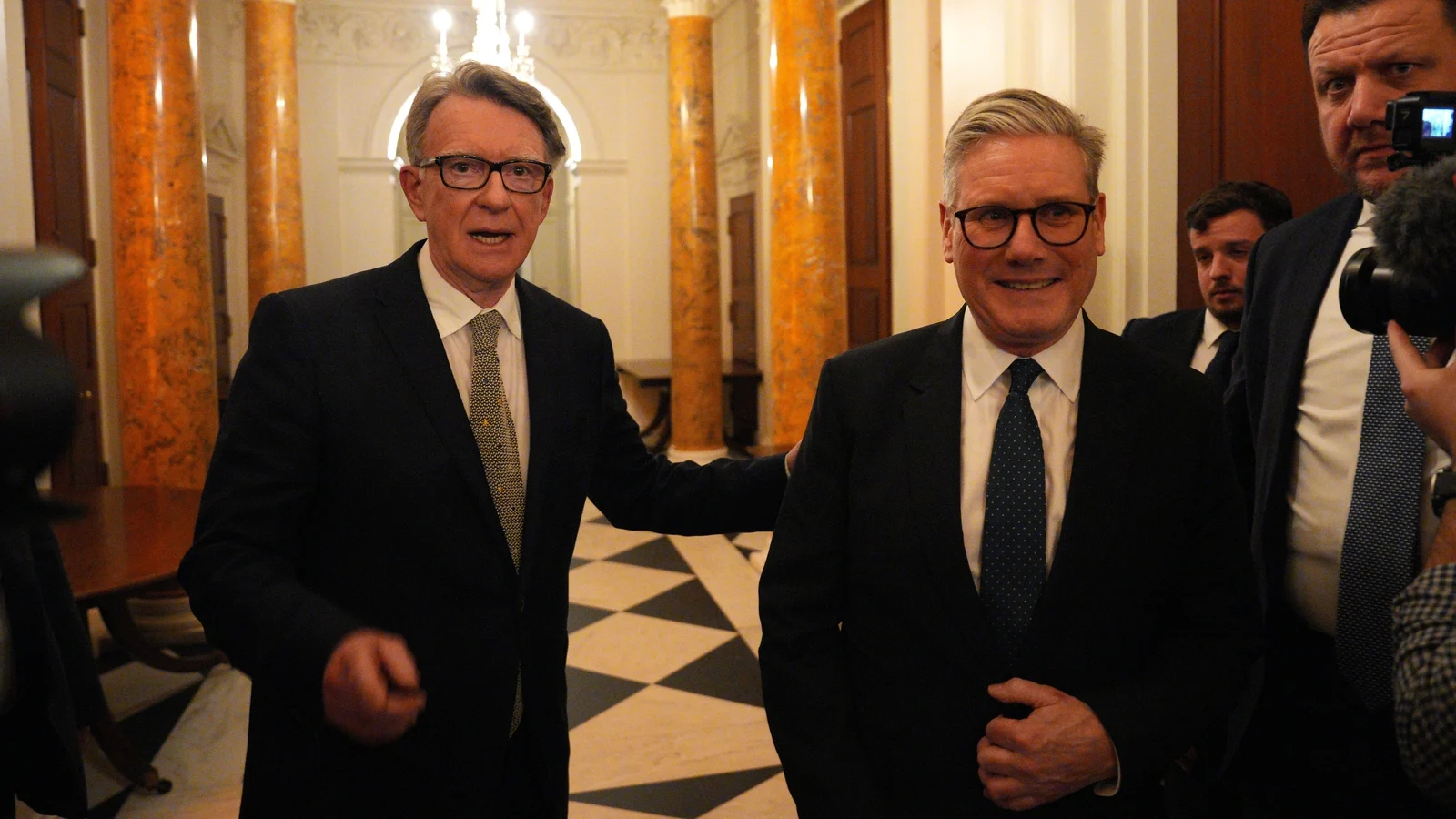
Peter Mandelson’s short-lived appointment to Washington—already controversial because of his political history and past associations—became a test case for the integrity of the state’s security apparatus. According to senior officials who spoke on condition of anonymity, the Cabinet Office’s initial background checks raised a “general reputational risk.” That was before the deeper, confidential stage of developed vetting (DV), the kind of clearance that includes interviews, checks on personal relationships and finances, and which can determine whether someone is fit to be given access to highly sensitive material.
“DV is binary,” said a former vetter who now lectures on national security, explaining the process. “Either you’re cleared or you’re not. It’s not about shades of grey. It’s about whether a candidate presents a vulnerability that could be exploited.”
What set off alarms this week was not just that vetters had refused clearance, but that officials in the Foreign Office reportedly overruled that refusal and issued the clearance anyway. The result: senior civil servants are leaving, ministers are angry, and the prime minister says he was not informed until days later.
People on the Ground: Voices That Tell the Other Side of the Story
Walk the streets around Westminster and you hear the story told in small, textured ways. At a greasy spoon near the Palace of Westminster, a barista wiped down a table and shrugged. “It’s the same song,” she said. “If you don’t know what’s happening in your own garden, how do you keep anyone else safe?”
A long-serving Foreign Office official, who asked not to be named for fear of reprisal, spoke of “a culture of fixes”—where political pressures and operational judgments sometimes collide. “Sometimes there’s a nervousness that a career path gets blocked, or a fear of rocking the boat. But security clearance shouldn’t be a matter of convenience,” they said.
Across the water in a quiet embassy office, a junior diplomat muttered, “We used to be able to trust the process. People moved on. Now there’s this feeling that rules bend.”
Scenes from Paris and a Broader Diplomatic Cost
The timing of the disclosures was brutal. Mr Starmer had chosen Paris to host a summit with France on maritime security—an event designed to display calm leadership and cross-Channel solidarity. Instead, he faced questions about judgment and oversight back home. A Downing Street source told me the prime minister was “absolutely furious” when he learned of the overruling and immediately ordered an internal fact-finding exercise.
Diplomats elsewhere bridle at the idea that staff in sensitive posts might have been cleared in a way that appears opaque or politicized. “America notices,” a former ambassador said. “Washington watches how we fill our senior jobs—who speaks for Britain matters globally, and not just for photo-ops.”
The Mechanics of Vetting—and Why They Matter
Security vetting in the UK operates on tiers: basic checks for routine roles, Security Check (SC) for access to secret material, and Developed Vetting (DV) for the most sensitive positions. DV can include interviews with friends and family, scrutiny of finances, and a review of any foreign contacts. The point is to identify whether a person can be blackmailed, coerced, or inadvertently manipulated—risks that could compromise national security.
- Basic: identity and criminal background checks
- SC (Security Check): deeper checks for secret-level access
- DV (Developed Vetting): highest level, in-depth personal scrutiny
“If you cut corners on that, you undermine everything else,” said Dr. Mina Patel, a security studies lecturer who has advised government departments. “The public doesn’t see the toil that keeps sensitive channels secure. They only notice when it fails.”
Political Fallout: Calls for Accountability
Opposition leaders were quick to pounce. Critics argue that if the prime minister did not know who had been cleared—or, worse, if he misled Parliament about it—then his position becomes untenable. “If the prime minister doesn’t know what’s happening in his own office, he shouldn’t be in charge,” one opposition figure told me. “This is about competence and candour.”
Inside Labour circles there is unease. Some ministers say they were not informed when decisions were made, and a former chief of staff has already publicly taken “full responsibility” for advice that led to a controversial appointment. He also called for a fundamental overhaul of the vetting system—a rare, frank admission of systemic failure.
What This Says About Power and Transparency
At its heart, the episode is about trust: in institutions, in leaders, and in processes meant to insulate national security from political whim. It raises uncomfortable questions. Are political appointments being treated with the same scrutiny as career diplomats? Has the cultural deference around personalities eclipsed institutional caution?
And it asks something of readers too: how much transparency should the public demand when the state is, by necessity, allowed to keep secrets? Where do we draw the line between necessary confidentiality and the right of citizens to know the criteria by which the most sensitive roles are filled?
Looking Forward
Investigations are under way. A top civil servant is reported to be leaving their post, and a formal review into why the vetting decision was overturned has been ordered. More documents are expected to be released to Parliament. For the moment, the government says it is “working urgently” to comply.
Yet the consequences will ripple. Beyond the immediate personnel changes, this episode may accelerate calls to reform vetting—clarifying its independence, speeding up timelines, and installing clearer lines of accountability. For foreign policy, it is a reminder that domestic governance matters; how we manage reputational and security risks at home affects credibility abroad.
What do you think? Should political appointees be subject to the same rigid vetting as career diplomats? And if a security body flags a concern, who should have the final say—the technicians with the evidence, or the elected officials who must answer to voters? The answers will determine not just who sits in embassy buildings, but how a nation balances secrecy, safety, and public trust.
In the soaked calm of a Parisian square, cameras moved on. Back in Westminster, the corridors are quieter, but the questions echo. Institutions are tested not just by crises abroad, but by the daily decisions we make about competence and candour. Today it was a clearance form; tomorrow it could be something far bigger. Either way, the state will need to show it can be trusted to keep its promises—and its secrets—without bending when pressure comes calling.