Bulgaria at the Ballot Box: A Country’s Quiet Reckoning
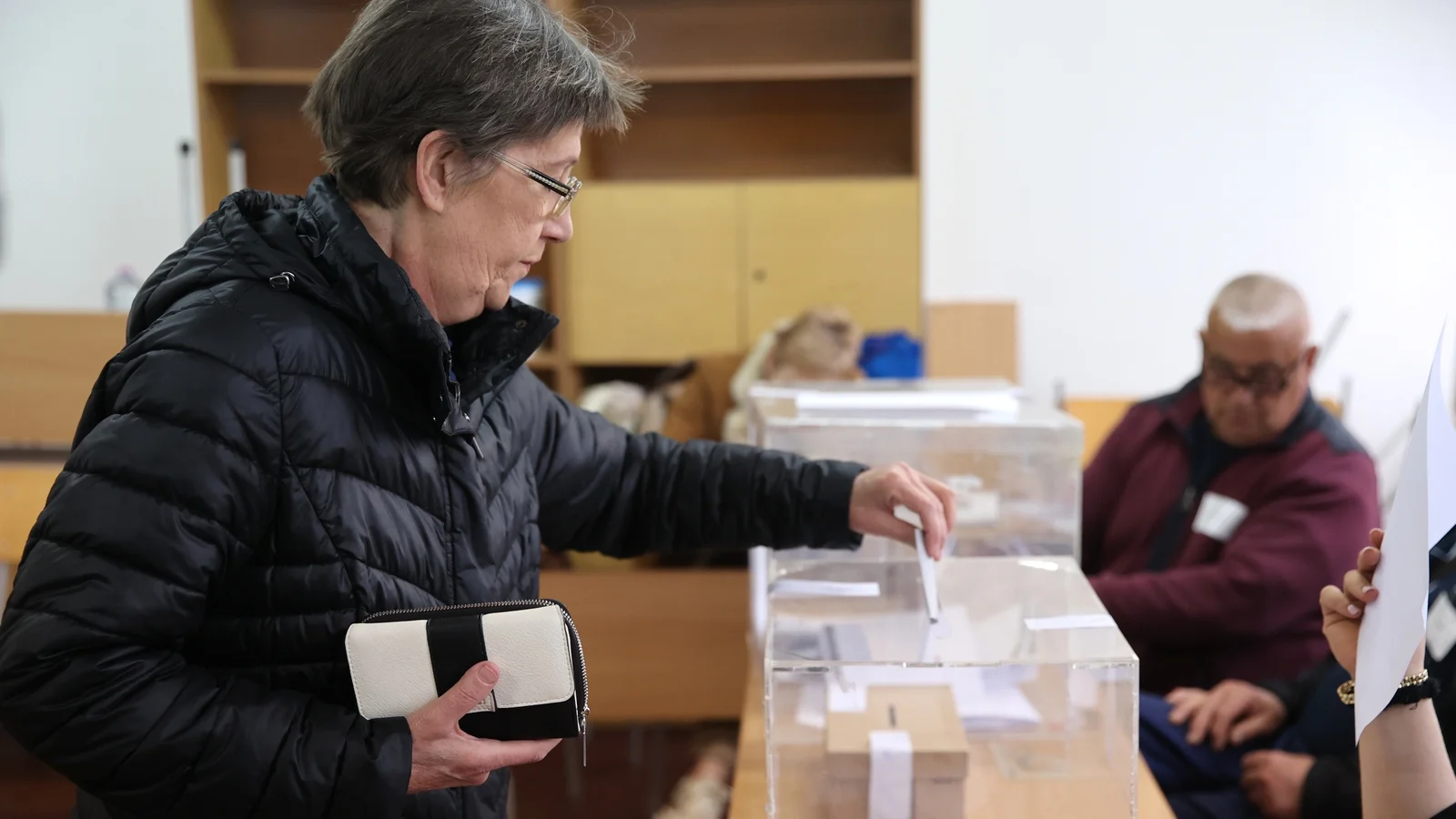
Early frost still clung to the pavement outside the primary school turned polling station in central Sofia when the first voters arrived, coffee cups in hand and the breath of the city fogging in the morning air.
They were not here for a festival. They were here to decide whether Bulgaria — the European Union’s poorest member and a nation of 6.5 million people — will place its fate back in the hands of a familiar figure who vows to uproot corruption, or keep steady with parties that promise continuity with Brussels and the West.
It is the eighth election in five years, a dizzying rhythm that says something about political exhaustion and about citizens who have grown used to making the impossible choice between stability and upheaval.
The Main Players: Promises, Past, and Polarization
At the center of the drama stands Rumen Radev, a former air force general and long-serving president who stepped down to lead Progressive Bulgaria, a centre-left coalition forged in the wake of mass anti-graft protests.
Campaign polls released before the vote suggested his bloc could capture roughly 35% of the ballots — an outcome that would reshape the 240-seat National Assembly if it were to translate into an absolute majority. Behind him on the paper trail of numbers sits Boyko Borissov’s GERB, the pro-European conservative party, polling around 20%, with the liberal PP-DB in pursuit.
“People are tired of the same old deals in back rooms,” Radev told a crowd of about 10,000 at his final rally. “We must close ranks and rebuild a state that serves its citizens, not oligarchs.”
Opponents fired back with equal conviction. Borissov, who led the country for nearly a decade, accused Radev of offering nostalgia wrapped in a new label. “We have fulfilled the dreams of the 1990s,” Borissov declared at a recent rally, pointing to achievements like the country’s recent accession to the eurozone — a claim he used to argue GERB’s economic stewardship is proven.
Beyond the Soundbites: What’s Really at Stake
This election is about more than personalities or parliamentary arithmetic. It is about trust — or the lack of it. After multiple governments and persistent corruption scandals, voter fatigue has taken root. Turnout plunged to 39% in 2024, and the question now is whether hope, anger, or simple exasperation will drive turnout higher this time around.
“I didn’t vote in the last round,” said Yana Petrova, a 34-year-old high school teacher from Sofia, as she folded her ballot and stepped out into the light. “But I came today. I can’t watch my students leave because there’s no work here. If someone promises to clean it up, I want to give them a chance.”
Analysts such as Boryana Dimitrova from Alpha Research predicted a surge in turnout, driven by Radev’s mobilization and by explicit appeals from parties to protect the vote’s integrity. In recent weeks, police raids aimed at preventing vote buying netted more than €1 million and led to hundreds of detentions — including local councillors and mayors. These heavy-handed operations are as much a symptom as a cure.
Russia, the EU, and the Tightrope of Foreign Policy
Flavoring the domestic debate is an international question that carries a special charge in Bulgarian politics: the country’s relationship with Russia. Radev has been open about renewing ties with Moscow and has criticized some EU green energy policies as naive, saying they miss the realities of a world “without rules.”
He has made clear he opposes sending Bulgarian arms to Ukraine in the wake of the 2022 invasion, a stance that has drawn heated pushback from pro-European rivals who warn that such a posture risks isolating Bulgaria in Brussels’ corridors.
“You can’t pretend foreign policy is a local matter,” said Dr. Ivaylo Marinov, a Sofia-based geopolitical analyst. “Bulgaria sits at a crossroads. Choices here echo in Brussels and in Kyiv. Voters understand that the decision isn’t just about domestic issues — it’s about identity and alliances.”
At the same time, Radev has publicly stated he would not block EU decisions outright — a hedged position that leaves room for governing complexity while inviting suspicion from critics who see too much proximity to Moscow in his gestures, including campaign images of meetings with Vladimir Putin.
Culture, Daily Life, and the Feel of the Moment
On the ground, politics rubs shoulders with everyday life. Outside the polling station, a vendor sold warm banitsa — a flaky pastry layered with cheese and the smell of butter — to voters who lingered and debated. An elderly man with a cane laughed and said, “We have had many governments. We just want one that will fix the pipes in our neighborhood.”
Small details like these matter. They are the soft fabric of a nation making a hard decision: will political renewal come from the ballot or from another cycle of protest? Will institutions reform, or will corruption find new disguises?
What Comes After: Scenarios and Chances
Radev is shooting for an absolute majority, a political unicorn in Bulgaria’s fragmented landscape. If he falls short, the inevitable negotiations will either produce a coalition or extend the pattern of short-lived governments that has characterized the past half-decade.
What that outcome means for Bulgaria’s European trajectory is anyone’s projection. Will the country tilt toward a more independent stance, recalibrating ties with Moscow and adjusting its approach to EU policy? Or will it reaffirm its western path and align more closely with Brussels on sanctions, arms, and green transition?
“Elections are mirrors,” said Sofia-based sociologist Maria Kolarova. “They reflect where people put their trust. Right now, many put it in an individual who promises to sweep away a corrupt model. The risk is institutional fragility — concentrating power without building systems that prevent a return to the past.”
Final Hour: A Nation Waiting
Polls closed at 20:00 local time, and exit poll numbers began to trickle out. The tense waiting that follows — for official tallies, for coalition math, for the predictable tweets and statements from capitals abroad — is itself a civic rite.
For voters like Yana, the choice was personal and practical. “If he cleans up the courts and the tenders, if there is real transparency, then maybe my students will stay and build a life here,” she said. “That’s all I ask.”
What do you think? Is reform possible at the ballot box, or does Bulgaria need a deeper social reckoning? As the night settles over Sofia and the country waits for results, these are the questions that will shape debate long after votes are counted.
- Population of Bulgaria: ~6.5 million
- Parliament seats: 240
- Poll estimates (pre-vote): Progressive Bulgaria ~35%, GERB ~20%
- Turnout in 2024: 39%
- Recent law enforcement seizures linked to vote buying: over €1 million