After the Ceasefire: When Silence Breaks, So Do Lives
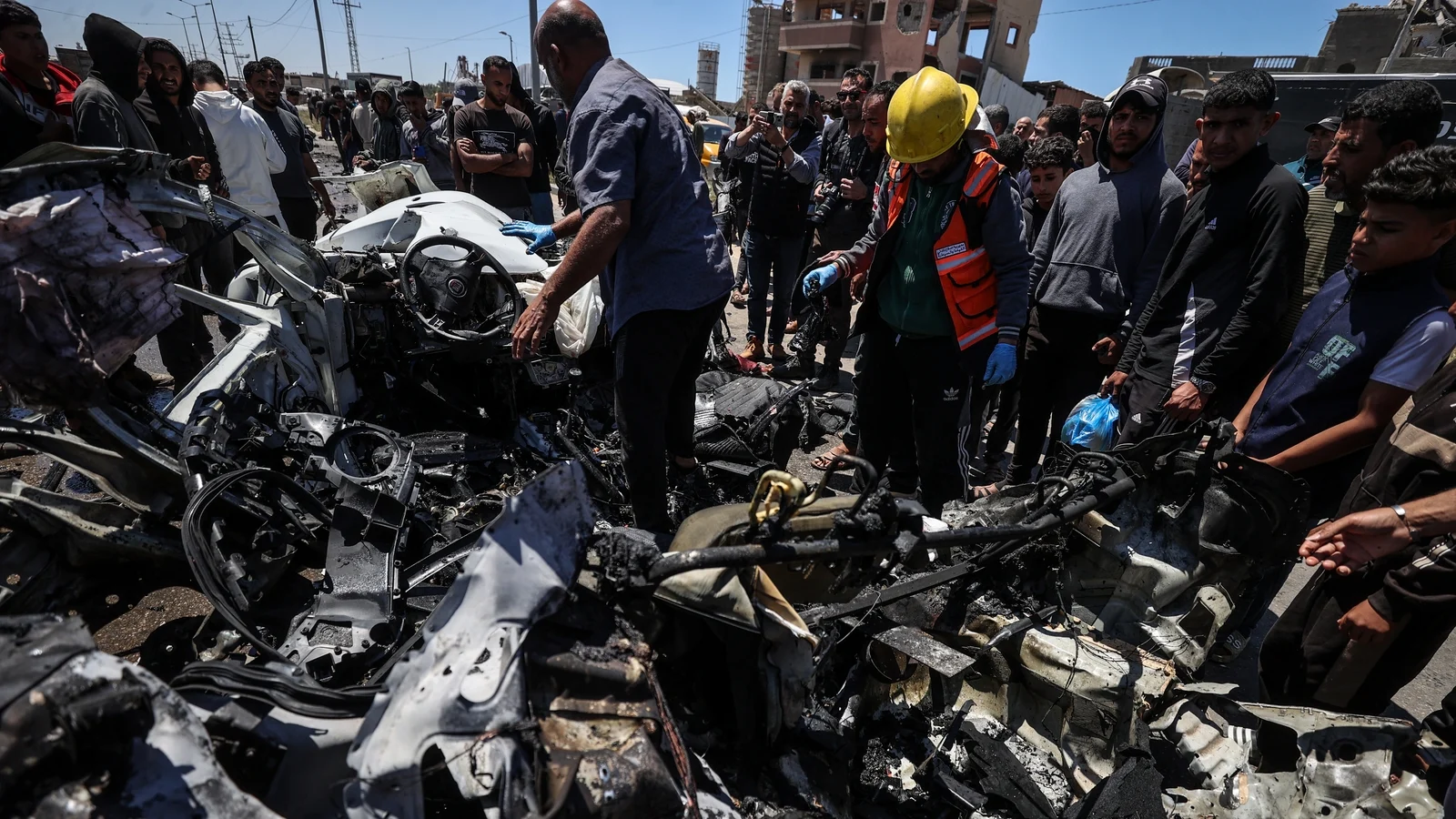
The night air over Gaza is supposed to be different now — quieter, the kind of hush people cling to after a ceasefire. But last night the hush was ripped. In the south, in Khan Younis, an airstrike turned ordinary evening into a scene of rubble and sirens. Medics counted one dead and several wounded; neighbours described a column of dust and the smell of burning that lingered for hours.
“We heard two explosions and then the whole street lit up,” said Miriam, a shopkeeper who lives a few blocks from the strike site. “Children were screaming. You can patch wounds, but you cannot patch sleep or the fear in their eyes.”
Further north, in Maghazi refugee camp — a stitched-together maze of concrete and memory in the Deir al Balah district — another strike claimed three lives, among them a volunteer rescue worker who had spent a lifetime hauling the wounded from under rubble. Palestinian health authorities said four people were killed across Gaza in these latest strikes.
“They were taking bodies out when another blast flattened what was left,” recalled Saeed, who helps run an informal burial society in Maghazi. “Who can rest? There is no guarantee today that you will be alive tomorrow.”
Hospitals as Beacons and Pressure Cookers
At Al Shifa, Gaza’s largest hospital, mourners moved through corridors that smell of antiseptic and grief. Relatives gathered to bury five people killed by an airstrike in the north — including three children. The funeral procession was a quiet, raw rhythm: the soft thud of feet, the muffled wails, the passing of a child’s tiny shoes from person to person before they were lowered into the grave.
“There is no ceasefire, no truce, nothing at all,” said Mohammed Baalousha, a relative of one of the victims. “There is no safety in any area.”
Doctors and nurses, already stretched thin, spoke of ambulance convoys waiting at checkpoints, of patients in corridors because operating theatres are full or out of water. A nurse who asked not to be named because of security concerns described sleeping on an office floor between shifts and waking to alarms. “We patch people and then we bury them,” she said. “It never ends.”
Statistics You Should Hold in Your Hands
Numbers are blunt tools for measuring human harm, but they help frame the scale. Palestinian health officials report that since the U.S.-brokered ceasefire came into effect in October, more than 780 Palestinians have been killed in Gaza while four Israeli soldiers lost their lives in the same period.
There is no international enforcement mechanism overseeing the truce; both sides accuse the other of violations. That legal and practical vacuum turns local flare-ups into fatal, recurring patterns.
- Since October: more than 780 Palestinians killed in Gaza (health authorities’ figures).
- Since October: four Israeli soldiers killed (Israeli military reports).
- At least 15 Palestinians reported killed this year in attacks by Israeli settlers, according to the Palestinian health ministry.
The West Bank: Raids, Stones, and Settler Violence
While Gaza’s skies once again burned at night, the West Bank continued its daily attrition. In Nablus, Israeli forces conducted a raid that ended with the shooting death of a 15-year-old. The military said its troops were met with stone-throwing during operational activity and that its “standard suspect apprehension procedures” led to live fire; Palestinian health officials confirmed the teen’s death.
“He was only a child,” said Amira Haddad, a teacher who lives in Nablus. “He loved football. You see his friends in the streets — they are acting like they are immortal because that is how you survive this place. But he’s gone.”
Elsewhere, near Ramallah, residents awoke to news that a 25-year-old had been shot and killed in Deir Dibwan, allegedly by settlers. Human rights groups have raised alarms about a surge in settler violence — from beatings and arson to shootings — sometimes amid the complicity or inaction of security forces. The Palestinian health ministry says at least 15 people have died in settler attacks so far this year.
On the Ground, the Tension Is Structural
What binds these incidents is not just geography, but a structure of insecurity: checkpoints that delay ambulances, a patchwork of military orders and emergency regulations, and an absence of a credible mechanism to hold violators accountable. “A ceasefire without verification is like a clock without hands,” said Dr. Lina Karim, an analyst with a regional policy institute. “You can set a time for calm, but without monitoring and consequences, old habits return.”
For ordinary Palestinians, the cycle of strikes, funerals and raids creates a cumulative trauma that does not pause for political negotiations. Psychologists warn of long-term effects on children who grow up in such an environment — heightened anxiety, sleep disorders, and a pervasive sense of threat that shapes life choices and limits economic activity.
Why This Matters to the Rest of Us
When violence threads through daily life in this way, it has ripple effects that extend beyond borders. Humanitarian aid becomes harder to deliver, reconstruction stalls, and the space for political compromise narrows. Refugee camps like Nuseirat and Maghazi, with their shared histories and cramped quarters, become pressure cookers for anger and despair.
At a distribution point in Nuseirat, a small charity was handing out meals to families. A volunteer, Fatima, ladled stew into plastic bowls and said, “People here do not want charity; they want dignity. But dignity is not just a word. It is safety, schooling, and hope for the children.”
Ask yourself: what does it mean to call something a ceasefire when people disappear in the night and ambulances wait at borders? How do international actors justify the language of peace while the experience on the ground is so different?
What Comes Next?
There are no easy answers. Diplomats may reconvene, monitors may be proposed, and aid convoys may arrive with new pledges. But lasting change requires mechanisms that communities can trust: independent monitoring, clear consequences for violations, and tangible improvements in daily life — water, electricity, safe schools, lawful protection from violence.
“We need more than statements,” said a veteran field worker at an international NGO. “We need local councils empowered, we need transparent reporting, and we need everyone — local, national and international — to be accountable.”
For people living in Gaza and the West Bank, the question is immediate and personal: how do you build a life when the foundations tremble? For those of us reading from afar, the question is ethical: what responsibility do we hold to witness, to pressure policymakers, and to not let the headlines fade into the background?
Final Thoughts
In the end, the stories from Khan Younis, Maghazi, Al Shifa, Nablus and Deir Dibwan are not footnotes. They are a mosaic of human experience — frantic, ordinary, heart-wrenching. They remind us that ceasefires are more than diplomatic lines on a map; they are promises of safety that must be kept, monitored and defended.
As you close this piece, consider this: peace is not a pause in violence; it is a commitment to a different future. And that commitment, if it is to mean anything, must start with the slow, stubborn work of protecting human life every single day.