Four Decades Later: Chornobyl’s Ghost Still Casts a Long Shadow
There are places on Earth where time collapsed the moment catastrophe arrived. Prypiat is one of them—the Ferris wheel stopped mid-rotation, a doll sits forever in a cracked schoolroom, and refrigerator doors swing open onto emptiness. It has been 40 years since the early hours of 26 April 1986, when Reactor 4 at the Chornobyl nuclear power plant blew apart during a badly judged safety test, hurling a plume of radioactive particles across Europe and into the lives of ordinary people forever.
The Night the Sky Changed
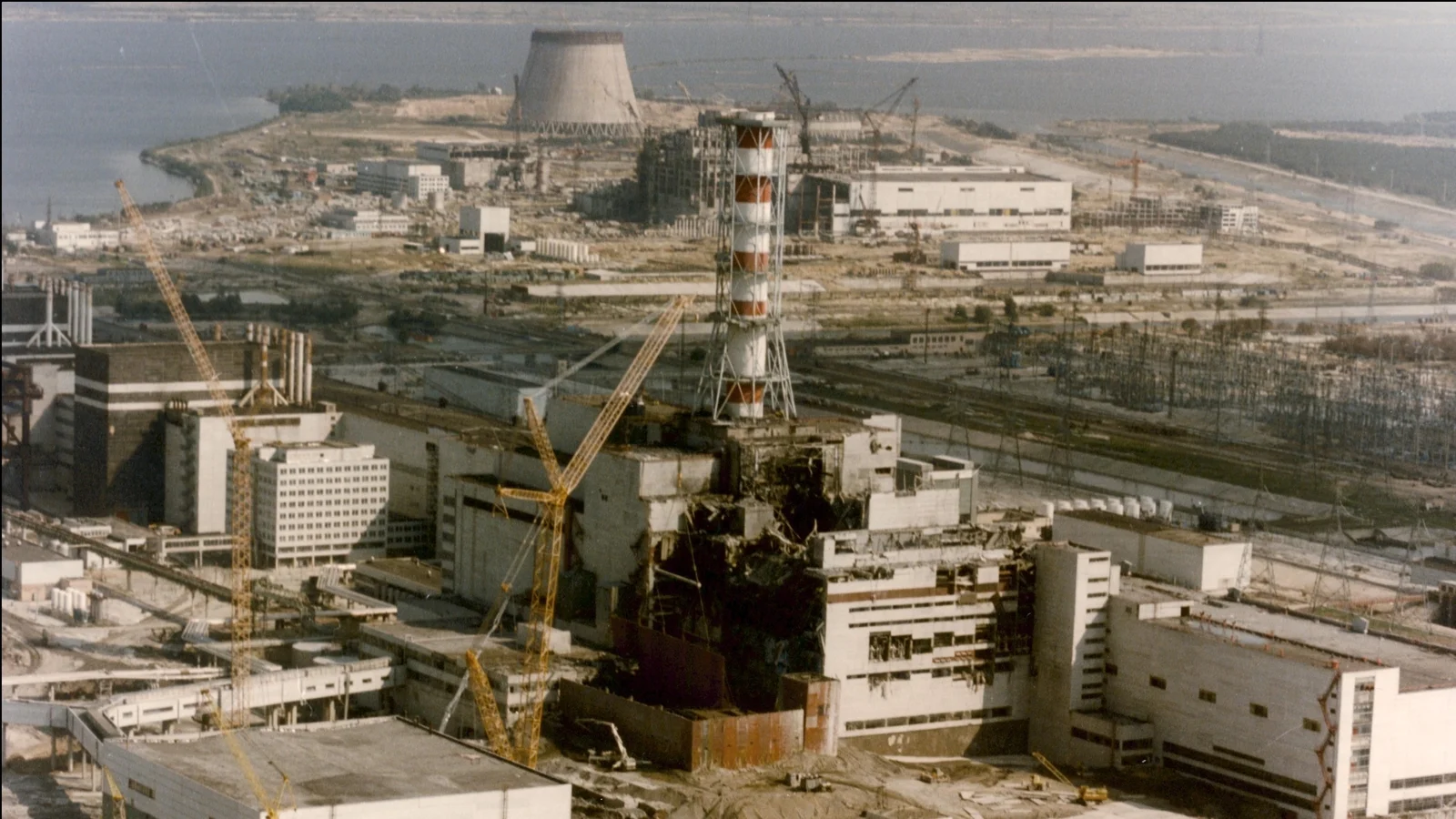
At 01:23 a.m., an experiment meant to improve safety instead shredded a reactor’s core and its roof. The blast murdered two plant workers instantly and irradiated the men who rushed to fight the inferno; around 30 of those first responders would die in the weeks that followed from acute radiation syndrome. For days, invisible clouds drifted, changing the chemistry of soil, pasture and people. Belarus, to the north, took the brunt. Radioactive particles were detected as far away as Sweden—where alert technicians were the ones who first raised the alarm—and only then did Soviet authorities tell their own citizens that a catastrophe had occurred on their soil.
Human Cost and the Making of an Exclusion Zone
Within weeks some 200,000 people were uprooted—families carrying photo albums, samovars, the small private myths that shape a life. Authorities carved out an exclusion zone roughly 30 km around the plant—more than 2,500 square kilometres rendered functionally uninhabitable. Thousands of soldiers, miners and construction workers—known collectively as the “liquidators”—were conscripted to clean up contaminated roads, roofs and reactors. Their sacrifice was immense, and the arithmetic of illness that followed remains contested. Estimates of long-term deaths tied to the accident vary widely; some studies point to thousands of excess cancers, particularly thyroid cancer in children, while others urge caution in attributing all health trends to a single event.
“We left with two suitcases and never came back,” remembers a fictionalized voice common in the region: an elderly woman who once taught at a Prypiat kindergarten. “We watched the buses go and thought we would return in a week. We never did.”
From Ruin to a Rusting Ark: Decommissioning and the New Safe Confinement
The battered nuclear station limped on in a reduced form for years; the final reactor was shut down in 2000. The most visible attempt at containment arrived in 2016: a colossal steel arch—the New Safe Confinement (NSC)—slid over the ruined Reactor 4 like a giant bandage. It was a triumph of engineering and an emblem of post-Soviet international cooperation, a structure designed to seal in deadly dust and give engineers time to dismantle what remained.
Yet decommissioning is slow, meticulous work. Today, more than 2,000 people remain employed at the site, sorting, packing and isolating contaminated materials in operations that will take decades to complete. The work is painstaking and expensive—and fragile in ways engineers never imagined.
War and the Return of Risk
In 2022, the landscape of risk shifted again when Russian forces occupied the plant in the opening weeks of their full-scale invasion of Ukraine. They held roughly 300 staff captive and cut off external power to facilities accustomed to redundancy. Oleksandr Hryhorash, head of Chornobyl NPP’s operational control, described the episode bluntly: “It was an act of nuclear terrorism by the aggressor state of Russia. It is very sad that the international community reacted very weakly, or, one might say, did not react at all,” he told Ukrinform.
The occupation, while eventually ended at Chornobyl, exposed the facility to a new kind of danger: warfare in the shadow of radiation. The plant lost off-site power during the earliest days of occupation; diesel generators kept essential systems running for only a brief period. Then, in February 2025, a Russian drone penetrated the NSC, leaving a 15-square-metre hole and igniting a fire on the outer shell. Firefighters stamped out the blaze; workers installed temporary patches, but the European Bank for Reconstruction and Development estimated a full repair could cost as much as €500 million.
“A Ticking Timebomb?”
The International Atomic Energy Agency’s inspectors have been blunt. After a December inspection of the temporary fixes, the IAEA reported that the NSC “had lost its primary safety functions” and warned that timely, comprehensive restoration is essential to prevent further degradation. Ukrainian officials point to repeated Russian drone flights within 20 km of the facility and to the detection of dozens of hypersonic Kinzhal missiles traversing similar distances near Chornobyl and the Khmelnytskyi plant since 2022. For many observers, the image is stark: an aging, fragile shield pierced by modern, remote weapons.
“We built the NSC to buy time,” says a fictionalized senior engineer who has worked at the site. “War bought back the risk that engineering tried to bury.”
At the Edge of Memory: People, Place, and the Everyday Strange
Walk the edges of the exclusion zone and you will sense contradictions: wolves prowl in the tall grass while Soviet apartment blocks crumble around them. A handful of “samosely” — the self-settlers who returned to their ancestral plots—still tend gardens despite the warning signs. Tourists in hard hats and respirators take photos of the silent schoolhouse and the Ferris wheel, and guides recite the names of buildings like prayers.
Local traditions persist. The smell of black bread and borscht still anchors memories; local musicians still play village songs in displaced communities. These are not just relics on display. They are the textures of a life interrupted and partially resumed, of a culture that endures even where governments and markets hesitated to intervene.
Why Chornobyl Matters to the World
Chornobyl is not only a local tragedy; it is a global cautionary tale about the fragility of technological systems in a world of geopolitics. There are roughly 440 commercial nuclear reactors operating globally, and many more communities that depend on them for low-carbon energy. In conflict, those facilities become political prizes and acute hazards. The European Commission’s statement on the 40th anniversary called for Russia to “immediately cease all attacks on nuclear facilities in Ukraine” and to comply with the IAEA’s Seven Pillars for Nuclear Safety and Security during war—principles meant to keep power, personnel and infrastructure secure even amid fighting.
How should the world balance the need for resilient nuclear infrastructure with the reality of conflict? What responsibility do international actors have when the risk is not localized but transboundary, when a plume can cross borders and a damaged shield can endanger neighbours? These are uncomfortable questions that Chornobyl asks of us still.
Looking Forward
Standing at the exclusion zone’s fence on a windy day, you can taste the past and the future at once. The New Safe Confinement, scarred but upright, testifies to human ingenuity. The drone scar on its shell testifies to our modern recklessness. The people who live on the margins of this story—engineers, exiled residents, liquidators, and the samosely—measure loss differently. For them, the reckoning is intimate. For the rest of the world, Chornobyl is a mirror.
Will we learn from its reflection, and from the recent violations that have reopened old wounds? Or will geopolitics continue to push the most dangerous infrastructures into the rearview of policy until the next catastrophe forces our hand? On this 40th anniversary, the question is not merely historical. It is urgent, global and unresolved.
- Approximate exclusion zone: more than 2,500 square kilometres
- People displaced after 1986: over 200,000
- Workers currently at the site: ~2,000
- Year reactor 4 was encased by the New Safe Confinement: 2016
- Estimated cost to fully repair the NSC after the 2025 drone strike: up to €500 million (EBRD)
What would you do if your home became a monument to a global failure? How do we protect future generations from risks created by our technologies and our conflicts? Chornobyl asks us to answer, and the longer we delay, the heavier the cost of silence.