Midnight Fire and Morning Grief: The Ceasefire That Felt Thin
There is a peculiar sound to a city waking under a fragile calm: the distant metallic thump of a military radio, the hiss of vendors sweeping their sidewalks, the soft sob of someone counting bodies or blessings. In southern Lebanon this weekend, that fragile calm cracked. State media in Beirut and the terse statements from the Israeli army sketched two different mornings — one of mourning in Nabatieh and Bint Jbeil, and one of tactical justification in Jerusalem. The result, for ordinary people, was the same: smoke, sirens and the sudden need to flee.
What Happened
Lebanese state outlets reported a wave of strikes across southern towns, saying four people died when a truck and a motorbike were hit in Yohmor al‑Shaqeef, Nabatieh district, and that another two were killed and 17 wounded in Safad al‑Battikh, in Bint Jbeil.
Israel’s military released its own account: it said it had “eliminated” several Hezbollah operatives — describing a vehicle laden with weapons, a motorcycle rider and other “armed members” — and that it intercepted what it called a suspicious aerial target. The army added it had identified and reacted to projectiles launched from Lebanon, calling that a “blatant violation of the ceasefire understandings.”
Within hours, after an order from Prime Minister Benjamin Netanyahu to “forcefully attack Hezbollah targets,” Lebanese news agencies reported additional strikes in Bint Jbeil, Tyre and Nabatieh districts. Hezbollah, for its part, said it struck an Israeli army vehicle in south Lebanon in what it described as retaliation for attacks on Yohmor al‑Shaqeef.
Lives Between Lines: Voices from the Ground
“We were sleeping and then the house began to tremble like a drum,” said Leila Mansour, a schoolteacher from Safad al‑Battikh, her voice catching on the phone. “My neighbor carried his child on his back and ran barefoot into the street. Six hours later, we still cannot find the youngest of the family.” Whether Leila’s neighbor’s child was among the fatalities reported by officials was unclear; what was clear was the fear that threaded neighborhoods together.
“We count the losses differently now,” said Dr. Karim Haddad, a medic who volunteers with a local clinic in Nabatieh. “Numbers come from above — statements, tallies, military briefings — but on the ground we count days without electricity, how many stretchers we have left, whether the generics in the pharmacy will last the week.”
“Every ceasefire feels like a promise written on glass,” an elderly farmer in Khiam told me, squinting past a line of trees where the horizon still smelled faintly of burning. “You can see the lines on it, you can trace the letters — but one stone and it shatters.”
Displacement and Damage
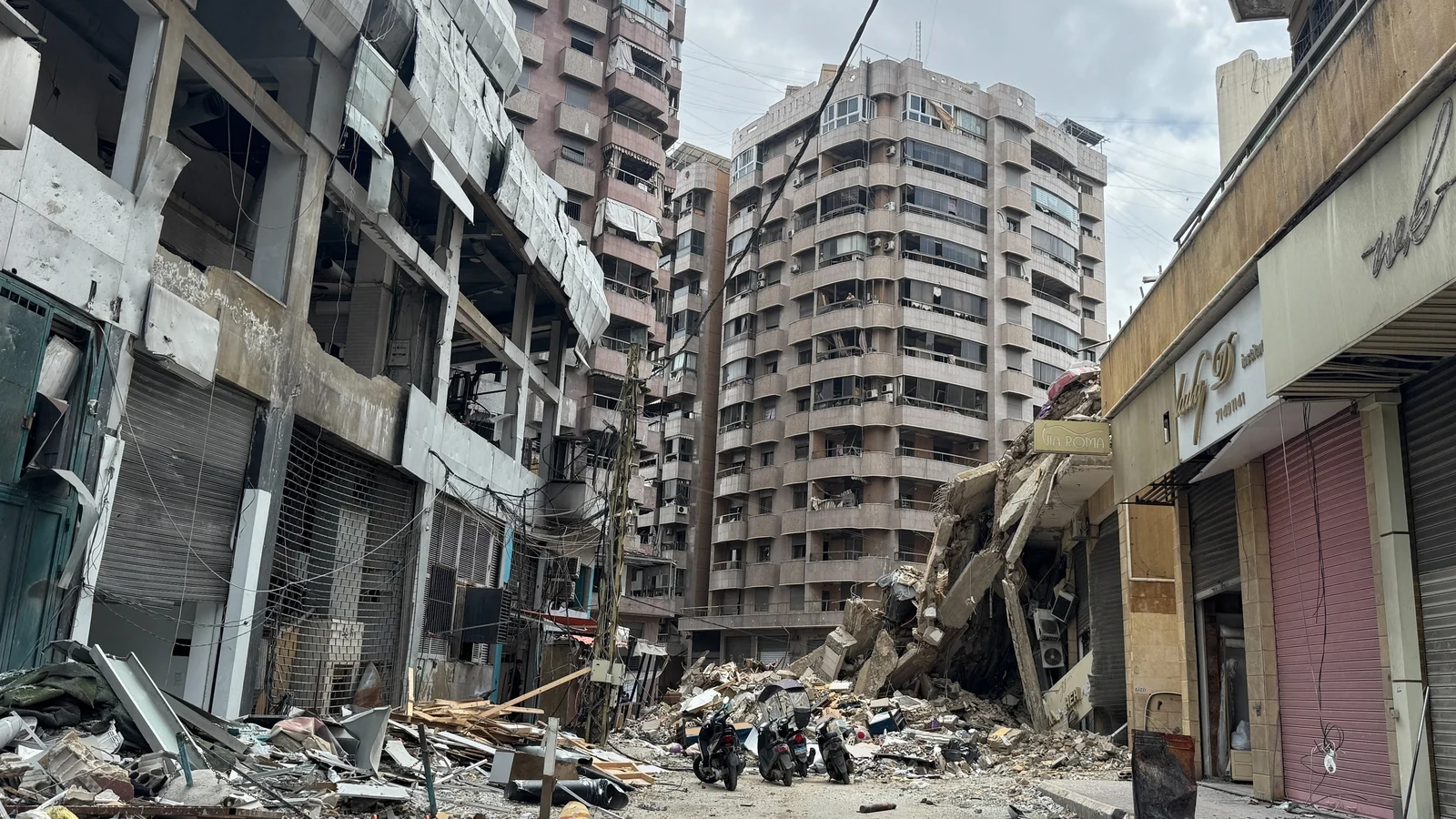
An AFP correspondent noted that residents fled parts of Beirut’s southern suburbs — long a Hezbollah stronghold and frequently in the crosshairs — after the Israeli statement. Lebanon’s state-run National News Agency (NNA) also described a “violent explosion” in Khiam, a border town that has borne repeated strikes and whose ruined houses are a map of previous campaigns.
Lebanese authorities say more than 2,400 people in Lebanon have been killed since early March, with civilian areas repeatedly affected. Those figures, while sombre, only tell part of the story: the displacement, the livelihoods lost, the crops unharvested and the children who will remember these years as the first time their world burned.
The Ceasefire’s Fragility
Earlier in April a ceasefire had been put in place — a pause that was extended, according to public statements at the time, for another three weeks. But pauses are not peace. They are conditional armistices drawn on a map of suspicion.
“Ceasefires in this region are often a thermometer, not a cure,” said Dr. Miriam Alami, a Middle East specialist at a university in Beirut. “They measure temperature: if it rises, they crack. They do not treat the underlying infections of political rivalry, regional influence, and the way local grievances become proxy battles.”
Israel insists it reserves the right to strike if it perceives an imminent threat, and it describes recent actions as defensive against weapons transfers and attempts to rearm combatants. Hezbollah insists it retains the right to respond to aggression. In the spaces between those two insistences, civilians are squeezed.
Local Color: A Region of Roots and Ruin
Walk through Bint Jbeil and you’ll notice something bittersweet: the almond trees stand tall where houses once did, their branches littered with white blossom and soot. Streets smell of za’atar and diesel. Tea vendors call out the names of patrons. Lorans — old women who sell fragrant tobacco — fold their hands and watch, because when artillery begins, even the most routine marketplace feels surreal.
Families in Nabatieh spoke of funerals that had to be rushed, of prayers recited in mosque courtyards because the enclosed halls were damaged. In Tyre, fishermen nervously checked their nets, uncertain whether the day’s catch would be interrupted by an order to move inland. Culture is stubborn here; it survives alongside the rubble, but it, too, is fraying.
Questions to Ask
- What does security look like for civilians when the pillars of authority on both sides cite ‘imminent threats’?
- Who rebuilds the homes once the guns are silent, and how are the costs shared?
- Can a ceasefire ever hold when armed groups and state armies both claim the right to act off the map?
From Local Pain to Global Patterns
What unfolds along a forty‑kilometre border in the Levant is not only a local tragedy. It is also a mirror of global trends: the erosion of rules of engagement, the blurred lines between state and non‑state actors, and the acute humanitarian toll that comes when urban density meets modern ordnance. It is a lesson in how fragile local governance becomes in the face of regional rivalries.
International aid organizations have repeatedly warned about the human cost, especially if winter or crop cycles intersect with conflict. The displacement of families pressures neighboring towns and strains the fragile Lebanese infrastructure, which was already buckling under economic collapse and migration pressures in recent years.
What Comes Next?
Predicting the next move in this theatre is perilous. Military logic prefers deterrence; human logic prefers safety. For locals, the choice is often between risky return and costly exile. For diplomats, the calculus is about backchannels, guarantees and enforceable monitoring — things that have often been lacking.
“We need a plan for people, not only plans for weapons,” said Sahar Nasser, a humanitarian coordinator with a Lebanese NGO. “If ceasefires are to mean anything, they must be accompanied by safe corridors, credible investigations into civilian deaths, and a roadmap for reconstruction. Otherwise they are simply a break in the noise.”
Final Thought
As you read this, imagine a family deciding whether to leave a home with its holey roof, which still carries the smell of last year’s pomegranates. Imagine a schoolteacher keeping half a classroom’s desks because the rest were destroyed. Imagine the arithmetic that turns a ceasefire into another countdown. What responsibility does the global community have, not only to broker pauses between guns, but to make those pauses meaningful to the people who will live with the consequences for decades?
In the short term, the rockets and the reprisals may calculate to tactical advantage. For the people in Yohmor al‑Shaqeef, Safad al‑Battikh, Khiam and the southern suburbs of Beirut, each strike has a human ledger: a home gone, a child orphaned, a market closed. That ledger, like any honest accounting, will outlast the politics of the moment.