Night of Glass and Gasps: Washington’s Dinner That Turned the World Watching
It was an evening that had, until a single, terrifying moment, all the soft edges of an old ritual: tuxedos and tails, the whirr of cameras, the murmur of reporters swapping barbed jokes with politicians. The White House Correspondents’ Dinner has long been equal parts roast and refuge—a place where the fourth estate slips on its formal shoes and, for one night, pretends the cameras aren’t aimed at them.
Then a shot cut through the clink of crystal and the laughter. For a few surreal minutes, the hush that followed felt larger than the room itself—stretched thin by disbelief, then fear. Guests ducked under tables; servers froze with trays midair. Smartphones popped up, not to document the punchline but to summon help.
What Happened — The Facts as We Know Them
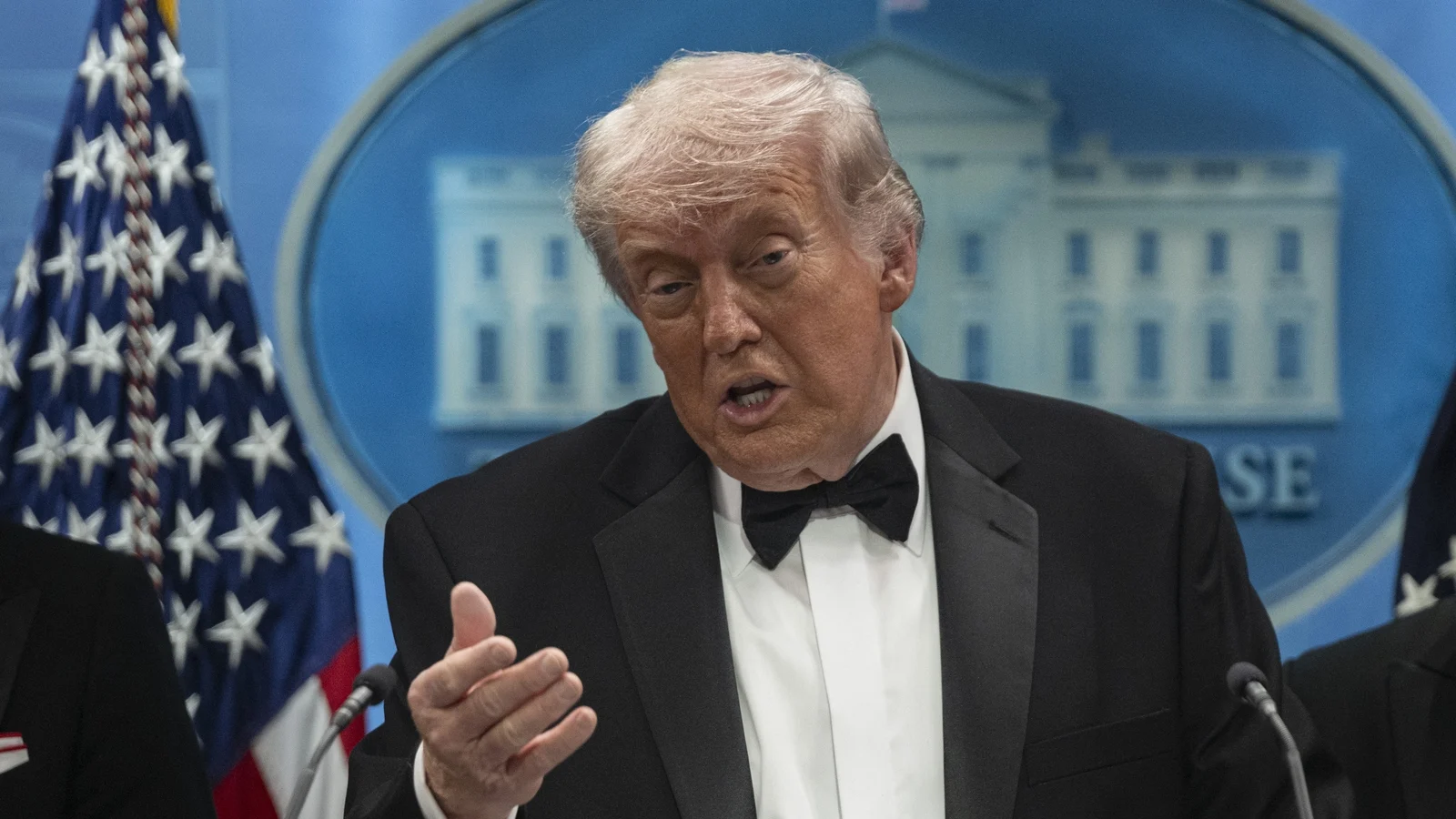
Authorities say the gunfire occurred at the annual event in Washington DC that President Donald Trump attended, and a suspect was quickly taken into custody. Remarkably, officials reported no physical injuries among the president, the First Lady, Vice-President JD Vance or attendees.
Less than 48 hours before Britain’s King Charles was due to arrive on a state visit, the incident sent a ripple through diplomatic and security circles. Teams on both sides of the Atlantic were reported to be coordinating closely to reassess and fortify protection arrangements for the royal party.
Immediate Reactions — From Dublin to Paris to London
Responses from political leaders were swift and solemn. Ireland’s Tánaiste Simon Harris posted on social media expressing relief that nobody was hurt and reiterating a simple truth: political violence has no place in a democracy.
French President Emmanuel Macron called the armed attack “unacceptable,” offering support for the president. In London, Prime Minister Keir Starmer described the scenes as shocking and said that any assault on democratic institutions or on a free press must be condemned in the strongest terms.
“It’s a huge relief that those present were not physically harmed,” a senior British official said during interviews, underscoring the delicate choreography now required to keep visiting dignitaries safe in the days ahead.
Voices from the Room
Out on the edge of the ballroom, where the catering staff hovers between the chandeliers and the crowd, stories stack up like folded napkins—small, sharp, and human.
“I was carrying a tray of canapés when everyone started to scream,” said Maria Alvarez, a server who has worked dozens of high-profile events in the capital. “People didn’t run toward the exits at first—some were just frozen. One gentleman helped a woman tie her shoe because she couldn’t bend. There was this odd kindness amid the terror.”
Jonathan Reed, a freelance photojournalist, described the moment his instincts overruled his profession. “You learn to capture the moment,” he said, voice tight. “But when it’s this close, you stop thinking about the story and only think about getting someone out. I left my camera on a chair. I didn’t care.”
Why This Feels Bigger Than a Single Incident
We live in an era where violence and spectacle often intersect. A political event that historically showcased the uneasy flirtation between politicians and the press has become, for some, a flashpoint of larger cultural and political tensions.
Security experts point out that attacks like this, even when non-lethal, reshape public life. “An incident in a high-profile setting is designed to do more than harm an individual—it’s intended to send a message,” said Dr. Leah Montgomery, a professor of security studies. “Whether that message is ideological, performative, or merely intended to terrify, it forces a reassessment of how we gather, how the press operates, and how democratic rituals continue.”
There are measurable consequences. After high-profile attacks, cities often see tightened security protocols, visible increases in armed police and changes to public access for weeks or months. The intangible impacts—on journalists’ sense of safety, on the willingness of citizens to attend public forums, on the tone of political discourse—can last much longer.
Press Freedom Under a Cloud
The venue that the shooting interrupted was not just a gala. It is a fixture in the relationship between government and media, a night that leans into satire to preserve the punch of scrutiny. To many journalists, the sight of a gun fired at such a place is a symbolic threat that resonates beyond the physical safety concerns.
“Journalism depends on the idea that we can ask hard questions,” said Naima Khan, an editor at a national daily. “When the space where we come together is attacked, it’s an attack on a way of doing our jobs. It’s chilling.”
Local Color: Washington at the Crossroads
Washington’s neighborhoods—Georgetown’s brick walks, the muted parks sloping toward the river—are often portrayed as outraged or solemn in the face of national events. On an evening like this, those familiar streets hum with extra security vans, with the chatter of advance teams, with neighbors consulting one another on what it all means for the city’s sense of normal.
“We were watching from a little bar, like everyone else in the city,” said Tom Harlow, who runs a bookstore near Dupont Circle. “When the news came through, people stopped browsing. The owner turned off the music. For a community that prides itself on being politically awake, it felt like a collective bite had been taken out of our calm.”
Questions That Stay with Us
As the dust settles, several questions loom. How will security protocols change for high-profile events in democracies that are already wrestling with strained civil liberties and a fraught political climate? What does an attack like this do to the fragile public confidence in the idea that disagreement can be contained within the rules of politics and debate?
We must also ask: how do we keep the press safe while preserving its proximity to power? And what welcome diminishing returns await if we retreat from public, unscripted encounters out of fear?
Looking Forward
For now, investigators will pore over evidence, and diplomats will recalibrate travel plans and protection details. Politicians will offer statements—words meant to steady the nerves of allies and citizens—and pundits will weigh motives and implications. But beyond the statements and the security briefings, an everyday truth remains: democracy is sustained by ordinary people showing up.
So here’s a direct question to you, the reader: how willing are we to defend the open rituals of our civic life when they become uncomfortable or unsafe? Are we prepared to fight for the messy, imperfect, often loud encounters that keep representative systems honest?
Tonight in Washington, no lives were lost. That fact is both a relief and a reminder. It is easier to mourn the idea of safety than the reality we must now collectively build anew. The hard work after a night like this isn’t just in the hands of security teams and politicians—it’s ours, too: to insist that disagreement stays lawful, that the press remains free, and that our public rituals survive without turning into fortified shows of fear.