A Midnight Sky of Metal: Odesa Wakes to Glass, Smoke and the Sound of Drones
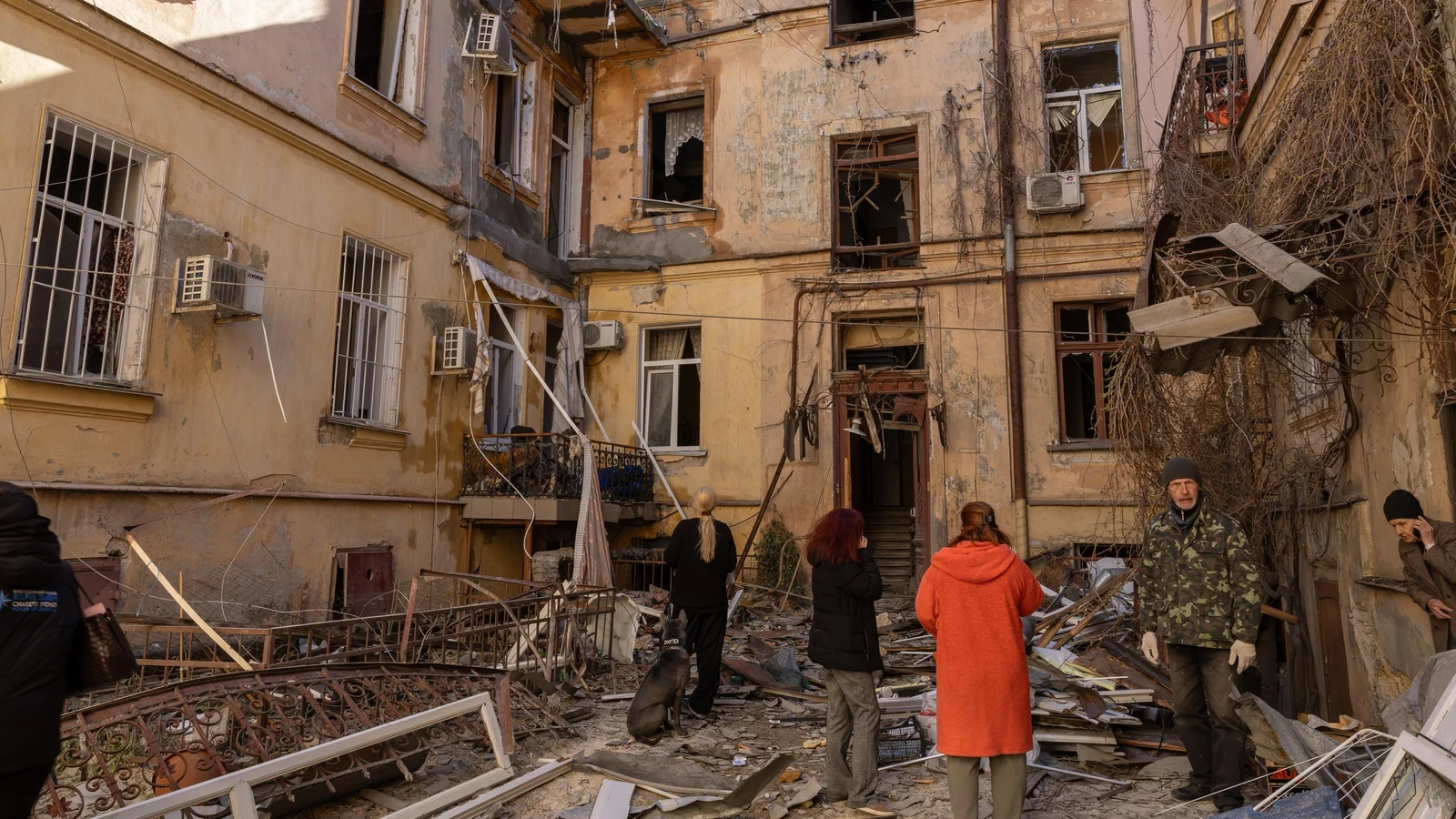
When the sirens began, they sounded like a city clearing its throat—soft at first, then growing into a prolonged wail that gathered neighbors on doorsteps and in stairwells. It was the kind of alarm that rearranges sleep into action: coats, keys, the careful lifting of a cat into a crate. By morning, Odesa’s historic Prymorskyi district, with its ornate balconies and narrow lanes that have seen centuries of trade and tide, lay marked by shattered windows, soot, and a trailing smell of burned insulation.
“It was an extremely difficult night,” Serhiy Lysak, head of the local military administration, wrote on Telegram, his terse update a civic waypoint for residents tuning in for news between sips of coffee and the slow sweep of glass from cobblestones.
The Human Toll
Local officials said at least 14 people were injured in the strikes, including two children. The blows landed hardest in Prymorskyi, the city’s storied seafront quarter where a hotel, residential blocks and small businesses sustain both locals and visitors. Governor Oleh Kiper confirmed the casualty count as the day unfolded.
A photograph Lysak shared showed the stark geometry of daylight through a ruined frame: curtains hanging like flags from a building whose windows had been transformed into jagged lace. Down the block, 68-year-old Volodymyr Taban—an Odessa man with the habitual stoop of someone who has lifted a lifetime of pantry sacks—swept debris from the sidewalk and smiled wryly at a passing journalist.
“We made it through. Old buildings are the strongest,” he said, his voice a mix of pride and fatigue, settling a human line under the harder headline.
Port, Ships and the Blunt Edge of Supply Chains
Odesa is more than a skyline; it is a gateway. The city’s docks and terminals have for decades been part of the arteries that move Ukrainian exports to the world. On this night, the attack grazed those arteries: Ukraine’s seaports authority reported damage to port infrastructure in the Greater Odesa hub and said a Nauru-flagged vessel, the Ramco, sustained minor damage while transiting a maritime corridor.
An energy facility within a cargo terminal caught fire, officials said, prompting localized blazes that were extinguished. A fire aboard the Ramco was likewise put out by its crew; early reports suggested no injuries on board. Still, for a global market watching grain and oilseed flows, even a small disruption at a major Black Sea port can unsettle pricing and logistics far beyond the quay.
Numbers That Tell a Story
Ukraine’s military response tallied the volume of the night: the air force said Russia launched 94 drones from 6 pm; Ukrainian defenses downed or neutralized 74 of them. President Volodymyr Zelensky escalated the account, saying that in the past week Russian forces had unleashed about 1,900 attack drones, nearly 1,400 guided aerial bombs and around 60 missiles of various types.
“This highlights how timely the new partner contributions to the PURL initiative are,” Mr. Zelensky wrote on X, pointing to the NATO-led program formed to speed US-made weaponry into Ukrainian hands. He also noted the European Union’s new sanctions against Russia and approval of a €90 billion loan to Ukraine—measures that stitch politics and finance to the front-line reality.
On the Streets: Voices of Odesa
The city’s response is practical and intricate—volunteers with brooms, municipal workers patching temporary shelters, cafes offering free tea. The mood is weary but stubbornly ordinary. A young mother, clutching a toddler with eyes still rimmed with sleep, paused on the staircase of a reinforced basement shelter.
“My child didn’t understand the sirens,” she said. “I told him it’s thunder. He asked when the sky will stop being angry.” Her name, like many here, is withheld; the city has become adept at privacy as a kind of safety.
Beside a bakery, where the smell of fresh challah fought the scent of smoke, a shopkeeper named Anton grinned despite a streak of ash on his cheek. “We joke that we live where the sea teaches you not to be surprised,” he said. “But jokes are thinner now.”
Military analysts watching from Kyiv and abroad caution that this pattern—swarms of inexpensive drones probing air defenses—is a deliberate Russian tactic designed to exhaust interceptors and targets alike. “Drones are the new saturation weapon,” explained a defense analyst who asked to be identified only as a regional specialist. “They are cheap, disposable, and force you to keep shooting, which can degrade your stockpiles and response time.”
Why This Matters to the Rest of the World
Is a strike on a Black Sea port a local incident or a global ripple? The answer is both. Odesa’s terminals are nodes in a global food system where disruptions can spike prices in markets already jittery from climate shocks, geopolitical uncertainty and supply-chain fatigue. When a port that loads grains and oilseeds is intermittently threatened, importers from Africa to Asia lean back on contingency plans—sometimes paying premiums for insurance or rerouting shipments at extra cost.
Moreover, the episode reflects a larger technological and ethical shift in modern warfare. Affordable, long-range drones lower the threshold for persistent strikes and blur the lines between battlefield and civilian life. When aerial munitions can be launched with mass and relative anonymity, cities like Odesa become arenas where urban life and geopolitics collide.
Quick Facts
- Injured: 14 people, including two children (local officials)
- Reported drones used in the attack window: 94 (Ukraine’s air force)
- Drones downed or neutralized that night: 74
- President Zelensky’s weekly tally: roughly 1,900 attack drones and nearly 1,400 guided bombs
- EU financial aid approved: €90 billion loan; new sanctions announced
Resilience, Memory and the Long View
Walking past the Opera House and the slope of the Potemkin steps later in the day, you can still hear the soft clack of shoes on stone—tourists and locals returning to routines, to the slow commerce of empanadas and espresso. In Odesa, every street feels like a palimpsest: imperial murals, Soviet mosaics, and the graffiti of a new generation layered one over the other. The city’s humor—gritty, self-aware, sharp—has kept it afloat through history’s many storms.
How long can that endurance be asked of a city? What is the cost, not just in brick and glass but in the collective patience of a population that keeps being asked to adapt? These are the questions that hover above the pragmatic lists of numbers and the immediate needs of medical care and shelter.
For now, volunteers hand out bottled water; emergency crews check gas lines; the Ramco sails on, patched and escorted if necessary. Yet the night’s images—glass shimmering in daylight like frost, curtains fluttering from broken frames—are the kind that remain. They become the small, human bookmarks in a conflict ledger the world reads in fits and starts.
So the city cleans, counts, and remembers. And the rest of us—trading goods, taking notes, weighing policy decisions—watch and, perhaps, ask ourselves how we shore up the fragile threads that connect a harbor to a supper table half a world away.