When Crystalware Shattered: A Night at the White House Correspondents’ Dinner That Didn’t Go as Planned
It was supposed to be one of those nights that Washington does particularly well: tuxedos, laughter that tasted like champagne, and a room stacked with the people who spend their days translating power into copy. Instead, the clink of cutlery was swallowed by the thud of running feet, and an evening of jokes and roast material turned into a study in fear, procedure and, eventually, relief.
I spoke with Caitríona Perry, the BBC’s Washington anchor and former RTÉ correspondent, who was seated in the middle of the dining room when chaos arrived. She remembers the sound that first broke through the murmur of conversation: a commotion at the door, a crack of glass, and then the world tightening around a single command.
“There was this kerfuffle—plates toppled, people gasped—and then Secret Service agents came racing down the central aisle, guns drawn, shouting for everyone to take cover,” she told me. “We all dove under tables. For a few long beats, you had tuxes and evening gowns and very professional people crammed together waiting to find out what would happen next.”
The Scene: Intimate, Unexpected, and Fast
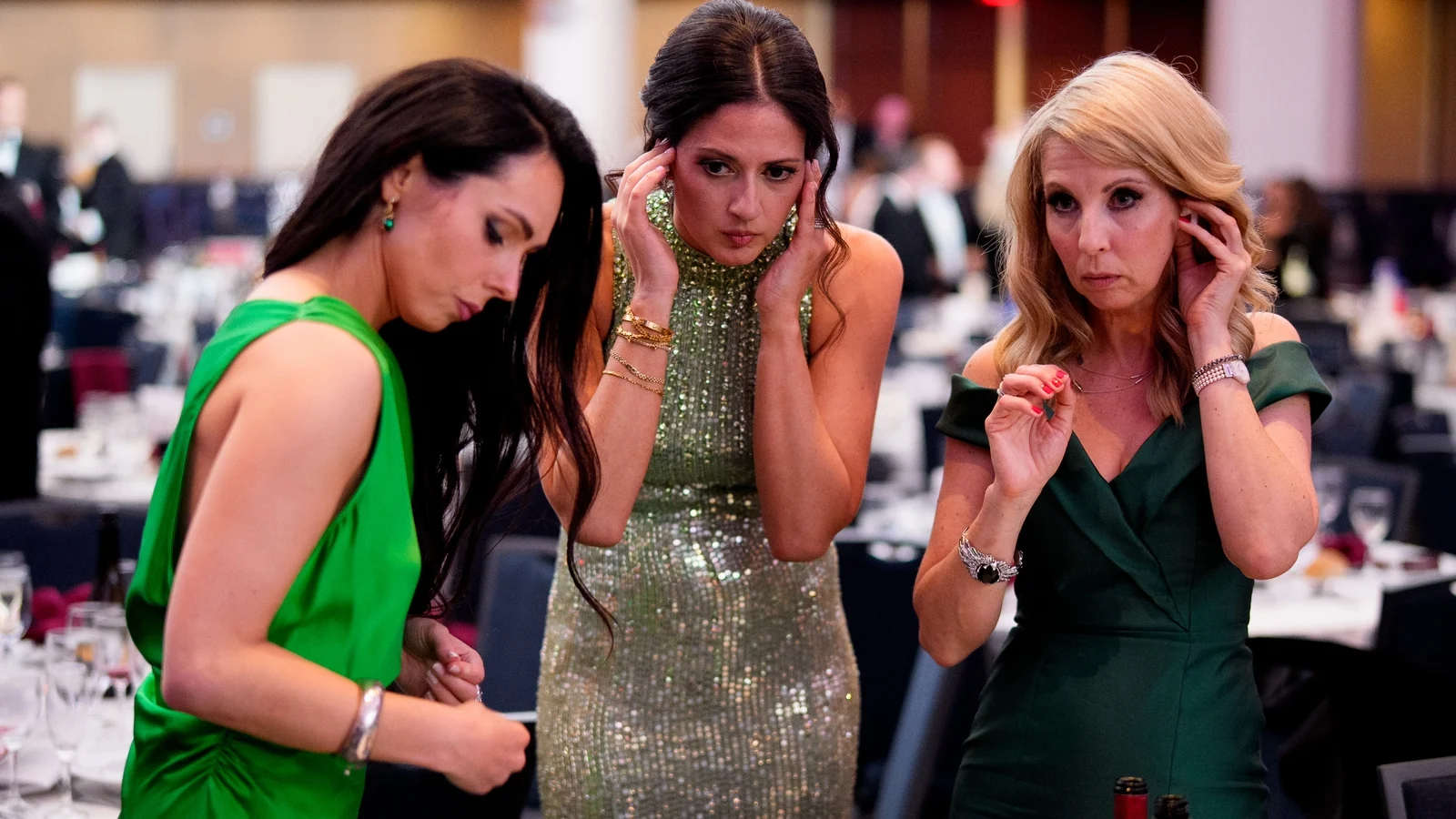
The White House Correspondents’ Association dinner has become an annual ritual: a mix of schmooze and satire where presidents are teased, reporters let their hair down, and Hollywood rubs shoulders with the press corps. Hundreds—sometimes more—fill the grand ballroom, wearing badges and good humor in equal measure. On this night, that intimacy became part of the drama; no one could tell immediately whether the threat was inside the room or outside the doors.
“I thought we were in a movie,” said Carlos Mendes, a freelance photographer who had been snapped leaning over a plate of roast. “One second you’re rolling your eyes at the speech, the next the world is very small. You can hear people whispering: ‘Is it in here? Is it outside?’ Those are the moments where your training and your pulse disagree.”
Witnesses say the shots were fired outside the dining room, which muffled the sound in an odd way. That only added to the uncertainty. Were there additional shooters? Was someone in the crowd acting out? Secret Service officers fanned out, planted themselves at the podium and on the stage, and shepherded the president, the first lady and the vice president away from sight before guiding them out of the room.
Protocol, Panic, and the Work of Protection
Getting hundreds of people to duck under tables in a room hung with chandeliers is not a script most guests had rehearsed. In minutes, however, the choreography was precise: agents moved, doors were secured, and a perimeter was established. “They were calm and efficient,” an unnamed Secret Service officer told me on background. “The priority is moving principals to safety and making sure the room is clear.”
Still, that calm can’t erase the human elements—confusion and fear. “You don’t expect to be in your finery and suddenly consider that you might be sitting on top of history,” Perry reflected. “It’s a very, very divided country right now, and nights like this lay that tension bare.”
Law enforcement arrested a suspect outside the venue and, as the evening wore on, the dining room was declared a crime scene. Guests who had gone under tables were eventually asked to leave. Some tried, briefly, to proceed with the program—because that is what the city does when it’s shaken: it tries to normalize—but the reality of a security cordon and investigators with evidence bags made the continuation impossible.
What This Night Reveals
Moments like these feel intimate but they also point to larger dynamics at play: the precariousness of public life for political figures, the spotlight on security protocols, and the way gun violence—statistical abstraction for many—becomes terrifyingly specific for those who experience it.
To frame this in numbers: the United States recorded roughly 48,000 firearm-related deaths in 2021, according to the Centers for Disease Control and Prevention. Mass shootings—events garnering national headlines because multiple people are harmed—represent a fraction but a particularly vivid slice of that toll. Meanwhile, high-profile security breaches or incidents around political figures tend to amplify national anxieties, driving debates about protection, public access, and the nature of civic discourse.
“When something happens at an event like this, it forces a reckoning,” said Dr. Lena Ortiz, a security analyst who studies public-safety planning for large events. “You ask how perimeter control failed or succeeded, how communication flowed, and whether the safety of guests and principals was balanced against the need for an open society. It’s never an easy calculus.”
Small Details That Tell the Story
There were foreground moments that will linger in people’s minds for a long time: an overturned glass, a shoestring caught on a chair, the sound of a microphone dropping, and the muffled, collective breathing under tablecloths. A server later told me he had kept his composure because training kicked in—“you learn to move without making more noise”—but admitted that returning to the same room in the weeks ahead would feel different.
“I’ll be back,” he said, half-joking, half-earnest. “But it’s like walking into a place where a storm just passed through. You notice the sun in a new way.”
Questions for a Nation
How do we reconcile the ritual of open civic life with the reality of threats that can appear with no warning? How do journalists continue to do their job—hold power to account, attend public events, ask uncomfortable questions—while the risk calculus of attending such events changes?
The answers are not simple. They touch on funding and directives for protective agencies, on the ways social and political polarization can fuel dangerous impulses, and on the public’s appetite for proximity to figures of power. They also require reflection about what kind of society wants its civic rituals to be behind a reinforced curtain.
For now, those who were at the dinner are left with memories: the surreal communal hush under linen; the abrupt severing of an evening meant for satire and ease; the relief when, at last, officers confirmed the danger had been contained. “We came to laugh,” Perry said. “We left grateful to be alive and, frankly, more sober about the fragility of these nights.”
As the capital returns to its routines, the dinner will be dissected in security briefings and late-night monologues alike. But for the people who were under those tables, the night will remain a reminder that even the most polished rituals can be interrupted—and that the personal, human response to fear is often messy, immediate, and unexpectedly tender.
- What would you feel if you were at a table and told to hide?
- How should societies balance openness and safety?
- And what role does journalism play when the newsroom itself is a scene of danger?