Across the Pond in a Storm: The Royal Visit That Won’t Be Simple
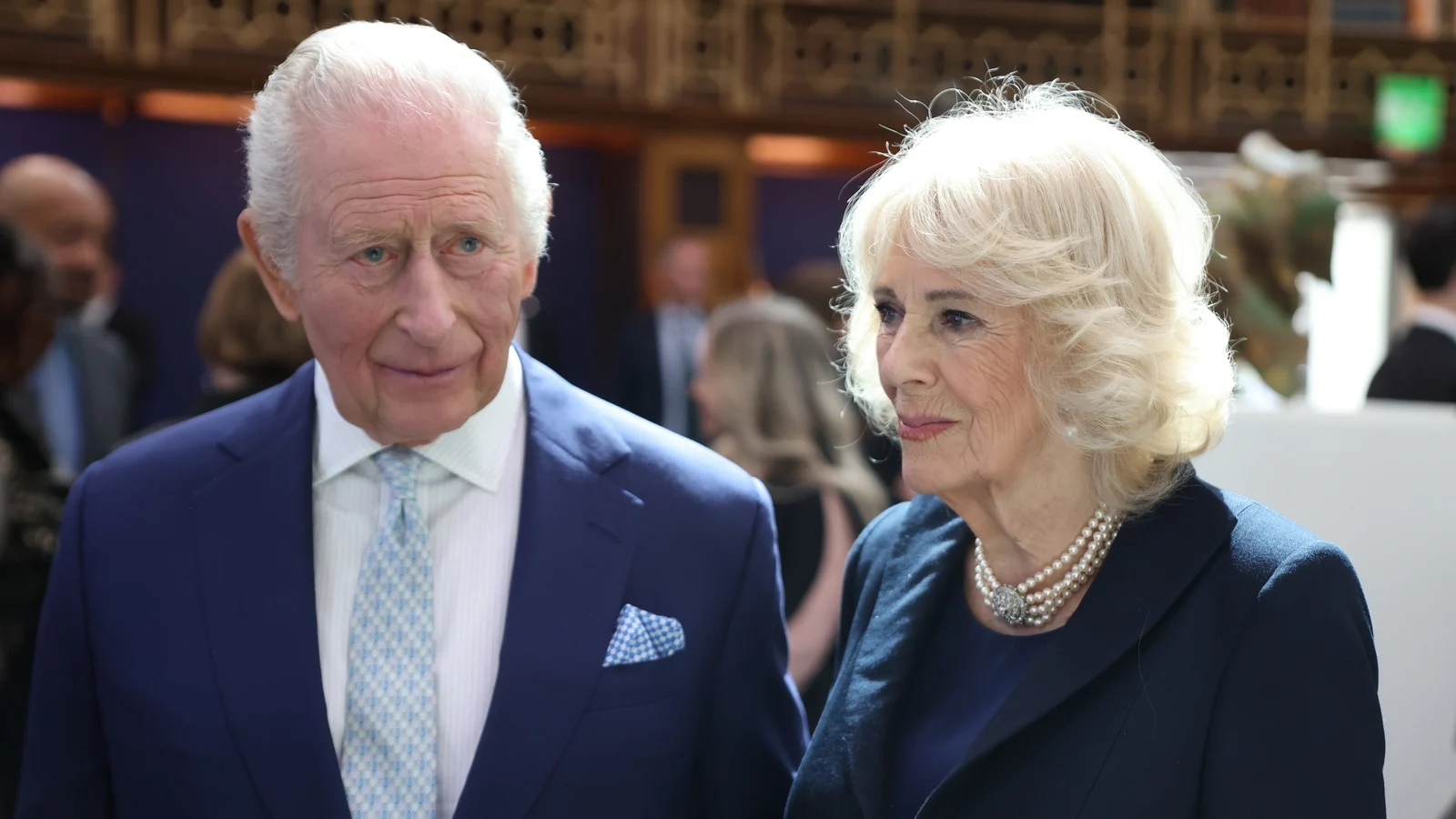
There is a certain old-world choreography to a state visit: black cars idling beneath white porticos, flags snapped taut in the wind, a rigid menu set by protocol. This week, that choreography meets chaos. King Charles and Queen Camilla arrived in the United States for a four-day state visit meant to celebrate transatlantic kinship at a milestone moment—the United States’ 250th anniversary—yet the mood is tight, jittery, layered with headlines and frayed nerves.
On the surface, it looks like a classic diplomatic pageant. There will be a congressional address—the first by a British monarch since 1991—tea with the presidential family, a state dinner, and a quietly scheduled pilgrimage to the 9/11 memorial in New York. Under the surface, however, there is a bruising mix of geopolitics, public unease and an episode of violence that briefly felt like an omen.
When ceremony collides with danger
Two days before the formal arrival, a gunman opened fire at a high-profile gala attended by the president. By the time dawn rose the next day, law enforcement had a suspect in custody and a city, and a country, taking stock of how fragile any public gathering can be. Buckingham Palace described the King as “greatly relieved” that the president and first lady were not injured; security teams on both sides of the Atlantic moved quickly to reassure the visiting party that the arrangements would go ahead.
“After extensive discussions, we are confident that all appropriate security measures are in place,” said Britain’s ambassador in Washington at a briefing—a pragmatic line meant to steady both public perception and the careful choreography of a state visit. Yet in quiet corners of the capital, aides worked through contingency plans as if on a stage director’s worst nightmare, ever mindful that the smallest unscripted moment can become a diplomatic flashpoint.
Historic ties, modern fault lines
The official rationale for the visit is straightforward: mark shared history. The United Kingdom and the United States will mark nearly two-and-a-half centuries of political, cultural and economic exchange this year. Bilateral trade runs into the hundreds of billions of dollars annually, defense partnerships are deep, and the two countries share intelligence networks that have long shaped global security decisions.
And yet, it’s the seams not the stitches that are showing. A widening disagreement over military action and strategy in the Middle East—focused on the conflict with Iran—has driven an unusually public wedge between London and Washington. Prime Minister Keir Starmer has openly criticized aspects of the U.S. approach, arguing that Britain should not be drawn in without clear legal and political mandates. The prime minister, who nonetheless defended the royal visit, spoke by phone with the president to convey “his best wishes” after the gala shooting and to press the urgent need to keep global shipping lanes open.
Consider the Strait of Hormuz for a moment. It is the narrow throat through which roughly 20% of the world’s traded oil flows; any closure or major disruption there would send ripples through fuel prices, shipping costs, and already-stretched household budgets worldwide. “When tanker traffic stops, a supermarket price tag somewhere has to reflect that shock,” Starmer’s office noted in their readout, underscoring the economic stakes behind the diplomatic shorthand.
Public opinion and the soft power question
Not all Britons are comfortable with this visit. A YouGov snapshot taken earlier in April found that approximately 48% of respondents supported cancelling the trip—an almost even split that signals how fraught the optics can be when state pageantry intersects with contested foreign policy. For many, the monarchy is a symbol of continuity, diplomacy and soft power; for others, bringing pomp into a contentious political moment feels tone-deaf.
“The monarchy can build bridges where politicians find it hard,” says one veteran diplomat who has shadowed state visits for decades. “But it can’t paper over policy rifts forever.” His voice carries the quiet of someone who’s watched London and Washington wink and cross fingers over many transatlantic storms. He adds: “What’s different now is that media cycles and social media don’t allow any fissure to be private.”
People on the ground: voices and textures
In a small café near the 9/11 memorial, a barista named Rosa—originally from Queens—wiped down a table and said she planned to watch the King’s speech on television. “It’s big theatre,” she said, “but it’s also important. I want to see if he says anything about peace, about hurting people at home.”
Across the Atlantic, in a harbor-side restaurant in Bermuda where the royal couple will pause on their way home, the proprietor shrugged at the prospect of hosting royalty. “We’re used to visitors, and we like to show the best of our island,” she said with a laugh that exposed her pride. “If they want a real cup of tea, we’ll give them one with rum—Bermuda-style.”
The personal storms inside the palace
Beyond international politics, the visit hangs over a royal family still grappling with painful headlines at home. The shadow of the Jeffrey Epstein scandal and the scandal surrounding the King’s younger brother, stripped of his titles and under investigation, has made the palace keen on tightly choreographed appearances. Those who study monarchy and modern public opinion say the King must balance private grief and familial loyalty with the public’s expectation of probity.
“No one in the royal family is immune to scrutiny,” a scholar of constitutional monarchy told me. “A state visit isn’t just foreign policy—it’s an exercise in legitimacy at home and abroad. Every handshake, every smile, is parsed.”
What will the King say?
Analysts expect King Charles to speak to Congress in a way that marries history with gentle admonition—an appeal to common values without stepping on sovereign political toes. He has done this before: using the soft power of the crown to nudge conversations rather than issue edicts. “He’ll address the big elephant in the room, but in the way monarchs tend to—circumspectly, with metaphor, with long view,” a monarchy expert observed.
Whether that will defuse tensions or merely soothe them for a moment remains an open question. The visit is, in effect, a human-scale experiment: can centuries-old ritual and personal relationships still repair frayed state-to-state relations in an era dominated by missile exchanges, economic anxieties and viral outrage?
Why this matters beyond Washington and Westminster
Look beyond the trappings and you’ll see a global theme: the difficulty of sustaining alliances in a world where domestic pressures and rapid communications can reconfigure foreign policy overnight. The visit raises questions about the role of soft power and ceremonial diplomacy when hard power choices dominate headlines.
So here’s a question for you, the reader: when the spectacle of statecraft meets the blunt demand for accountability, which should shape the narrative? Do we need the rituals to remind leaders of shared values, or do those rituals distract from urgent policy debates that affect lives now?
For now, King Charles and Queen Camilla will continue their meticulously planned itinerary—9/11, Congress, tea, Bermuda—while teams on both sides of the Atlantic hope that dignity, decency and a good measure of cup-and-saucer diplomacy can keep a fragile relationship on steady ground. Whether that will be enough to bridge the deeper divides remains to be seen.