When a Gulf Titan Walked Out: The UAE, OPEC and a Fractured Energy Map
The sun slides low over Abu Dhabi’s Corniche, painting the glass towers a soft gold. In the harbor, a fleet of dhows rocks gently beside supertankers—ancient wooden hulls and modern steel giants moored at the same quay, each telling a story about a region suspended between past and future.
It was from this shoreline—the nerve center of a nation that has ridden oil’s boom and reinvested its wealth into airports, museums, and glittering skylines—that the United Arab Emirates quietly signaled a seismic shift. On the eve of May, Abu Dhabi announced it would leave OPEC and the broader OPEC+ alliance. For a country that has been a dependable member of the cartel for decades, the move feels less like a break-up and more like a long-anticipated statement of independence.
Not just a policy change—an identity recalibration
“This was never a knee-jerk decision,” said an Emirati official, speaking on condition of anonymity. “We reviewed our production strategy, our climate commitments, and the geopolitical reality of our trade routes. In the end, we decided the best way to secure our interests—and global supply—is to act on our own terms.”
Suhail Mohamed al-Mazrouei, the UAE’s energy minister, has described the exit as a considered policy pivot tied to future production goals. He told reporters the UAE did not coordinate the move with other members, including Saudi Arabia. That independence will surely be parsing fodder in capitals from Riyadh to Washington.
For locals, the announcement struck a chord that went beyond geopolitics. “We are proud of our sovereignty,” said Amal Al-Mazroui, a civil engineer who shares a common surname but not relation with the minister. “We built this country by making tough calls. This is another one—ambitious, but true to who we are.”
Why now? The bottleneck at the Strait and a new map of risk
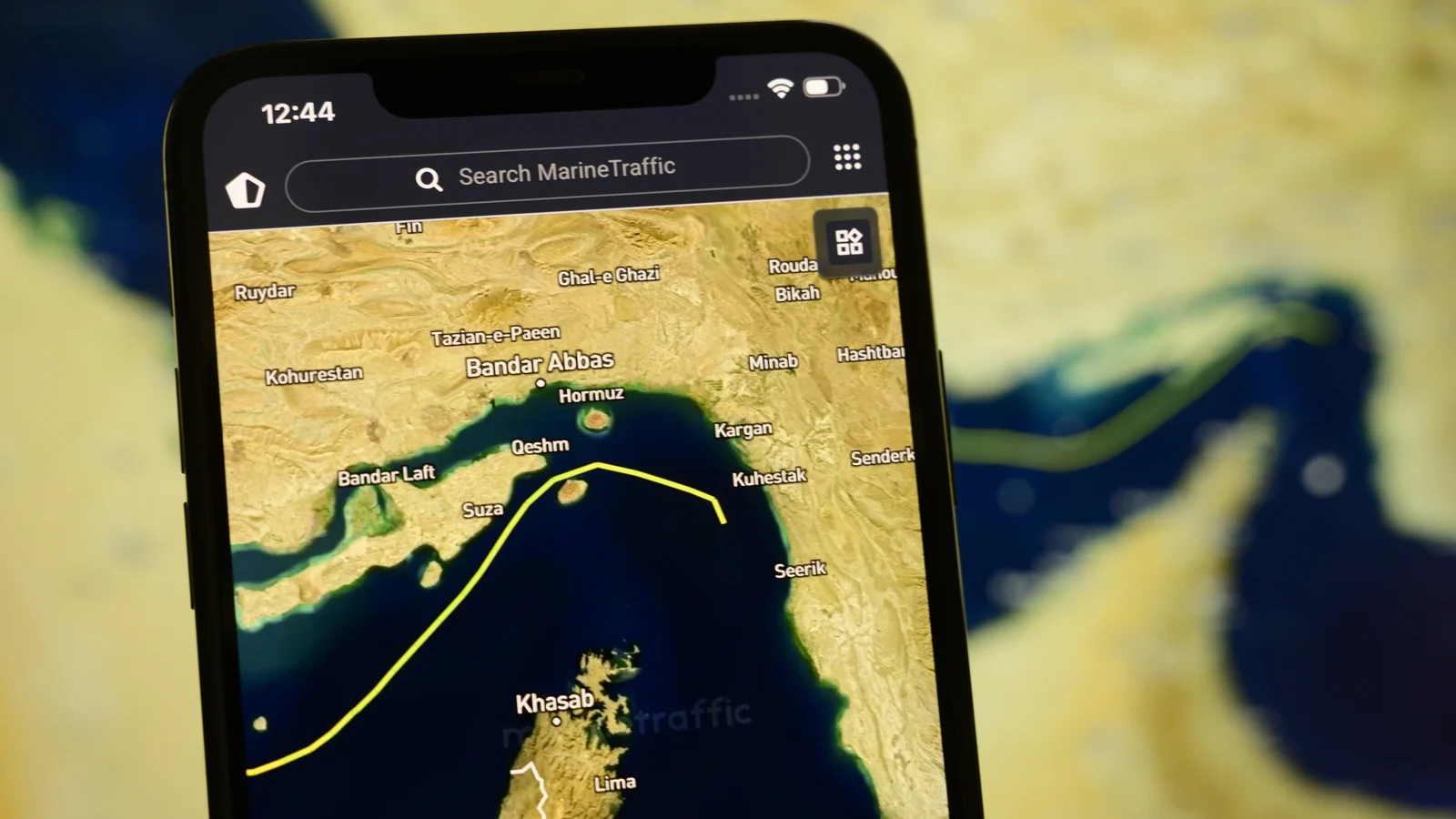
To understand timing, look at the map. The Strait of Hormuz—a narrow, bottle-shaped channel linking the Persian Gulf to the open waters—carries roughly one-fifth of the world’s crude oil and liquefied natural gas. Before recent hostilities, between 125 and 140 vessels crossed it each day. Since an escalation in the region, those transit numbers have plummeted as insurers and shippers reroute or pause voyages, and producers temporarily shut in volumes to limit exposure.
“When you cannot rely on a corridor for the movement of energy, you start to rethink alliances and distribution strategies,” observed Layla Hafez, a maritime risk analyst in Dubai. “The UAE is betting that by stepping outside OPEC+ it will be nimbler in finding buyers and routes, and quicker to market when the fog clears.”
Still, the pull of global averages is unavoidable. The International Energy Agency noted that OPEC+ accounted for about 48% of world oil output in February—but that share slid to roughly 44% in March, and looks set to shrink further as production shut-ins deepen. The UAE had been the group’s fourth-largest producer, so its departure is not symbolic only; it trims a chunk of the cartel’s clout.
Markets, politics and a little bit of theatre
Markets reacted with a mixture of surprise and relief. Brent crude, which had been flirting with volatile gains, saw its rally tempered after the UAE’s announcement. Traders are torn: on one hand, less unity in OPEC could mean weaker price discipline; on the other, real-world supply constraints at chokepoints maintain upward pressure.
“This opens a window for the UAE to capture more market share when things normalise,” said Monica Malik, chief economist at ADCB. “They produce some of the lowest-cost and lowest-carbon crude available, which is a commercial edge. For consumers and the global economy, that could be a win—if the oil flows.”
Beyond markets, the decision reads as geopolitical theatre with real stakes. The UAE has tightened strategic ties with the United States and Israel in recent years—part of a broader recalibration that included the 2020 Abraham Accords. Some analysts view the exit as aligning with a foreign policy that increasingly pursues bilateral leverage over multilateral cartel solidarity.
“Energy is power—commercially and diplomatically,” said Daniel Fraser, a policy fellow at an energy think tank in London. “Operating outside OPEC lets Abu Dhabi use oil as a direct instrument of statecraft: who to supply, at what terms, and in what quantities.”
Voices from the docks and the coffee shops
At Mina Zayed port, a longshoreman called Hassan shrugged off the jargon. “We move barrels. We don’t worry who sits in meetings. If the market pays, the boats go,” he said, leaning against a crate with the dust of decades on his hands. His comment reflected a practicalism shared by many on the ground.
But not everyone believes the exit is purely pragmatic. “It’s also signaling,” said Anwar Gargash, the UAE president’s diplomatic adviser, at a regional forum shortly before the announcement. “We are recalibrating how we protect our interests when threats to maritime security persist.”
Environmentalists have a different lens. The UAE has marketed its oil as among the world’s lowest in emissions intensity. Leaving OPEC, some say, could permit more aggressive marketing of those barrels as part of a transition narrative—raising questions about how “low-carbon oil” fits into net-zero pledges.
Wider ripples: what this means for global energy governance
So what happens next? For OPEC, cohesion has always been a badge of authority. The club’s ability to present a united front affects market psychology as much as physical supply. A high-profile member walking away chips at that image—regardless of how much oil the UAE actually sells independently.
For consumers and importers, there are both dangers and opportunities. Fewer formal production constraints could mean more competitive pricing, but only if exporters can physically move oil around chokepoints that are increasingly contested. For policymakers, the UAE’s move underlines a larger trend: states seeking flexible, bilateral arrangements over rigid multilateralism in times of crisis.
And there’s the human element: dockworkers, traders, policy advisers, mothers making dinner—the lives that ripple from every decision behind closed doors. “I only hope this brings stability,” said Aisha, a teacher in Abu Dhabi. “We have seen too much unpredictability. If they can deliver predictability, then it’s worth it.”
Questions for us all
As you read this from across time zones—cafes in Nairobi, living rooms in London, offices in Seoul—ask yourself: how do we balance national sovereignty with global commons? Is energy security a local problem or a shared responsibility? The UAE’s departure from OPEC is more than an oil story; it’s a mirror reflecting how nations are rewriting the rules of cooperation in an era of competing crises.
In the coming months, watch the tankers and the headlines. Watch which buyers knock on Abu Dhabi’s door. Watch prices and listen to the negotiations that will test whether the global energy map is being redrawn or merely sketched in fresh ink.
For now, the skyline continues to glitter and the dhows still bob in the harbor. Decisions have been made. The hard work—the diplomacy, the shipping, the market adjustments—starts now.