A pop star fights the machine: Taylor Swift’s bid to trademark her face and voice
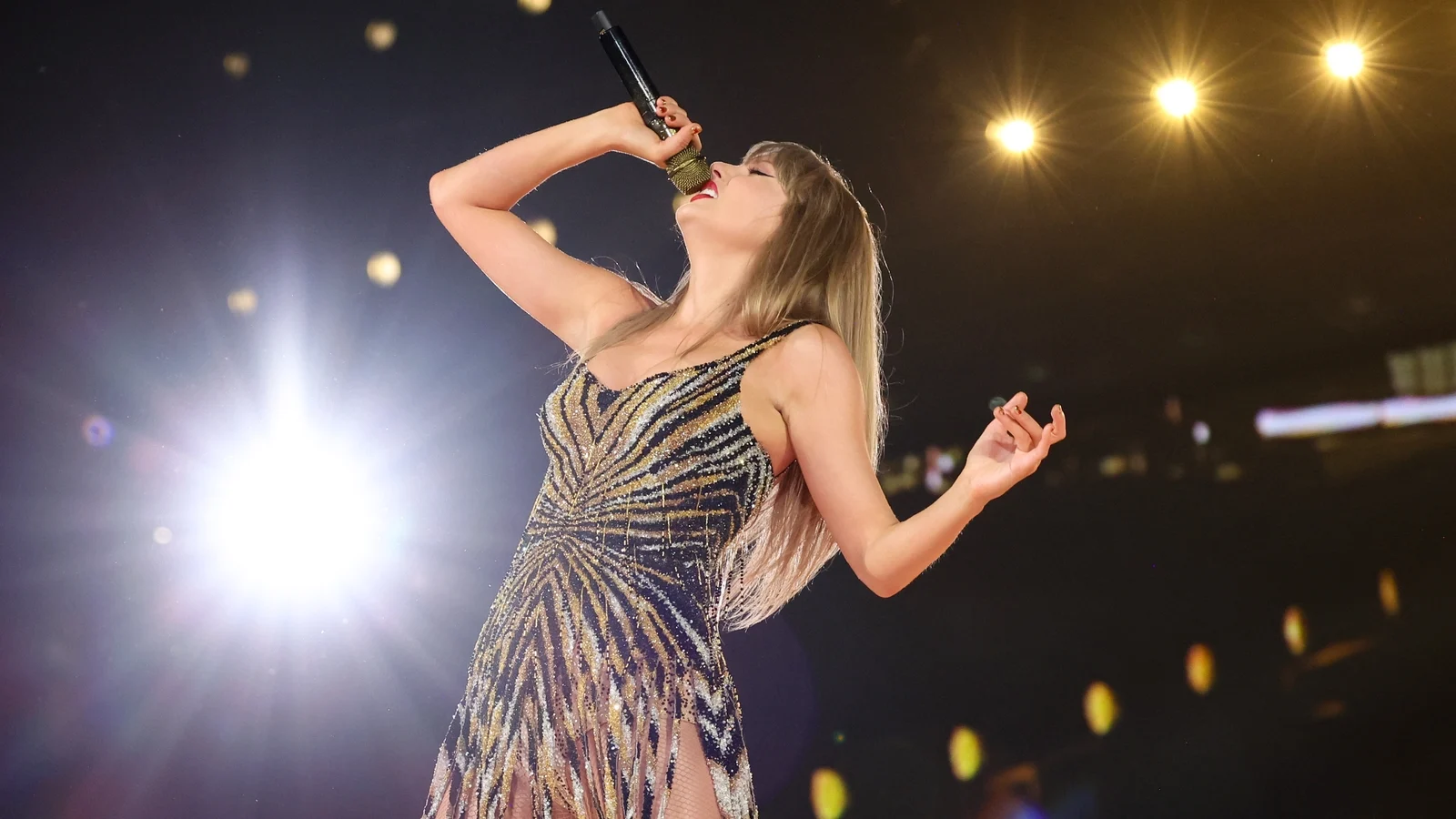
Picture a stadium awash in purple light, a glittering bodysuit catching a thousand flashes, and the unmistakable cadence of a voice that has become the soundtrack to countless lives. That image — a fragment from Taylor Swift’s Eras tour — is now more than a memory or a marketing moment. It has become the frontline in a growing battle over identity in the age of artificial intelligence.
This week, Swift, one of the world’s most recognisable artists, filed three US trademark applications seeking protection not just for a photograph of herself but for the sound of her spoken voice. The filings include an Eras tour image used to promote her Disney+ docuseries and two short audio clips: one with the simple introduction “Hey, it’s Taylor Swift,” and another promoting a new album.
To the casual fan, the move may read as a savvy celebrity protecting her brand. To many legal observers and technologists, it reads as a pre-emptive strike — a creative use of a legal toolbox to combat a new kind of forgery: synthetic likenesses and voice clones that can be produced in minutes by consumer apps.
What exactly did she trademark?
Swift’s filings are specific. Alongside the image — described in the paperwork with a level of sartorial detail that would make a costume designer smile — the sound samples are being offered as evidence of commercial use. In trademark language, she’s not simply asking for exclusive rights to a name or logo; she’s asking the federal register to recognise the way she looks and the way she sounds as identifiers that point back to her in commerce.
- Image: Taylor in a multi-coloured iridescent bodysuit, pink guitar and silver boots, on a pink stage.
- Audio clip 1: “Hey, it’s Taylor Swift.”
- Audio clip 2: Short promo mentioning a new album and pre-save action.
Why this matters now
“We’re at a tipping point,” said Asha Patel, an AI researcher who studies synthetic media. “Ten years ago, a voice deepfake might have been crude. Today you can produce a convincing replica with a handful of public recordings and a few clicks.”
That rising fidelity has pushed artists and public figures to think beyond copyright and the right of publicity — the two historic ways celebrities have defended their names and faces. Copyright protects creative works like songs and photos. Right of publicity laws vary by state and let people control commercial uses of their identity. But neither tool was designed with an internet where an artificial voice can be generated, tailored, and distributed globally in seconds.
“Trademark law brings something different to the table,” explained Lena Morales, a New York attorney who specialises in entertainment and IP law. “Trademarks prevent confusingly similar uses in commerce. If someone sells a product or service using a voice or image you’ve trademarked, that’s directly the kind of commercial confusion trademark is meant to stop.”
Not the first, but perhaps the boldest
Swift is not the first celebrity to think this way. Actor Matthew McConaughey recently told the Wall Street Journal he had moved to trademark his voice and image for similar reasons. But applying for a trademark on a spoken voice still occupies legal gray space in the United States — courts haven’t fully tested how far such protections can stretch.
“Sound trademarks are not new — think of the NBC chimes — but voice identity as a registered mark tied to a living person? That’s a frontier,” said Morales. “If these applications are approved, they could create a new precedent and give public figures a stronger claim when AI-generated imitations are used commercially.”
How would this be enforced?
That’s the rub. Trademarks grow teeth when they’re enforced — by cease-and-desist letters, litigation, or settlements. Imagine an app that offers “sing like Taylor” with a synthetic vocal track included. Or a bogus endorsement in which a cloned voice promotes a product overnight. Swift’s team could argue that either circumstance creates a likelihood of consumer confusion and therefore a trademark violation.
“The problem is scale,” said Marco Ruiz, a copyright and AI policy fellow. “Digital markets are global and fast. Enforcement actions often move at human speeds while AI clones proliferate at machine speeds.”
Voices from the crowd
At an outdoor café near one of Swift’s concert cities, fans I spoke to felt a mix of admiration and alarm. “I don’t want a robot singing my songs or telling me to buy something in her voice,” said Priya, a 28-year-old graphic designer and longtime fan. “Her voice is part of the art.”
“I worry about misinformation,” added Jamal, a schoolteacher who remembers fake news episodes that used doctored audio. “If someone can put words into a celebrity’s mouth convincingly, it’s not just a commercial issue — it’s a political and social one.”
Bigger questions about identity, consent and the future of work
Swift’s move speaks to larger, thornier questions. Who owns a human voice when it can be copied and monetised without consent? How do we balance artistic freedom and parody against the harms of impersonation? And what does this mean for session singers, voice actors, and producers who increasingly rely on AI tools in their workflows?
There’s also an economic dimension. Music is an industry that has seen revenue models shift dramatically in recent decades. A voice, once a singular instrument, has now become a potential product in and of itself. “The commodification of voice is accelerating,” said Patel. “We’re seeing a marketplace where identity itself becomes tradeable.”
What to watch next
Legal scholars will be watching the US Patent and Trademark Office for signs of acceptance or resistance. Technology companies and start-ups that offer voice-cloning services will be watching too, and so will artists around the world, wondering if this path offers a template they can follow.
For everyone else — the fans, the consumers, the casual internet users — the issue poses an invitation to think about how we want technology to respect human identity. Do we want voices to remain anchored to the people who created them? Or are we comfortable with perfectly plausible imitations floated into the ether — indistinguishable to the ear?
It’s a legal tussle and a cultural question at once. Taylor Swift’s filing is more than a business move: it’s a statement that in a world where things can be faked with terrifying ease, the human element — a timbre, a pose, a lived history — still matters.
So here’s a question for you: if an algorithm could speak with the exact warmth of someone you love, would that be comfort or theft? And who, in the end, decides?