Brasília Stuns: How a Parliamentary Override Could Free Brazil’s Most Polarizing Figure
They cheered like strangers reunited. In the cool, concrete amphitheatre of Brazil’s National Congress, a chorus of claps and hollers rose up, cutting through Brasília’s dry air. Some lawmakers embraced; others raised their phones to broadcast the moment, faces flushed with triumph. Outside, the city’s modernist geometry—the sweeping curves of Oscar Niemeyer’s buildings and the solemn lines of the Praça dos Três Poderes—looked on like an indifferent witness to another chapter of Brazil’s political drama.
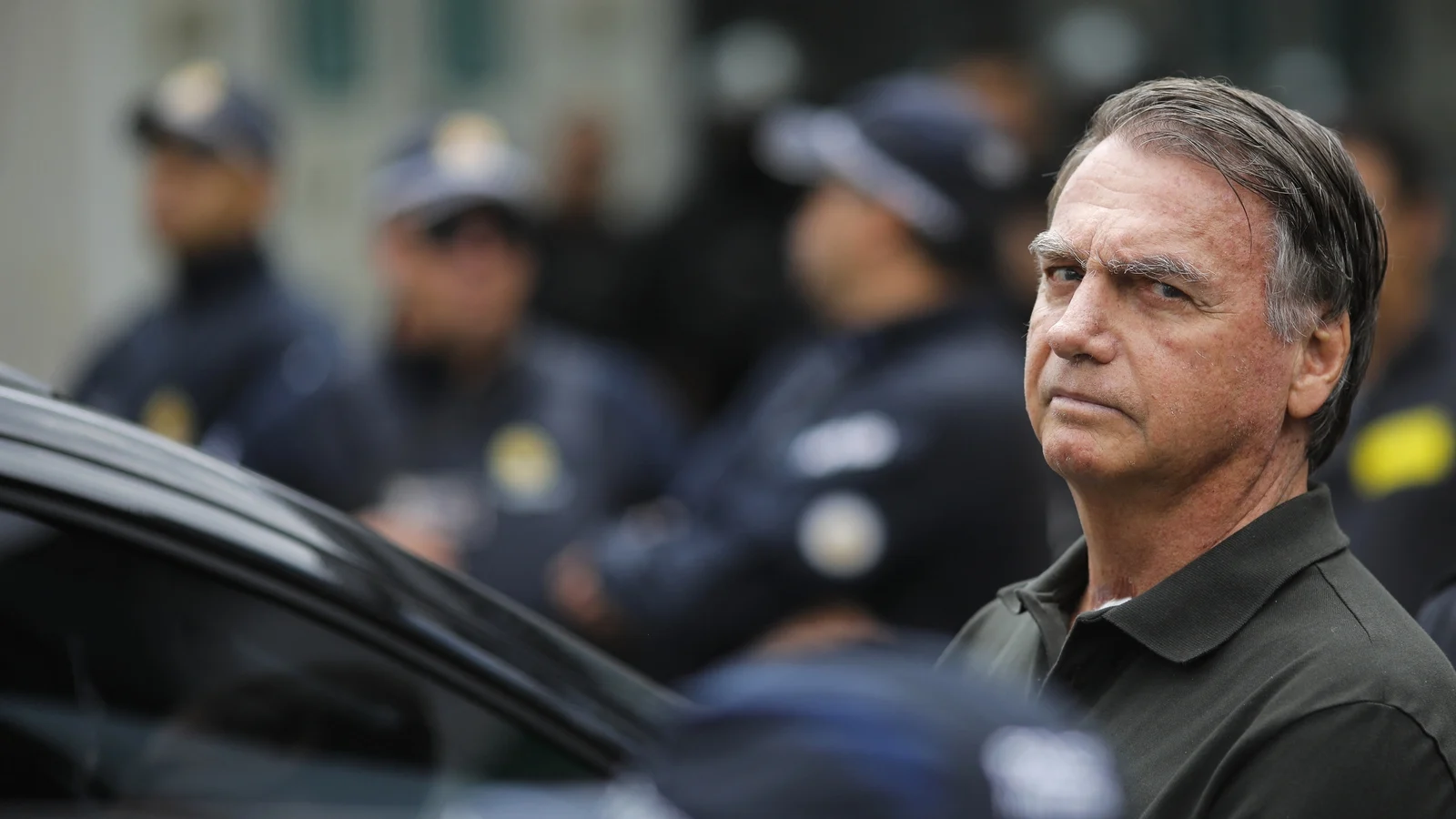
In a raw and dramatic session, Brazil’s Congress overturned President Luiz Inácio Lula da Silva’s veto on a law that significantly reduces how prison time is calculated—effectively shrinking the 27-year sentence imposed on former president Jair Bolsonaro to roughly the length of a summer internship.
The math was stark and decisive: the Chamber of Deputies carried the override by 318 to 144, and the Senate followed with a 49 to 24 vote. The result is not only a personal reprieve for Bolsonaro but a political earthquake that reverberates through institutions, neighborhoods, and the living rooms of millions who have watched Brazil’s democracy strain and snap over the past few years.
The mechanics — and its beneficiaries
At the heart of the controversy is a technical change in sentencing calculations. The new law alters how multiple convictions are aggregated, providing mechanisms that allow much of a cumulative sentence to be served concurrently rather than consecutively. For Bolsonaro, who was convicted last year in a high-stakes trial for plotting to overturn the 2022 electoral result, the effect is dramatic: a sentence of nearly three decades pared down to something in the realm of two years and change.
But this is not just about one man. The legal tweak potentially benefits dozens of others—co-defendants from Bolsonaro’s coup trial and many of those jailed after the 8 January 2023 attacks on Brasília’s public buildings. That day, thousands of Bolsonaro supporters stormed the Esplanade of Ministries and the legislature, leaving the nation stunned and drawing instant comparisons to the US Capitol siege of January 6, 2021.
Voices from the city
“We felt the city hold its breath,” said Mariana Alves, a café owner near the Congress who watched the vote unfold on a restaurant television. “Some customers celebrated like it was Carnival; others left without saying a word. There’s no middle ground here.”
A taxi driver who spent the morning making runs between government buildings and the rodoviária gave a different view: “For many people I talk to, Bolsonaro is a martyr. For others, this is proof the system bends to the powerful,” he said, flicking his hands in exasperation. “Both are true in Brazil today.”
From the corridors of power, a senior lawmaker in the governing coalition—speaking on condition of anonymity—described the feeling as “a deep institutional failure.” “When Congress overrides a veto like this, it’s not just a political rebuke to the president, it signals that the checks and balances are fraying,” they told me.
Politics on a knifepoint
For President Lula, the defeat is the second significant setback in as many days. Days earlier, the Senate rejected his nominee for the Supreme Court, a rare public rebuke that underlined the depth of opposition he now faces from a conservative-leaning legislature. That rejection was the first of its kind in decades, a vivid reminder that Lula’s ambitions—he served two terms from 2003 to 2010 and returned to power in 2023—are complicated by a Congress that no longer moves to his drumbeat.
“This isn’t only about revenge politics,” said Dr. Helena Carvalho, a constitutional law scholar at the University of São Paulo. “It’s about how institutions interpret accountability. Some see Congress asserting its independence; others see a legislative body weaponizing legal loopholes to protect a political ally. Both narratives are dangerous for democratic norms.”
What this could mean
The practical implications are immediate and unsettling.
- Individuals jailed after the 2023 attacks could see their sentences reduced or reinterpreted.
- Bolsonaro, currently serving his sentence and recently moved to house arrest after hospitalization for bronchopneumonia, could return to a more active role sooner than many imagined.
- Trust in institutions—already brittle—may erode further, widening the gap between a politically engaged public and the systems designed to hold leaders to account.
“We have to remember: laws are tools. Whether they build justice or tear it down depends on who holds the hands that wield them,” said Rafael Mendes, director of a Brasília-based watchdog NGO monitoring political violence.
Local color and the personal stakes
Walk around the capital this afternoon and you’ll see signs of a city split down its avenues. A street vendor sells pastel and caldo de cana to a line of civil servants heading home from late sessions. A mural near the Congress, painted after the January 2023 riots, shows cracked columns and the words “Nunca Mais” (Never Again) fading where paint meets graffiti.
Families of those detained in connection with the riots have been camped outside detention centers, some clutching photos of relatives, others clutching legal papers. “He’s not a criminal,” said Ana Costa, whose brother was detained. “He believed in a cause. Now the law is shifting—so maybe there will be justice.”
Others worry that the move will embolden the very forces that once stormed the institutional heart of the country. “This is a message to anyone who thinks they can wield violence to change political outcomes,” said one former prosecutor. “If sentences can be reshaped like this, deterrence weakens.”
Beyond Brazil: a ripple in global democracy
This is not an isolated story. From Europe to Latin America to North America, democracies have grappled with populist leaders who test the boundaries of constitutional order. Brazil’s moment is a vivid case study in how legislatures, courts, and executives can pull in opposite directions—and what happens when they do.
Are we watching a nation heal through the mechanics of law, or are we witnessing the legal scaffolding that can shelter those who undermine democratic norms? It’s a hard question—one that circles back to everyday life in Brazil: How do you reconcile a thirst for justice with the hunger for political victory?
“For Brazilians,” Dr. Carvalho said, “the answer will be written not only in legal statutes but in the polling booths, in the courts, and in the stories people tell their children about what a democracy should be.”
What’s next?
Congress has spoken, and for now, Bolsonaro’s time behind bars appears dramatically reduced. The Supreme Court, advocacy groups, and international observers will no doubt weigh in. Legal appeals are likely, and the political fallout will be measured in campaigns, protests, and perhaps more court battles.
As you read this, ask yourself: what kind of democracy do you want to see exported as a model, and what safeguards are needed so that laws protect the people—not just the powerful? Brazil’s answer will be consequential not only for its 215 million citizens, but for the global conversation about power, accountability, and the fragile art of self-government.