Half a century waiting: two executions, two claims of innocence, and a country wrestling with death
The sun had already dipped behind the pines by the time state officials in Florida confirmed what neighbors and activists had feared: James Hitchcock, 70, was put to death by lethal injection at the state prison in Raiford. He had spent nearly 50 years on death row for the 1976 murder of his 13-year-old step-niece, Cynthia Driggers—a sentence imposed in 1977 that outlived friends, lawyers and a generation of witnesses.
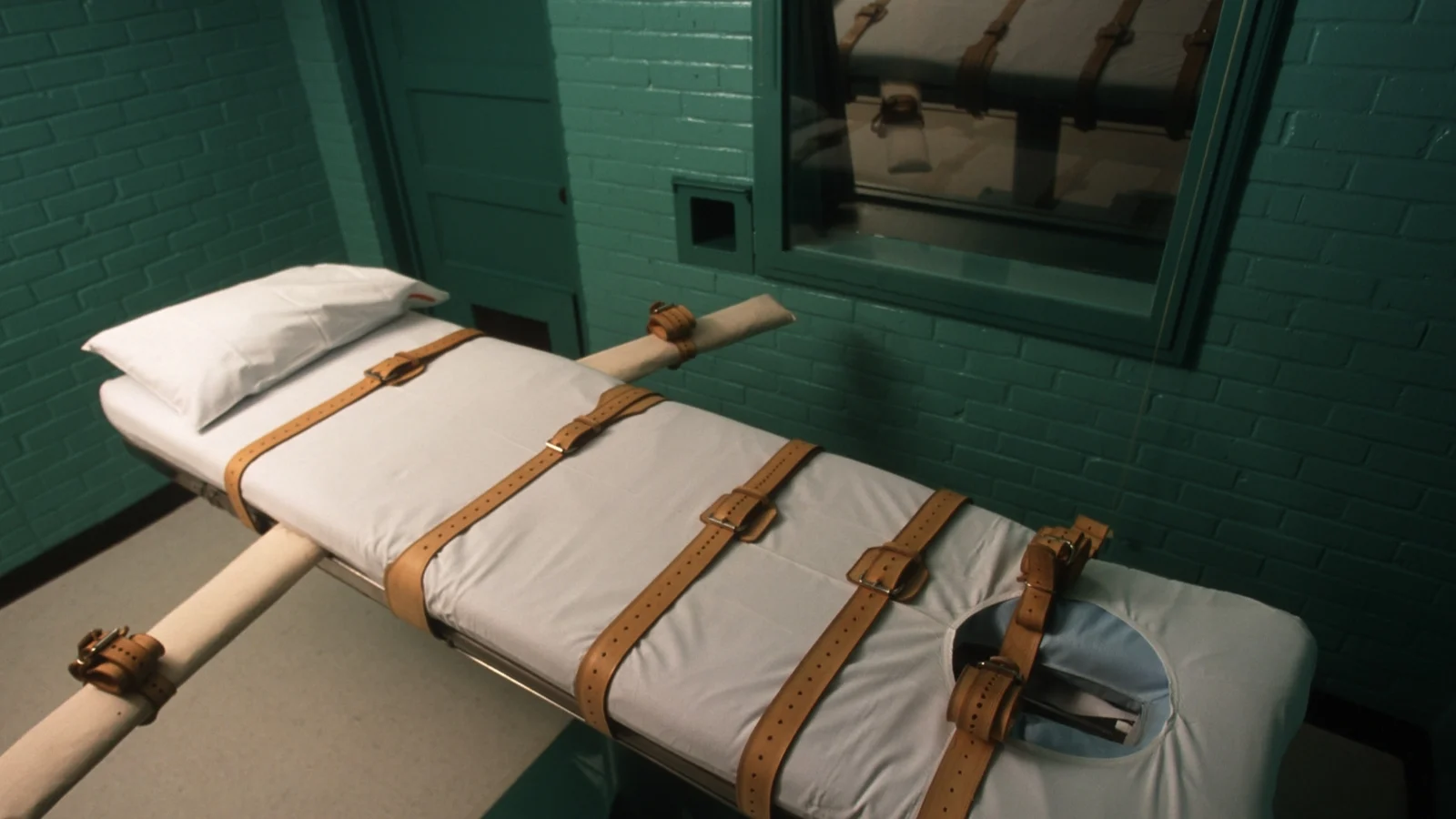
Across the country, in Texas, another needle was readied and another life ended. James Broadnax, 37, who had been convicted in the 2008 killings of two music producers, was executed that same evening. Both men issued last statements insisting they were innocent. Both left behind questions that ripple beyond prison walls: Who decides finality? How long is too long to wait for death? And what does justice look like in an age of forensic advances, shifting public opinion, and growing unease about the methods used to carry out sentences?
Raiford at dusk: the peculiar geography of punishment
Drive north from Jacksonville and the highway forks into a landscape of scrub pines, cattle pastures and small towns where Confederate flags hang from porches. The Florida State Prison in Raiford sits tucked into this quietly American terrain, a place that looks placid from a distance and merciless up close.
“You can smell the humidity, see the barbed wire against the orange light, and it feels like time gets pulled into a slow squeeze,” said a former corrections chaplain who worked at Raiford two decades ago. “For some men, the years hollowed them out; for others, the years made them a museum of appeals and legal filings.”
Hitchcock’s case became a prism for that slow squeeze. He was arrested in the mid-1970s, convicted and sentenced during a period when the death penalty was, in many parts of the United States, a reflexive answer to violent crime. But the decades that followed were not kind to simple narratives: advances in forensic science, shifting prosecutorial priorities, and an increasingly fractious public debate about capital punishment slowly complicated the picture.
Two executions, two final words
At 6:12pm local time in Florida (11:12pm Irish time), state records show Hitchcock was pronounced dead. At 6:47pm in Texas (12:47am Irish time), Broadnax followed. Their last statements—letters and brief spoken words conveyed by corrections officials—were stark and unanimous in one respect: both men continued to claim innocence.
“No matter what you think about me, Texas got it wrong,” Broadnax said in his final remarks, according to statements released by the Texas Department of Criminal Justice. “I’m innocent.”
Hitchcock maintained his innocence for decades, raising questions that some lawyers and advocates say were never fully explored. “The longer someone sits on death row, the more likely it is that the case becomes about procedure rather than truth,” said Dr. Ana Mendes, a criminal law scholar who has studied lengthy appeals processes. “When you have 30, 40, 50 years between crime and execution, memories dim, witnesses die, and what’s left is paper.”
Numbers that don’t sit still
Look at the statistics and you see a country in motion. This year, ten executions have been carried out in the United States—six in Florida, three in Texas and one in Oklahoma. Those figures sit against a backdrop in which 2024 saw 47 executions nationwide, the highest number since 2009, when 52 people were put to death.
Florida led the pack last year with 19 executions, a striking tally in a nation where the death penalty now sits uneasily with the public. Thirty-nine of last year’s executions were by lethal injection, three by firing squad, and five by nitrogen hypoxia—a newer method that involves pumping nitrogen gas into a mask and allowing the person to suffocate.
That use of nitrogen has been condemned by United Nations experts as cruel and inhuman. “To introduce a method whose physiological effects are not fully understood and whose deployment is shrouded in secrecy is to gamble with human dignity,” said a U.N. special rapporteur in a statement earlier this year.
Methods, morality and the international gaze
Execution methods are not merely technical details; they are symbols of how a society imagines the boundary between punishment and barbarity. The debate reached the federal level in April, when the Department of Justice announced it was seeking to broaden the arsenal of execution methods in federal cases, adding firing squad, electrocution and gas.
“When we talk about diversifying methods of execution, we are really talking about the limits of the state’s power to take life,” said Raymond Kline, a death-penalty defense attorney. “Plus, these aren’t just choices among technologies—they’re statements about what we will tolerate.”
Globally, the trend tilts away from capital punishment: 23 U.S. states have abolished the death penalty, and three others—California, Oregon and Pennsylvania—have moratoriums on executions. Internationally, dozens of countries have eliminated it from law or practice, casting the U.S. into an increasingly small club of active executioners.
Voices from the margins
On the same day as the executions, vigils flickered to life in disparate places: a small park in Tallahassee where candlelight reflected off damp grass, an Austin square where musicians mourned two producers killed 17 years ago, and a downtown tableau where activists chanted against a system they compared to a slow-acting death.
“I stand with victims’ families,” said Sandra Mullins, whose cousin was murdered in 1993 and who supports capital punishment. “But I also wonder if this final act brings peace—or just more violence.” Nearby, a young law student named Jordan, who volunteers with an innocence project, held a cardboard sign that read: “We should not speed the state’s worst mistake.” He added, “If there’s a chance we killed the wrong person, no one should celebrate.”
What should the reader ask?
As you read this, consider the scale and the strain: a man waiting nearly half a century for a sentence that finally arrives just hours before midnight; another, decades younger, making the same claim of innocence at his end. Are these anomalies or artifacts of a system grappling with its own contradictions?
Ask yourself: does lengthy delay before execution make punishment more or less just? Does the persistence of execution in a minority of states reflect democratic will—or political calculation? And in a world where forensic science keeps rewriting past certainties, should a justice system that relies on human fallibility be permitted to carry out irreversible sentences?
Beyond the headlines
These two deaths are not isolated incidents; they are chapters in a longer American story about retribution, doubt and policy. They intersect with broader themes—racial and economic disparities in sentencing, the modernization of legal tools, and the international debate over human rights and state-sanctioned killing.
For families on both sides, for lawyers and for the public, the work of grappling with these questions is far from over. “We should be brave enough to admit what we don’t know,” Mendes said. “And humble enough to question what we assume we do.”
As the lights go down at Raiford and the Texas prison, and as candlelight vigils burn out across two states, the nation continues to argue about the meaning of justice. It is a conversation that presses on time itself—how long we can wait, and whether that waiting ever makes an irreversible outcome any fairer.
- Executions this year: 10 (6 Florida, 3 Texas, 1 Oklahoma)
- Executions last year: 47 (most since 2009)
- States without the death penalty: 23
- States with moratoriums: 3 (California, Oregon, Pennsylvania)