Shock in the Outback: A Town Shattered at Dusk
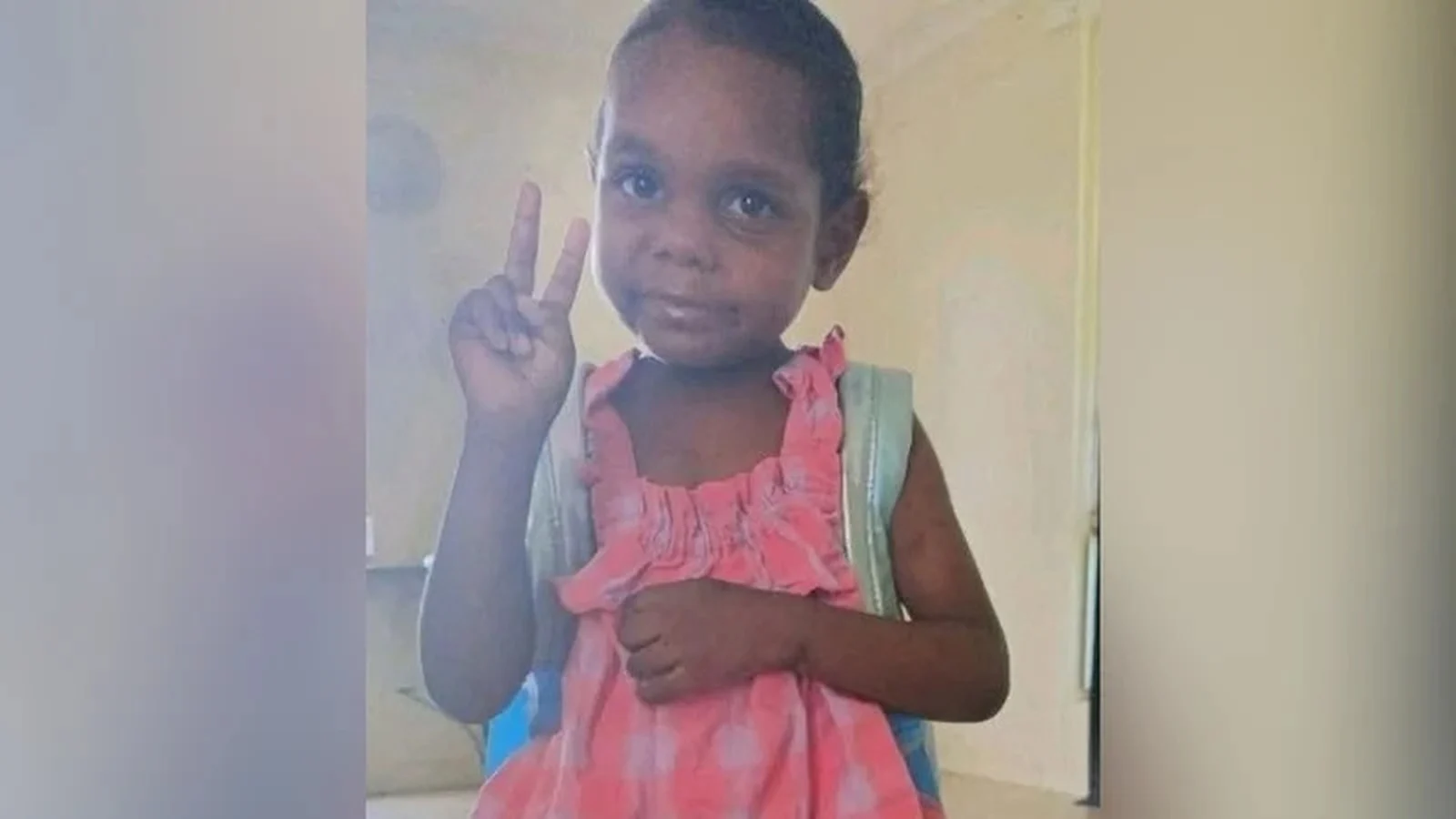
There are places where the earth seems to remember everything. Alice Springs, a red-sand knot in the centre of Australia, is one of them. On a recent late afternoon, as the sun pulled its gold blanket over the MacDonnell Ranges, a search party of neighbours, family and friends pushed into the dense spinifex and mulga that fringe the town. What they found stopped people in their tracks: the body of a child known to her people as Kumanjayi Little Baby.
The name itself carries culture and care — an Indigenous custom that protects the personal name of someone who has died by referring to them in a way that keeps their spirit and family dignity intact. The discovery of Kumanjayi’s body ignited grief, fear and, within hours, open fury.
Arrest and the Charges That Followed
Police announced that a 47-year-old man, identified as Jefferson Lewis, had been charged with murder. Lewis, who had presented himself to one of the makeshift camp communities on Alice Springs’ outskirts, was also accused of two other offences that the court has suppressed from public release.
“This is a devastating, horrific event,” said Northern Territory Police Commissioner Martin Dole, his voice edged with the solemnity that such a tragedy demands. “Our primary concern remains with the child’s family — with their loss and their need for answers.”
Lewis, a man who had recently been released from custody and who carries a history of convictions for physical assault, was due to appear in court in Darwin. For many in Alice Springs, the news that someone had handed themselves in offered only a brittle comfort; the hurt was already spilling onto the streets.
How the Arrest Unleashed Anger
Within hours of the arrest, roughly 400 people from local communities gathered. What began as mourning and a demand for justice turned volatile. Demonstrators set fires, hurled rocks and bottles, and in footage that played across national broadcasts, voices chanted for payback.
Police used tear gas to break up the crowd. Ambulances and fire trucks — themselves damaged in the unrest — were blocked and pelted; several officers and medical staff were injured. One local nurse, who asked to be named only as “Maya”, described the scene with a tired voice: “You come here to help, to put people back together, and you end up needing to be put out of the way because grief turned into something else. It’s heartbreaking.”
Prime Minister Anthony Albanese, local elected officials and a family spokesperson implored the community to step back from violence. “My plea is simple,” the Prime Minister said. “We must not allow grief to be weaponised against our own communities. We must seek justice through law and through care.”
Small Town, Big Historical Wounds
To stand in Alice Springs is to live within a palimpsest — ancient Indigenous cultures layered beneath the marks of colonisation and modern neglect. Aboriginal and Torres Strait Islander peoples have lived on these lands for at least 50,000 years. Today, they make up about 3.8% of Australia’s population, yet they are concentrated in specific towns and regions where generations have faced systemic disadvantage.
In Alice Springs itself, roughly one in five residents identify as Indigenous. Many live in “town camps” — small communities on the edges of the urban town centre, often born of displacement and marginal housing policy. These camps can be tight-knit and resilient places, rich with songlines and kinship ties, but they are also places where overcrowding, limited services and chronic underinvestment are daily realities.
“You can’t separate what happened from how we live,” said Aunty June, a local elder who has spent decades advocating for youth services in the town. “Kids here are beautiful, smart, and stubborn in a good way. But there’s trauma that follows families — from stolen generations to present-day poverty. When something like this happens, it hits every wound we carry.”
Numbers That Tell a Story
Hard statistics underscore what people feel in their bones. Indigenous Australians are a small percentage of the national population but are dramatically over-represented across indicators of disadvantage — in health outcomes, educational completion and the criminal justice system. In many jurisdictions, Indigenous people make up a disproportionately large share of the prison population despite their small share of the total population.
These disparities are the result of centuries of policy decisions, neglect and structural racism. They also shape the volatility of moments like this one: a devastating death colliding with an environment of collective hurt.
Voices from the Ground
“When a child is taken, that feeling of helplessness becomes a roar,” said Liam, a young father who attended the search. “You try to channel it into action, but sometimes grief is heavier than action. We want protection for our kids. We want safe places to raise them.”
Legal voices have also been careful. Dr. Helen Reyes, a criminologist who has worked in remote Northern Territory communities, warned: “Anger is understandable; vigilante responses only perpetuate cycles of harm. What’s needed is transparent policing, culturally informed support for the family, and fast, clear legal processes so the community can have faith that justice will be served.”
Beyond the Headlines: What Comes Next?
There are practical questions and moral ones. Will the family receive culturally appropriate supports to grieve? Will police engage local leaders in the investigation and in de-escalating tensions? Will authorities invest more in housing, healthcare and education in town camps so tragedies don’t reverberate as they have?
The answers are neither quick nor merely bureaucratic. They require a willingness, nationally and locally, to see the human faces behind statistics and to commit resources not only in the immediacy of crisis but in the long work of repair.
As night falls over Alice Springs, campfires still burn in circles where people sit and speak. Stories are told in whispers and louder laughter, in shared tears and in the silence of those who cannot find words. Kumanjayi Little Baby’s loss has become, for many, a mirror held up to the nation.
Questions to Carry Forward
What does justice look like for a community that has been carrying intergenerational pain? How can law, health and social systems better join forces to protect the most vulnerable? And crucially: how do we keep the grief from being transformed into more harm?
Out here, in the red dust, the questions feel urgent and intimate. They do not admit easy answers. But if this moment leads to honest listening, meaningful investment and the kind of community-led change Aunty June dreams of, then perhaps a terrible loss can be a turning point rather than a repeating refrain.
If you are reading from afar, know this: the story is not only about one town or one night. It is about how societies care — or fail to care — for their children, and how history, policy and everyday choices make some lives more fragile than others. What will we, as a nation and as citizens of a connected world, choose to do with what we have seen?