When a Quiet Leipzig Street Turned Into a Scene of Loss: On Cars, Minds and Public Safety
On a spring afternoon in Leipzig, sunlight warmed the pale stone facades of the old city centre. Cafés hummed. Students shuffled between lectures. Then a car, driven at speed down a main thoroughfare, fractured the ordinary.
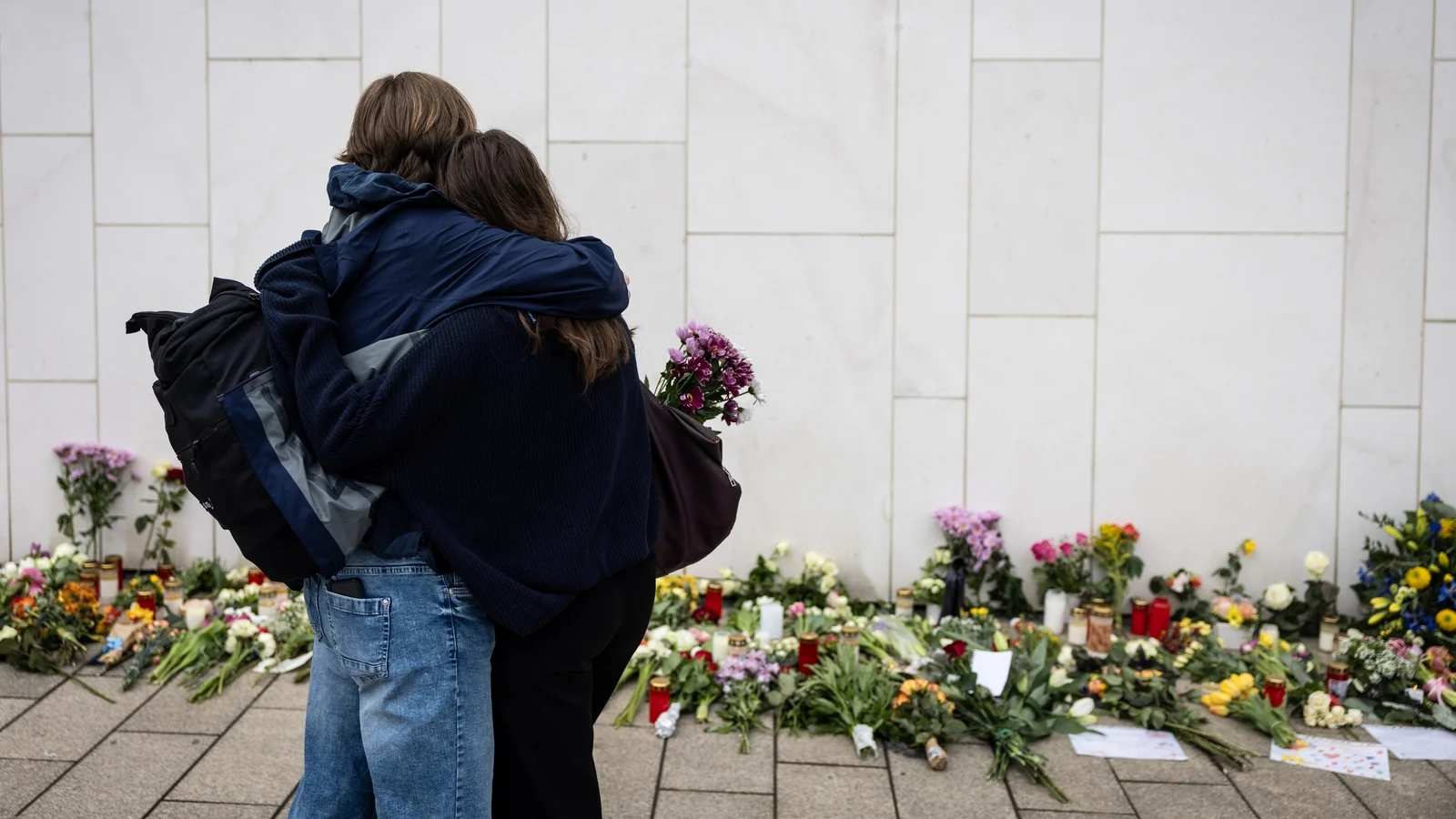
By the time the sirens faded into the evening, two lives had been snuffed out — a 63-year-old woman and a 77-year-old man — and half a dozen more lay wounded, some fighting for their recovery. More than eighty people sought help for shock and psychological trauma. The city’s pulse skipped; a makeshift memorial of candles and flowers grew overnight beneath the shadows of the churchyard.
What happened, and what we know so far
Authorities say a 33-year-old German man steered a vehicle into a crowd in Leipzig’s historic centre. He was arrested at the scene. Prosecutors allege the attack was deliberate and that the man “wanted to kill and seriously injure as many people as possible.”
A judge has since ordered him into a psychiatric hospital, citing “compelling reasons” to suspect he acted with significantly diminished responsibility. Regional health officials say the man had recently been treated in a specialist clinic from 17 to 29 April — voluntarily — and that during that stay he was not assessed as an acute danger to himself or others.
Investigators emphasize they currently see no religious or political motive. They also note past contact this year between the suspect and police for threats and defamation-related offences, though details remain scarce.
Faces in the crowd: the human footprint of one instant
At a candlelit shrine near the scene, I found people tracing the outline of familiar streets with trembling hands. “I come here every week,” said Dalyan Unland, a 20-year-old university student, voice low. “That pavement, that bench — it’s where my friends and I meet. Seeing it like this feels like losing a small part of my life.”
Heidi Rheinsdorf, 32, had taken a day trip to Leipzig from a neighbouring town to stand with the community. “I am shocked,” she said. “There’s a helplessness that follows when something senseless happens in a place you think is safe.” A young woman, Lynn Sue Leiste, told me she fought to lay two white roses at the memorial; her sister had been on the street at the time. “People say he must be locked up forever,” she said. “But locking someone away doesn’t heal the hole he made.”
The ripple effects of violence
Beyond the victims and their families, the fallout is diffuse. Shopkeepers with boarded windows recount slow days and customers who avoid certain streets. Therapists report a spike in calls. “Trauma travels,” says Dr. Miriam Hoffmann, a clinical psychologist in Leipzig. “Even those who witnessed from a distance can carry anxiety that affects sleep, work and relationships for months.”
Why cars, and why now?
Vehicle-ramming incidents are not new, but they have acquired renewed notoriety in recent years, as attackers exploit the accessibility of vehicles and the vulnerability of crowded public spaces. Germany has seen several such attacks in recent memory — including an assault on a Christmas market in Magdeburg in 2024 — and cities across Europe and beyond have wrestled with how to protect open, civic life without turning streets into fortresses.
Urban planners and security experts note that cars are attractive instruments to those who want maximum harm with minimal planning. “A vehicle is an everyday tool,” says Stefan Krüger, a public safety analyst. “It’s pre-existing, easy to weaponize, and it allows an assailant to strike at random crowds where policing is thin.” But Krüger is quick to add that most people who own cars will never use them in this way; the acts of a tiny minority create disproportionate fear.
Mental health, responsibility and the law
This case raises difficult questions about the intersection of mental health and criminal accountability. A judge’s decision to order psychiatric treatment — rather than remand the suspect to prison — reflects legal assessments that his capacity for responsibility may have been significantly impaired at the time of the incident.
“The court’s primary duty is to balance public safety with the rights and needs of the person before it,” said Maria Neumann, a criminal law scholar. “In cases where severe mental disorder is suspected, hospitalisation can be both a protective and therapeutic measure. But it also raises anxieties: will the public feel justice has been done?”
Across the world, healthcare systems face the same question of thresholds: when does voluntary treatment become involuntary, and how can communities identify risks without criminalising suffering? The World Health Organization estimates that mental health disorders affect hundreds of millions globally, but gaps in care — and stigma around seeking help — remain profound.
Urban design, prevention and the trade-offs
As cities digest the shock, debates will re-emerge about physical measures. Bollards, retractable posts and pedestrianised zones are common responses. Yet these measures are not neutral: they reshape movement, commerce and the feel of a place.
“Security can be an act of design,” says urbanist Isabel Koch. “Well-placed infrastructure can save lives, but it’s crucial that interventions are sensitive to the life of the city. We shouldn’t create fortresses every time something terrible happens.”
Citizens are split. Some insist on more visible protection. Others fear the erosion of public life into a succession of checkpoints. Which balance do you think keeps both safety and civic freedom intact?
How a community heals
In Leipzig, healing began in small, human ways: volunteers passing out tea at the church steps, counsellors offering immediate care, strangers joining in quiet vigil. Local institutions — universities, churches, youth centres — mobilised resources to support those affected.
There are practical steps communities take after such events:
- Immediate psychological first aid at the scene and in clinics;
- Coordinated support services for victims and witnesses, including long-term counselling;
- Public forums where questions can be asked and information shared, to reduce speculation;
- Careful review of police records and health-service contacts to understand potential warning signs without breaching confidentiality.
Looking outward: what this tells us about our times
When violence arrives in ordinary spaces, it challenges a fragile bargain: that our streets are predictably safe, that strangers can move about without fear. Events like the Leipzig attack nudge societies to rethink prevention — not only through policing and design, but by investing in mental health, social cohesion and community resilience.
There are no easy answers. But these moments also reveal quieter truths about how communities respond: the willingness of people to comfort one another, to demand accountability, and to ask hard questions about the gap between seeing someone in distress and being able to help them.
As Leipzig cleans the street and reveres the names of those lost, inhabitants and outsiders alike are left to reckon with a commonplace fear: how do we live together in cities that are at once open and safe? What do we owe one another when one among us snaps under pressure? And how do we build systems to find people before tragedy finds them?
In the weeks to come, the courts and clinics will continue their work. The memorial candles will burn down. The city will begin, slowly, to stitch itself back together. For now, Leipzig stands as a reminder — that life is delicate, that urban spaces are communal, and that prevention often requires looking beyond the headlines, into the quieter public health and social investments that keep a city whole.
What would you change in your own city to make public spaces safer without sacrificing openness? How do you imagine a better crossroads between care and security?