When the Quiet Breaks: Beirut’s Southern Suburbs Return to the Sound of Explosions
For a few fragile weeks the skyline above southern Beirut had been learning to breathe again. The drone of jets that once seemed like a permanent fixture had thinned. Street vendors in the narrow lanes off the main thoroughfare started calling out their prices like they were auditioning for normal life: carton of cigarettes, a handful of za’atar, a steaming cup of cardamom coffee handed over with the quick, practiced smile of someone who had decided to keep living.
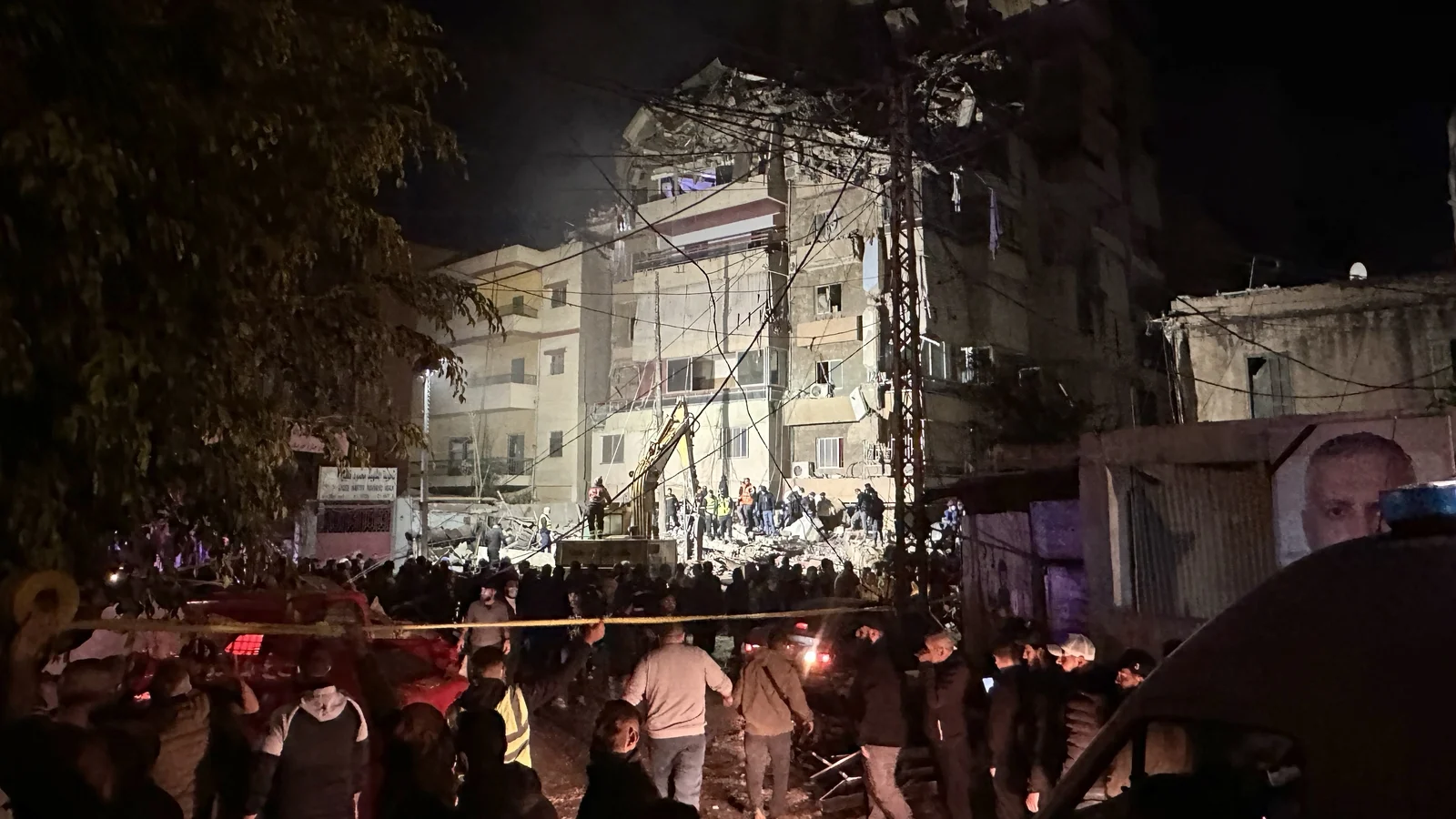
Then, in the pre-dawn hush, an explosion stitched open the night. Smoke rose over the suburbs — low, black, stubborn. The ceasefire that had calmed this patchwork of apartment towers, souks and family homes fractured in an instant as Israel carried out what it said was a precision strike targeting an operations leader in the elite Radwan unit of Hezbollah.
What happened — and why it matters
Israeli leaders framed the strike as a tactical move. In a joint announcement, the prime minister and defense minister said the attacker had been a senior figure in the Radwan force, an elite unit known for operations beyond Lebanon’s borders. Local sources and anonymous accounts close to Hezbollah identified the figure as Malek Ballout and said he had been killed, though formal confirmation has not been made public by either side.
Hezbollah answered almost immediately, firing rockets and launching armed drones toward positions in southern Lebanon and Israeli forces across the border. Israel reported two soldiers were injured and said its aircraft intercepted an unmanned aircraft before it crossed into Israeli airspace. In the south, a separate Israeli strike on the town of Zelaya was reported to have killed four civilians, including two women and an elderly man, according to Lebanon’s Health Ministry.
Numbers tell the rest of the story. Since the conflict escalated on 2 March, the Lebanese Health Ministry estimates more than 2,700 people have died across Lebanon. The Israeli military says Hezbollah has launched hundreds of rockets and drones into Israel, and that 17 of its soldiers were killed in southern Lebanon, alongside two civilians in the north. These are not just statistics — each number is a life, a family, a street corner now marked by a missing chair.
Voices from the ground
“I woke to the smell of smoke and the sound of glass,” said Samar Haddad, a teacher in Beirut’s southern suburbs, her voice a mix of fatigue and indignation. “We had just started to let our children play outside again. Now they ask if the lights will go off forever.”
At a makeshift clinic in Tyre, Dr. Farid Nasser, who has been triaging wounded for months, spoke quietly about the human toll. “We are exhausted,” he said. “Beds that were empty when the ceasefire began are filling again. If one strike undoes weeks of careful calm, what does that tell us about the durability of peace here?”
Meanwhile, an Israeli army spokesperson emphasized the security rationale. “Our responsibility is to protect civilians in the north,” the official said. “We will act on credible intelligence to neutralize threats.” On the other side, a Hezbollah field commander, speaking to reporters, described the strike as “an invasion of Beirut” and pledged to respond to any “aggression in kind.”
Ceasefire, diplomacy, and the fragile architecture of peace
This incident arrives against a complex backdrop. A tacit truce between Israel and Hezbollah — supported, at least in part, by broader understandings between the United States and Iran — had paused strikes on Beirut and many populated areas. That détente has been painstaking and partial: Israeli forces remain south of the Litani River, and exchanges of fire and targeted attacks have continued in southern Lebanon.
Washington has been quietly shepherding talks between Israeli and Lebanese diplomats. Last month the two ambassadors met in the U.S., an unprecedented contact in decades that many see as a pragmatic channel for preventing wider escalation. Yet these conversations have been low-level and contested; Hezbollah objects strongly to any engagement that sidelines its influence in Lebanon’s defense calculus.
Lebanese Prime Minister Nawaf Salam has been careful to draw a line between “normalization” and “peace.” “We are not seeking normalization with Israel,” he told reporters, “but we are pursuing a practical security arrangement that guarantees the withdrawal of troops and the restoration of Lebanese sovereignty.” President Joseph Aoun has echoed the sentiment: Lebanon wants a binding security framework and a halt to Israeli operations before any high-level meeting with Israel’s leadership.
Local politics, regional rivalries
Lebanon’s politics remain a mosaic of competing loyalties. Hezbollah — the armed Shia movement backed by Iran — dominates parts of the south and Beirut’s suburbs. Its presence complicates Beirut’s relations with its allies and opponents alike. The Lebanese government, fragile and coalitional, has opened channels with Israel out of necessity, a move that accentuates rifts at home. For many Lebanese, disarmament of non-state actors under state control is the only path toward sustainable peace. For others, Hezbollah is a guarantor of resistance and a deterrent against perceived threats.
“Disarmament sounds simple on paper,” observed Dr. Samir Karam, a Beirut-based security analyst. “In practice it involves restructuring security institutions, building trust, and addressing the political demands that drive armed groups. That’s a generational task, not a press release.”
On the margins: villages, fishermen, and the geography of fear
The Israeli military also called on residents of several villages north of the Litani River to evacuate — a move that could intensify displacement across an already strained region. For generations, this crescent of southern Lebanon has supported citrus groves, olive orchards and a small fleet of fishing boats out of Tyre and Sidon. Now, fields are trampled by boots and boats sit idle in harbors where men who once hauled nets in the morning sun ponder whether to leave their homes for the fourth time.
“My father never wanted to leave the sea,” said Karim Mansour, a fisherman who has weathered war before. “But if the sirens keep coming, what choice do I have? The fish will still be there. Will I?”
What comes next?
The immediate future is uncertain. Diplomats in Washington say a broader U.S.-Iran understanding — reportedly moving toward a pause in direct confrontations — helped underpin the Lebanon ceasefire. Yet the strike in Beirut signals how quickly local actions can rearrange fragile regional equilibriums.
So ask yourself: how do you measure peace? Is it the absence of bombs, or the presence of institutions that prevent violence from recurring? Across southern Beirut there is a hunger for both answers — and the impatience that often accompanies them.
In the smoky light of another morning, life continues. Children chalk hopscotch grids in alleys between concrete blocks. Tea shops open. But in conversations in the markets and in the corridors of power alike, there is a recurring, nervous question: will diplomacy hold, or will a single strike pull this region back into a more brutal chapter?
Whatever the answer, one truth stands: the people on the ground — the teachers, the doctors, the fishermen and the shopkeepers — will bear the immediate cost. For them, every ceasefire is a promise, and every explosion a reminder of how fragile those promises are.