A ship on the horizon, an anxious waiting game
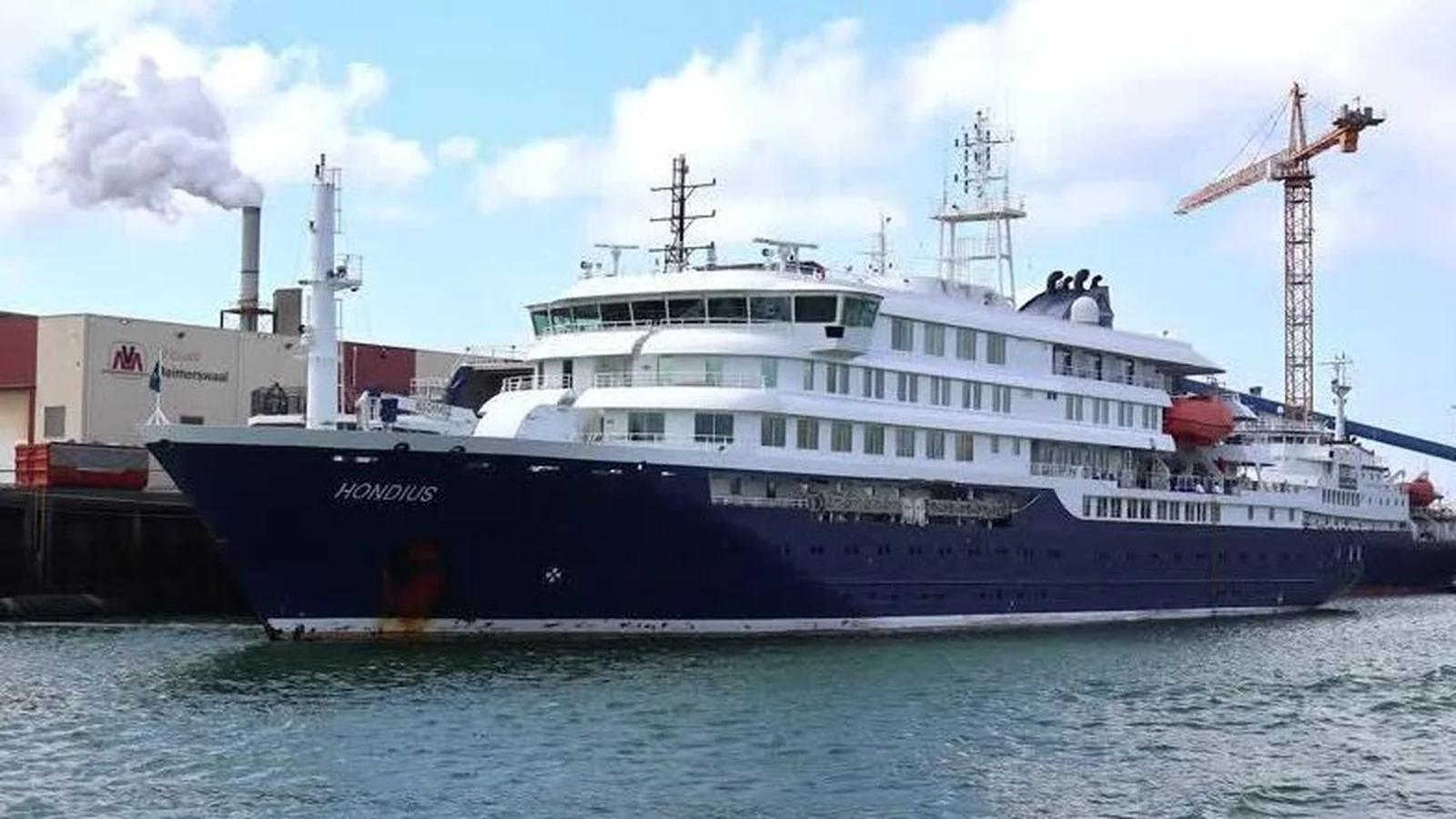
There is a particular kind of hush that falls over a vessel when news of illness spreads through its cabins—an anxious, salt-scented silence broken by the clink of crockery and the low hum of the engines. That hush has settled over the MV Hondius, an expedition ship now making its way toward Tenerife, carrying nearly 150 souls and, for now, an invisible worry: a hantavirus outbreak that has put public-health teams in several countries on high alert.
Two of those people are Irish. Their names are not being released, and details about their condition remain private. What is public is the choreography that is now unfolding across borders: Irish health authorities preparing for the possible return of their citizens, Spanish officials arranging docking in the Canary Islands, and European public health bodies watching the vessel’s course like the hands of a slow-moving clock.
Onboard life and human voices
“There’s a strange bravery about people at sea,” said a passenger who asked not to be named. “We’re used to rough weather, but not this—uncertainty is the real storm. We’re still looking out for dolphins in the morning and sharing stories at dusk, but there’s an undertow now.”
Other voices are calmer, practical. “We have protocols for illnesses at sea,” said a crew medic via a brief statement passed to journalists. “We’re monitoring symptoms, isolating where appropriate, and communicating with port health authorities. Everyone wants to get home safely, but we have to proceed carefully.”
From Tenerife, locals watch the approaching ship with a mix of curiosity and protective concern. The port there, a mosaic of palm trees, volcanic promenades and fishermen mending their nets, is accustomed to visitors—this is the Canary Islands, a place where travel is woven into the everyday economy. But the image of a vessel at anchor because of disease resonates differently now, in a world still accustomed to pandemic-era caution.
How authorities are preparing
Back in Ireland, the Department of Health and the Health Service Executive (HSE) have activated response lines. A National Incidence Management Team in the National Health Protection Office has been stood up to coordinate the Irish public health response and to plan for the care of the two nationals should they return. “We are preparing for a range of scenarios,” an HSE spokesperson said. “Our priority is the health and safety of the individuals involved and of the wider public.”
Decisions about repatriation and quarantine will hinge on medical status, officials say. If healthy and asymptomatic, the two Irish nationals can expect to be closely monitored and to undergo a period of quarantine in line with guidance from the European Centre for Disease Prevention and Control (ECDC). If they become symptomatic, they will be assessed and treated at the appropriate level of care.
Spain’s health minister has indicated the MV Hondius is expected to dock in Tenerife within three days, and Spanish officials have reported that those remaining on board are not currently presenting symptoms. Still, docking is only the beginning: there will be certification checks, possible testing, and further assessments before passengers disembark.
Coordination across borders
Public health crises at sea force cooperation among agencies who don’t always work together every day. “These situations are logistical puzzles,” said Dr. Aisling Byrne, an infectious-disease specialist who has advised maritime health programs. “You need rapid communication between the ship’s medical team, port health authorities, national health services and, often, consular officials. The goal is to balance individual care with preventing exportation of disease.”
The Department of Foreign Affairs is providing consular assistance to the Irish citizens aboard, while the Department of Health is liaising with EU partners, the ECDC and the World Health Organization. In practical terms this means decisions about where anyone will quarantine, who will provide transport and medical oversight, and how to handle waste and decontamination on disembarkation.
What is hantavirus? Separating fact from fear
Hantaviruses are a family of viruses carried by rodents. In Europe, hantaviruses typically cause a spectrum of illness known as hemorrhagic fever with renal syndrome (HFRS), which in many cases is milder than the hantavirus pulmonary syndrome (HPS) seen in the Americas. Incubation periods vary but are often measured in weeks—not days—making contact tracing and monitoring a lengthy task.
“The key point is transmission,” Dr. Byrne said. “Most hantaviruses do not spread from person to person. The primary risk is exposure to rodent droppings and urine in enclosed spaces. Human-to-human transmission has only been documented with a few strains, like the Andes virus in South America.”
To put numbers on the risk: hantavirus pulmonary syndrome has carried case-fatality ratios in some series of roughly 30–40 percent in the United States, according to the U.S. Centers for Disease Control and Prevention, whereas many European hantaviruses tend to cause less severe disease, with mortality rates far lower—but still serious for vulnerable patients. Such statistics are a reminder that these are not “routine” infections.
Local color and human stakes
On land, Canary Islanders are used to cruise ships anchoring against the backdrop of the Teide volcano’s silhouette. Swallows dart among masts, and kiosks sell papas arrugadas (wrinkled potatoes) with mojo sauce—food that has comforted generations of seafarers. “We worry about our guests, but we also want to protect our community,” said Marta, a café owner near the port. “If they need care here, we will help, but we also have to keep our people safe.”
For the two Irish nationals, the journey home may be more than a flight and a transfer; it may involve quarantine, testing, and the peculiar blend of solitude and surveillance that comes with public health containment. Families at home wait with the mixture of dread and hope that has marked pandemic years. “We just want them home and well,” said a close friend in Dublin. “It feels so small and so immense at once.”
Bigger questions: travel, trust, and global response
This episode on the MV Hondius is a vignette of larger tensions: the desire to roam and the need to contain risk; the friction between individual liberties and communal protection; the strains on health systems when emergencies drip across borders rather than burst in one place. It also speaks to preparedness—are ports and ships adequately equipped to handle infections that are rare but dangerous?
Policy responses are evolving. The ECDC recommends that contacts be monitored and that suspected cases be isolated and tested; port health authorities are advised to ensure safe disembarkation procedures. Yet guidance is only as good as the capacity to implement it—clean wards, testing supplies, trained personnel, and clear lines of responsibility.
What we might ask next
As readers, what should we take away? How do we balance compassion for those who fall ill far from home with the legitimate need to keep communities safe? What does this tell us about the future of expedition travel, about the intersection of adventure and epidemiology? And perhaps most simply: how do communities—from a ship’s tiny infirmary to a busy port city—hold together when the unexpected arrives?
There are no neat answers. But there is a story unfolding, human and messy, that invites our attention—not just to the case count or the timetable for docking, but to the people caught inside the headlines. In the coming days, watch for official updates from the HSE, the Department of Health, and Spanish port authorities. Listen for the human notes: relief, frustration, gratitude. And consider, for a moment, what it means to be responsible travelers in a tightly connected world.