The Nervous Approach to Tenerife: A Ship, A Virus, and a World Watching
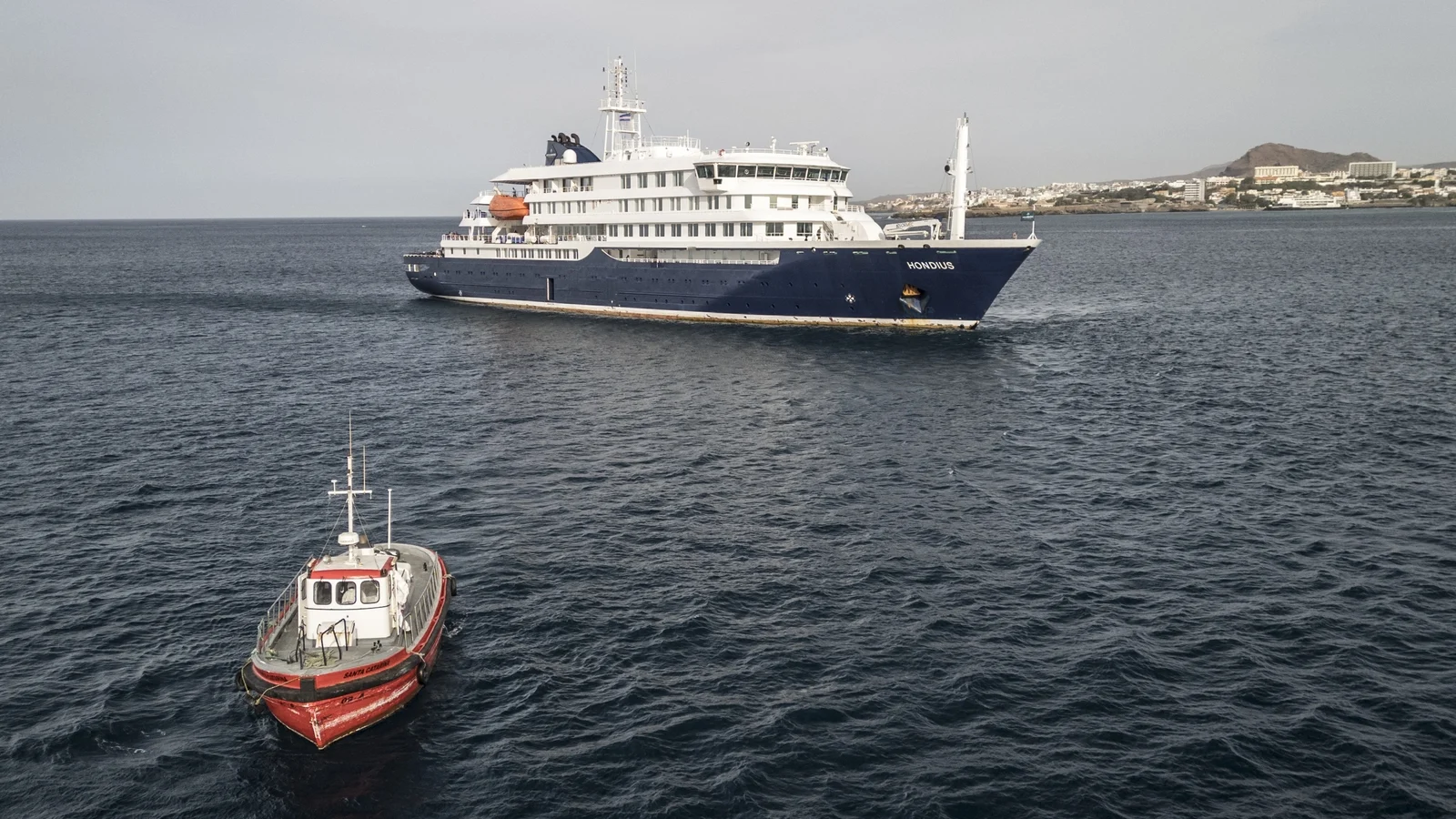
The MV Hondius cut a pale line across the Atlantic at dawn, a steel spine that has suddenly become more than a vessel for sightseers. On board, blankets and binoculars traded for thermometers and whispered conversations. On shore, officials prepared tarmac, quarantine wards and the kind of careful choreography that turns a routine port call into an international containment operation.
By 8 May, the World Health Organization had tallied eight suspected cases connected to the cruise — six of them confirmed as hantavirus, all identified as Andes virus — and three people had died. That grim ratio, a case fatality rate of about 38% among those reported, sent a ripple through ports, embassies and living rooms from Tenerife to Nebraska.
“We’re treating this with the seriousness it deserves,” a WHO spokesperson said, stressing that globally the risk remains low while the threat to those aboard is moderate. The paradox is stark: a virus that rarely jumps from rodent to human now carries the added chill of documented human-to-human spread in the form of Andes virus.
Repatriation, Quarantine and the Long Corridor Home
For Americans on board, the next steps were mapped with military precision. The US Department of State arranged a repatriation flight that will meet the ship in Tenerife, then shuttle passengers to Offutt Air Force Base in Nebraska. From there, the plan moves them to the National Quarantine Unit at the University of Nebraska Medical Center — a facility purpose-built for this kind of public-health tightrope.
“At this time, the risk to the American public remains extremely low,” the Centers for Disease Control and Prevention said, reassuring millions of other travelers who might be tracking the story. Nebraska Medicine and UNMC echoed that the individuals slated for monitoring are currently well and without symptoms, and that care will be provided in federal quarantine facilities.
“We are in direct communication with Americans on board and are prepared to provide consular assistance as soon as the ship arrives in Tenerife,” a State Department official told reporters, speaking on condition of anonymity. The ship operator, meanwhile, has said there are 17 Americans among the passengers; WHO has noted that nationals from 12 countries had disembarked earlier at the remote island of Saint Helena on 24 April.
What the Numbers Say — and What They Don’t
The headline figures — eight cases, six lab-confirmed, three deaths — are blunt but incomplete. Hantaviruses are a family of viruses typically spread by rodents, and most strains do not pass between people. Andes virus is the outlier: in South America it has been linked to rare, but confirmed, person-to-person transmission, which is what has heightened international concern.
Incubation periods for hantaviruses can vary, generally spanning days to a few weeks, and severe cases can progress quickly to hantavirus pulmonary syndrome, a respiratory failure that can be fatal. Historically, Andes-related outbreaks have carried case fatality rates in the range of 30–40%, which squares with the early numbers from the Hondius.
Voices from the Deck and the Dock
“We came to see ice and penguins and left feeling watched by headlines,” said “Margaret,” a 68-year-old passenger who asked to be identified only by her first name. Her voice carried notebook-paper fatigue — the kind etched by canceled excursions and unanswered questions. “It’s unsettling, but the crew has been calm. That helps.”
At the port of Tenerife, port workers and local officials began to practice a careful choreography: screening, isolation areas, and the delicate business of ferrying anxious travelers to tents and treatment without causing a stampede of fear. “We welcome ships, but we also protect our people,” said a Tenerife municipal official, pausing to adjust his facemask. “This island has faced storms, volcanoes and cruise traffic surges. A virus is another kind of weather.”
Back in Tierra del Fuego, Argentina, where the Hondius made a stop in Ushuaia, provincial epidemiology director Juan Petrina told local reporters that it was “almost zero” likely the Dutch man linked to the outbreak contracted the virus there. He based his assessment on the virus’s incubation period and timing of symptoms — the small calculations that can make a big difference between blaming a town and tracing a chain of transmission.
Expert Take: Why This Matters Beyond a Single Ship
“This is a reminder that our age of rapid, global travel turns a local organism into an international problem in a matter of days,” said Dr. Lena Ortiz, an infectious-disease epidemiologist who studies zoonotic spillovers. “Andes virus is unusual because it can, in documented cases, pass between humans. That changes the calculus of response — contact tracing becomes urgent, and the social side of quarantine becomes crucial.”
Ortiz emphasizes the interplay of culture and containment. “On a cruise, people eat together, talk late in the lounge, attend the same briefings — that’s intimacy. That closeness is what public health teams must respect and work around when they try to break chains of transmission without breaking spirits.”
Small Places, Big Questions
Think of Saint Helena: a speck in the South Atlantic where some passengers disembarked on 24 April. Think of Ushuaia, the windswept edge of Argentina where tour buses rumbled over peat and the world felt very small and very far. Think of Tenerife, volcanic and tourist-crammed, now a junction where global health policy meets human elbow-room. These are not abstract coordinates; they are living communities with markets, cafes and people who will watch the incoming ship with curiosity and fear.
The story also forces broader reflection. How do we balance individual freedoms and rapid repatriation with the imperatives of public health? What responsibility do cruise lines have to passengers and to ports? Are our quarantine infrastructures — often underfunded and politically tricky — prepared for the next time a rare pathogen shows up in an ordinary itinerary?
- Timeline: ship called at Saint Helena on 24 April; multiple stops followed; Tenerife arrival planned for tomorrow.
- Health facts: 8 suspected cases, 6 laboratory-confirmed as Andes virus; 3 deaths as of 8 May; WHO assesses global risk as low, passenger/crew risk as moderate.
- Repatriation flow: Tenerife → Offutt Air Force Base → National Quarantine Unit at UNMC.
What Comes Next?
Public-health teams will continue testing, tracing and, where necessary, isolating. For the passengers, it will be a slow unwinding: the return flights, the checks at Nebraska, the days of watching and waiting while science works in real time. For the rest of us, this episode is a quiet test of global systems — the laboratories, the embassies, the hospitals and the human compassion that must thread them together.
So I ask you: when your next holiday plans pop up on a screen, will you think of the Hondius and the quiet logistics that protect us, or will it all feel too distant? And if the next outbreak starts not on a ship but in your town square, will the nets we are casting today hold?
There are no easy answers. There is, however, an urgency to listen — to health workers in white coats, to porters who greet weary voyagers, to lab technicians who run late-night assays, and to passengers who simply want to get home. Their voices will chart the next chapters of this epic little story, part human drama, part microbial history, and entirely global in reach.