A city that suddenly felt analog
On a pale spring morning in central Moscow, two women paused under the copper domes and snapped selfies as if to document something more than a day out. Their screens sputtered. The usual river of messages, videos, and gossip slowed to a trickle. Commuters in the Metro peered at dead apps the way people used to check watches—out of habit and disbelief.
“It felt like someone had pulled the plug on a part of our lives,” says a film professional in his 40s, who asked not to be named. “We use these tools for everything—work, family, news. When Telegram or WhatsApp falter, it’s not a glitch. It’s a small panic.”
This is no occasional outage. Over the past year, Russia’s internet has been reshaped—gradually, then suddenly—into something more closed, more curated, and more controlled. Messaging apps that once carried the private pulse of the nation are being throttled or barred. Western social platforms and independent news outlets remain largely blocked. And when the state’s engineers flick switches before a major national ceremony, entire neighborhoods can wake up with an unfamiliar inconvenience: a restricted life in the palms of their hands.
The tools of a quiet squeeze
The changes did not arrive overnight. The Russian government’s media regulator, Roskomnadzor, began building the technical and legal scaffolding a decade ago: a blacklist system in 2012, a “sovereign internet” law in 2019 that gave authorities the power to isolate Russia’s network, and a steady drumbeat of restrictions that escalated after the 2022 full-scale invasion of Ukraine.
Then came the bans. Facebook and Instagram disappeared from Russian mobile screens within weeks of the invasion. Messaging platforms followed. WhatsApp was declared non-compliant earlier this year; Signal was blacklisted in 2024. Telegram—long a bastion for both private chatter and public channels with millions of subscribers—was gradually squeezed and then throttled.
“The goal is obvious,” says Igor Gretskiy, a foreign-policy researcher now based in Tallinn. “Create a RuNet that looks outward but listens inward—an ecosystem you can curate, censor, and surveil.”
Authorities present their moves as defensive measures—necessary, temporary steps to stop drone strikes and terrorist acts. In practice, they amount to a wholesale attempt to steer how Russians discover facts, tell stories, and organize.
Timeline in brief
- 2012 – Roskomnadzor launches a national blacklist for online content.
- 2019 – The Sovereign Internet law grants tools to cut international connectivity.
- 2022 onwards – Western platforms and many foreign news sites are blocked after the invasion of Ukraine.
- 2023–24 – Messenger apps (WhatsApp, Signal, Telegram) face throttles and bans; YouTube speeds were limited to steer users to Russian platforms.
Max, the state-approved remedy
When free apps go, the state often pairs bans with an alternative. Enter Max: a government-backed “super-app” installed on newly sold phones in Russia and promoted as a one-stop portal for messaging, payments, and public services. It is the Kremlin’s answer to the problem of uncontrollable software: a domestic platform where the rules are known and the logs can be read.
Pro-Kremlin outlets claim tens of millions of users have adopted Max; one paper reported figures exceeding 85 million. Tech analysts say the app’s architecture makes surveillance and moderation easier—an intentional trade-off between convenience and privacy.
“The government wants a digital assistant that does everything except ask questions,” says Lena Volkova, a digital-rights researcher. “That sacrifice of privacy for functionality is exactly what authoritarian tech plays on.”
Everyday life under shifting signals
The human cost of that trade-off is immediate. Journalists who once whispered through end-to-end encrypted channels find sources harder to reach. Small businesses that sold goods through social apps see payments delayed. Friends who used Telegram channels to organize cultural events now scramble to new platforms—if they can.
“I’m still holding out against Max,” the unnamed film worker told me. “I don’t trust an app that’s handed to me like a baton with ankle weights attached.”
Across Moscow and St. Petersburg, young people vocalize their frustration on the platforms that still work—often carefully, without naming the president or the war. Dissent is practiced in fragments: a snarky meme, a short-lived hashtag, a quiet thread of complaint. Even some government-friendly voices have muttered criticisms, not at the top of power, but at “authorities” in general—safe enough to avoid reprisals but blunt enough to reveal unease.
“We are adapting, but adaptation feels like resignation,” says Anya, a 22-year-old university student. “You learn VPNs, you switch to VK playlists, you accept lower-quality videos. But little by little, you stop expecting the world to be at your fingertips.”
What this means beyond Moscow
The Russian experiment is part of a larger story: the splintering of the global internet. Countries from Beijing to Ankara have shown that it is possible to shape an online environment to fit political needs. The model is seductive to regimes that fear information flows they cannot control—whether those flows carry protest, reportage of military setbacks, or foreign perspectives that contradict official narratives.
Digital rights groups warn the trend is accelerating: more governments are refining the same playbook—legal restrictions, technical throttling, domestic substitutes, and intense surveillance. The consequences are not merely local. As more nations pursue internet sovereignty, citizens worldwide face a patchwork of online realities defined less by global connectivity and more by national preference and security theater.
Paranoia at the center
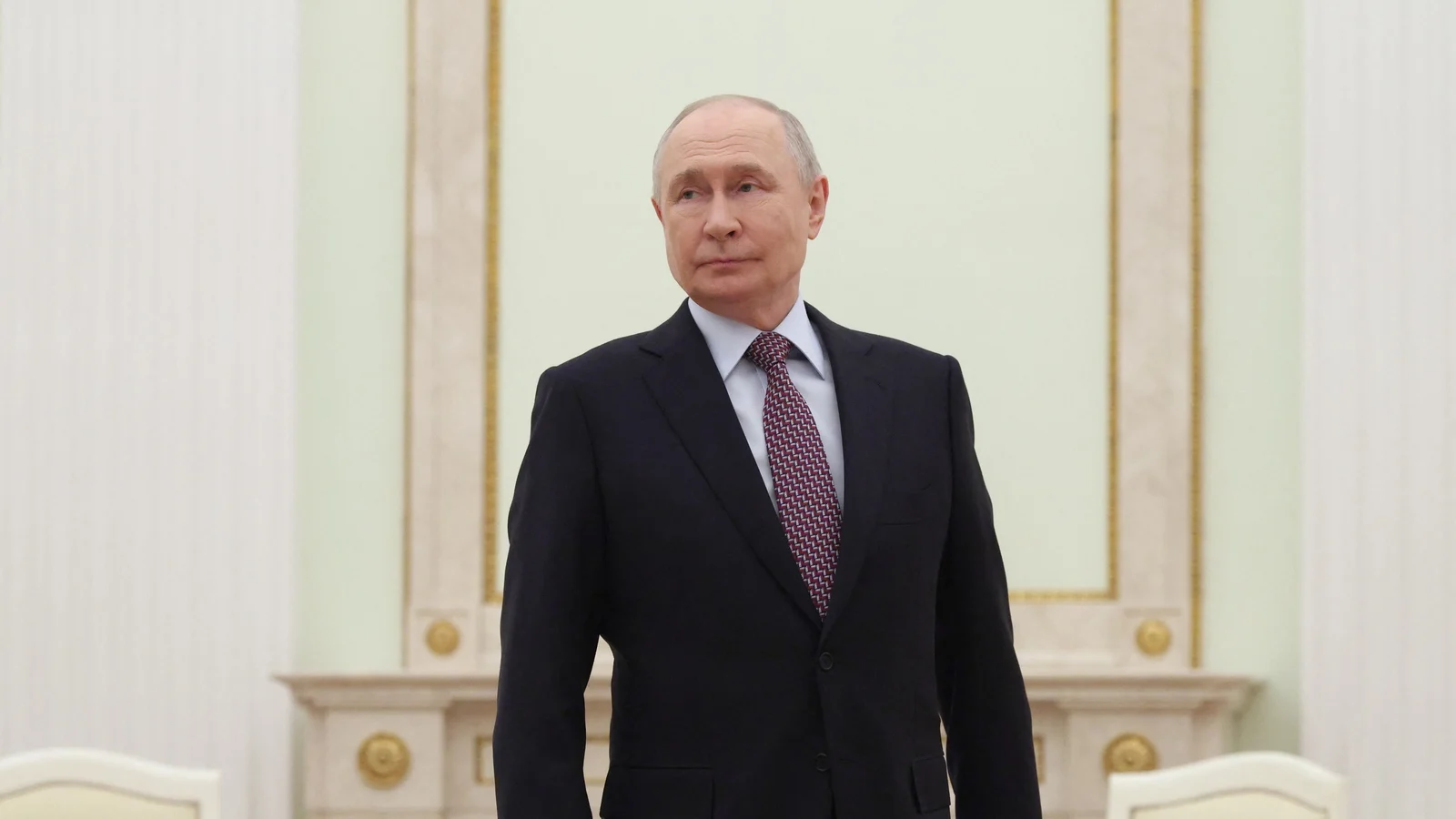
Inside the Kremlin, according to a leaked European intelligence report, fear is palpable. The document—published recently in international media—describes heavy surveillance measures for those who move in the president’s orbit and restrictions on travel and communication. Whether that paranoia is justified or exaggerated, its effect is clear: a leadership that trusts fewer channels is more likely to limit them for everyone else.
It is tempting to imagine these moves as purely strategic. But there is also a theatrical side: the optics of control. When a leader reads from handwritten notes rather than a teleprompter, the gesture becomes part performance—an assertion that the messy, risky internet is unnecessary or dangerous for a modern state.
And you—what would you do?
Imagine waking up tomorrow and finding that the apps and websites you rely on are slower, censored, or gone. How would you work? How would you stay in touch with family abroad? Where would you get reliable news? These are not abstract questions for the people I spoke to in Moscow. They are practical anxieties that shape daily life.
There are no easy solutions. Activists teach workarounds: VPNs, decentralized platforms, encrypted offline meetups. But each countermeasure has costs and risks—and governments learn fast.
The last, most human cost is quieter: the loss of a shared public square where people argue, laugh, and learn together. An internet that is curated by the state becomes an echo chamber by design. And once you accept a smaller world, it is hard to imagine why you would fight to make it larger.
In the end, whether Russia becomes a model others follow, or an outlier whose hard line softens, will be decided not just by policy and code, but by ordinary people choosing how much of themselves they will trade for a semblance of safety. What would you trade?