Anchored Fear: A Cruise Ship, a Rare Virus, and the Small, Looming Questions of Our Time
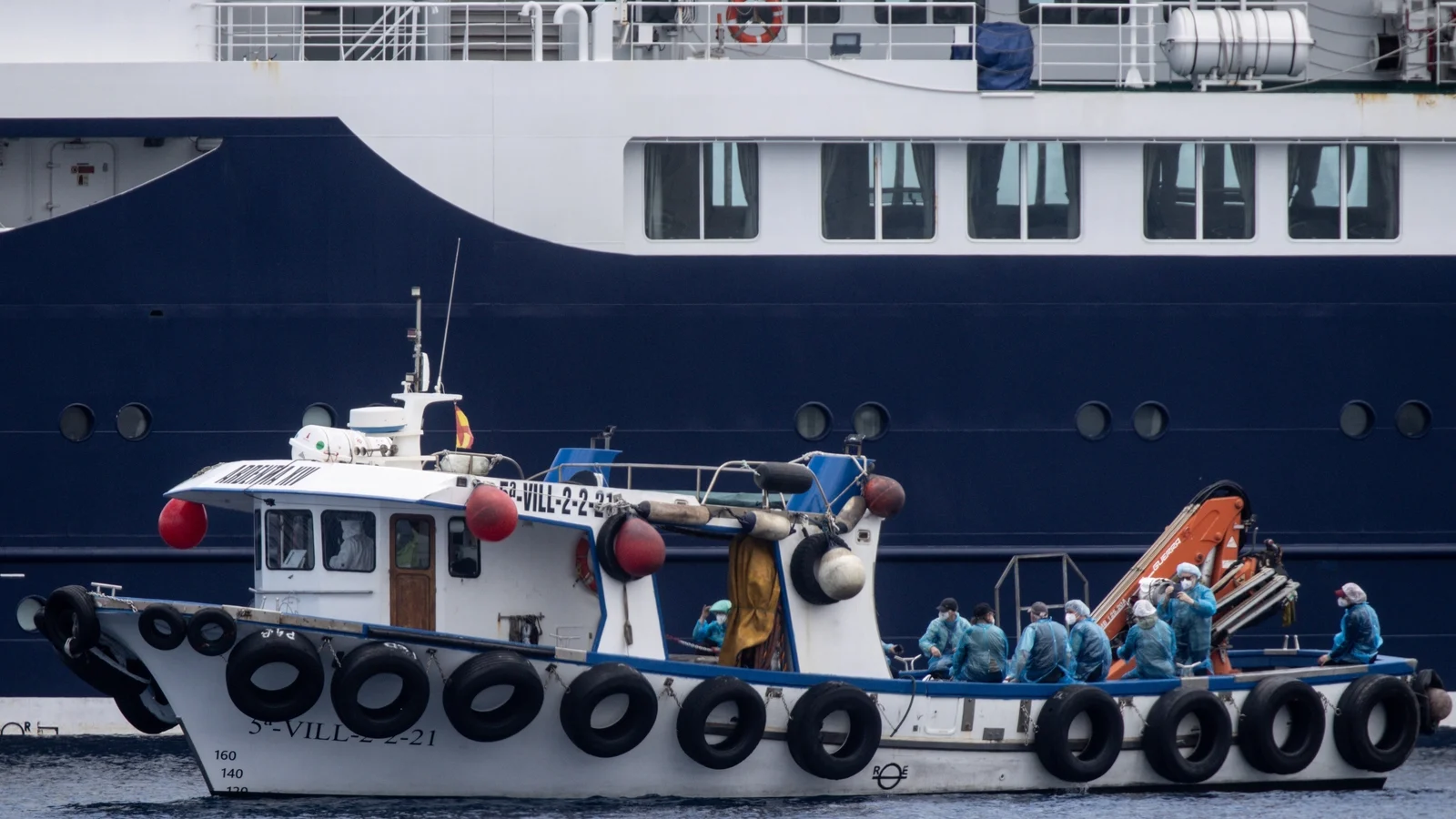
There is a strange hush that falls over a port when an illness becomes a headline: fishermen still mend nets along the quay, tourists keep ordering coffee, and somewhere nearby a cruise ship bobs like an island of contained anxiety. Off the coast of Tenerife in the Canary Islands, the MV Hondius has become precisely that—an unlikely locus of worry, grief and logistical choreography as nations scramble to contain a hantavirus outbreak aboard the vessel.
The facts are stark enough to pierce the ordinary hum of news cycles: eight people who once sailed on that ship have fallen ill, six of them confirmed to have hantavirus. Three people—identified in official tallies as a Dutch couple and a German national—have died. The World Health Organization has urged a precautious path: a 42-day quarantine for all passengers. For travelers and policy makers alike, what feels new isn’t so much the disease itself but the way our interconnected world turns a single case into an international operation.
What happened on the MV Hondius?
The story, as health officials describe it, began to surface in early May. A British passenger became ill in Johannesburg on May 2—21 days after another passenger on the same voyage had died. As alarm bells rang, the ship cut a course toward Spain, anchoring near Tenerife, the largest of the Canary Islands.
Countries moved quickly. Ireland, Spain, France, the United States, Australia, the Netherlands and New Zealand all organized evacuations or repatriations for their citizens. The United States Department of Health and Human Services disclosed that among 17 Americans being repatriated, one tested PCR-positive for the Andes virus and another was showing mild symptoms; both were transported in aircraft biocontainment units. France, meanwhile, revealed one of its returned passengers has tested positive and is deteriorating, while four others tested negative but will be retested—French authorities say they have traced 22 close contacts.
Why hantavirus feels different — and why it shouldn’t be dismissed
“This is not Covid,” said Dr. Ana Morales, an infectious disease specialist I spoke to who has worked on outbreaks in South America. “But it is serious. Hantaviruses are typically transmitted from rodents, via droppings or urine, and the Andes strain can, in rare circumstances, pass from person to person during very close contact.”
Historically, Andes virus infections have come with a heavy toll. Case-fatality rates in some outbreaks have hovered in the 30–40 percent range, depending on the promptness of care and local health capacity. That statistic is sobering, but it is not a prophecy. Most people exposed to hantaviruses never transmit the infection to others; most outbreaks have remained small and containable.
“What we’ve gained from recent pandemics is not just fear—but tools,” said a WHO epidemiologist, speaking on condition of anonymity. “Contact tracing, rapid testing, isolation protocols—these have tightened. The WHO’s 42-day quarantine recommendation for passengers is cautious but sensible: the incubation period and the severity of potential disease warrant that window.”
The human stories beneath the headlines
Numbers tell one part of the story. The rest lives in the moments that don’t fit into a press release: the family on Edge of a seat in Baldonnel Airfield when Irish evacuees touched down; the steward who wiped down a cabin twice and still worries; the Australian official coordinating a charter flight as local authorities finalize quarantine sites.
“I felt a knot in my stomach when they told us we’d be going home,” said “Marta,” a passenger who preferred not to use her full name. “We were happy to leave the uncertainty, but you carry the faces of the people who are sick. You think: Did I touch that hand? Did I share a meal with them?”
Local scenes in Tenerife were quieter than the crisis felt. Cafés along the harbor still sell churros, and market sellers display bananas—Canary Islands produce is famous across Spain. A port worker leaned on a railing and said with a shrug, “Ships come and go. We treat them with care. But this, yes, it made people edge up to the rail and peer.”
Official lines and the reality of moving people
Governments have had to make quick, careful choices. France’s health minister spoke about acting early to break transmission chains, invoking emergency powers to strengthen isolation measures. Australia announced it would charter flights for its citizens, with quarantine plans to be finalized with state and territory authorities. New Zealand said its public health system could support any required quarantines.
In the U.S., evacuees were to be taken to specialised centres, including one in rural Nebraska, where clinical assessments and care would be conducted. “Each person will undergo clinical assessment and receive appropriate care and support based on their condition,” an HHS statement said. The optics of biocontainment units on aircraft stirred anxious conversation, but officials described it as a precaution to ensure the safety of crew and fellow passengers.
What should travelers take away?
It’s tempting to retreat into an “avoid all travel” mentality, especially if headlines are urgent and the details uncomfortable. But there is nuance here. Hantaviruses are not airborne in the way influenza or SARS-CoV-2 can be. Most transmissions occur through contact with infected rodents or their excrement; human-to-human spread with Andes virus remains the exception, not the rule.
That said, the episode underlines two broader truths. First: our global mobility means local pathogens can instantly become international concerns. Second: public health systems have learned lessons from COVID—many countries now have mechanisms to move people, to isolate, to test, and to communicate rapidly. The aim is to blend urgency with restraint, to act fast without sowing panic.
Looking ahead
We will learn more in the coming weeks: further test results, the outcomes for the sick, and whether new measures become standard in cruise protocols. For passengers who lived through it, the memory will not be only of illness but of the intimate human responses—phone calls to family in the dark hours, nurses offering reassurance in corridors, crew members carrying meals with gloved hands and steady eyes.
As you read this, ask yourself: what level of risk are you willing to accept to see a sunset at sea or a mountain ridge? What would you want a health system to do for you in a crisis? These are not hypothetical questions anymore—they are the practical moral choices that shape how we travel, how we govern, and how we care for one another when illness crosses an ocean.
In the coming days, authorities will keep tracing contacts, retesting those who are negative, and trying to stitch together a clear timeline. For now, Tenerife’s harbor resumes its daily rhythm. The MV Hondius remains a reminder that on a vessel of strangers, a single illness can bind people together in alarm—and in the quiet, human work of making sure the worst does not come to pass.