When Silence Ends: Drones Over Kyiv and the Fragility of a Truce
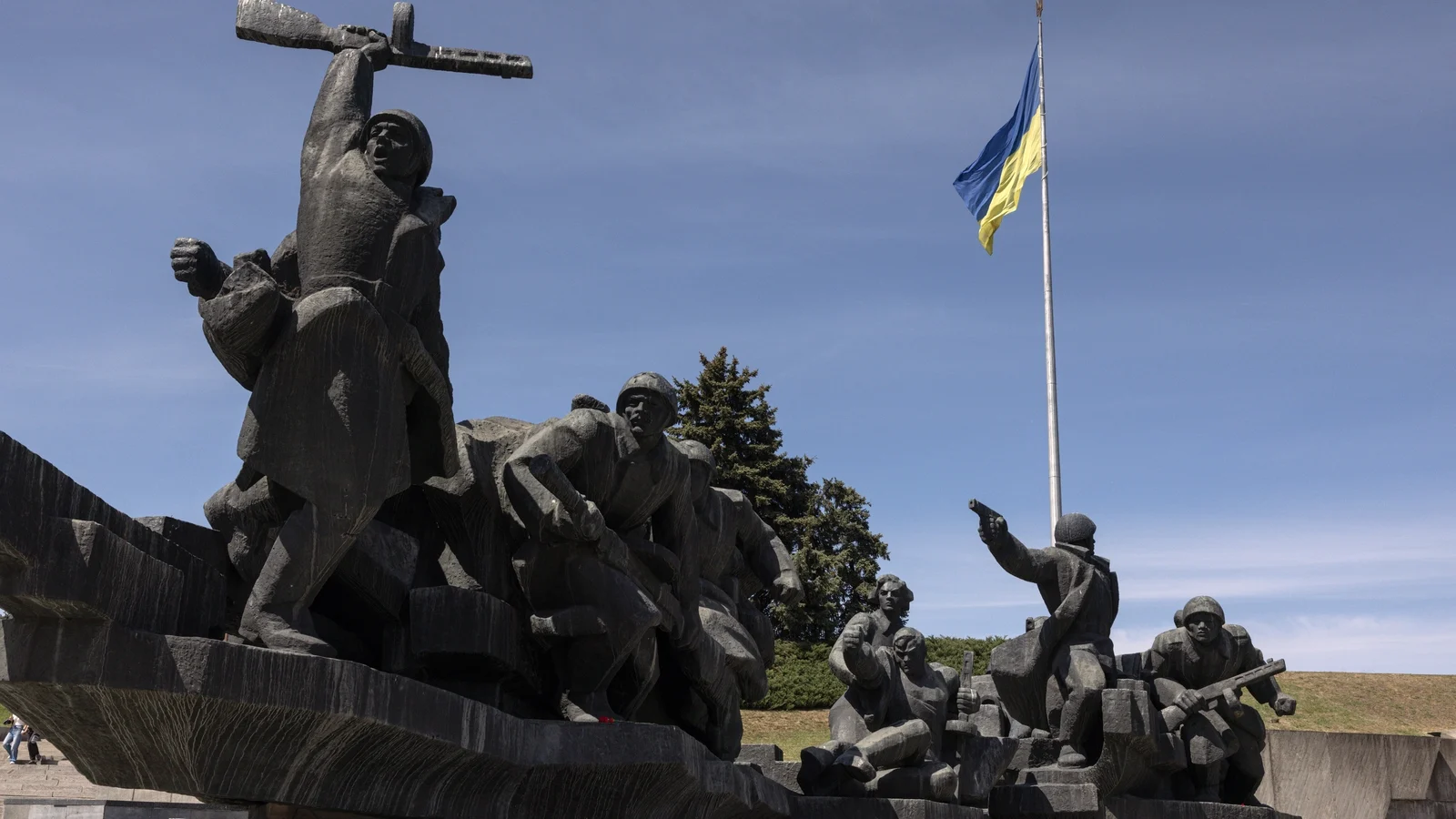
There was a peculiar quiet over Kyiv on the morning the truce died—an ordinary, late-spring hush of tram bells and pastry smoke—until the siren shredded it. People paused mid-sip in cafés, market vendors folded their hands over crates of cherries, and commuters ducked into the city’s vaulted metro stations, not for a routine delay but because the fragile promise of peace had evaporated with the dawn.
That silence was not the beginning of something new. It was the temporary lull before the familiar pattern resumed: alarms, uncertainty, and the unavoidable calculus of survival in a city that has learned to read the sky.
First light, first strikes
Ukrainian officials said drones flew over the capital as a three-day ceasefire—announced days earlier by US President Donald Trump—came to an end. Tymur Tkachenko, head of Kyiv’s military administration, posted on Telegram: “Enemy UAVs are currently over Kyiv. Please stay safe until the alert is cleared.” It was the first confirmed air-raid siren since the ceasefire began.
In the industrial belts to the east, the toll was grim but contained by the numbers: regional authorities in Dnipropetrovsk reported one man killed and at least four others wounded after Russian strikes hit areas including Synelnykove. “We lost a neighbor today,” said Olena, a 54-year-old grocery owner who asked that her surname not be used. “You dream about peace, and then it happens—suddenly, like a band that breaks up mid-song.”
Conflicting tallies, familiar accusations
On paper, the morning’s figures read like a ledger of contradictions. Moscow’s defence ministry claimed it had intercepted and destroyed 27 Ukrainian fixed-wing drones over the border regions of Belgorod, Voronezh and Rostov between midnight and early morning—an assertive tally that framed the day as one of Russian tactical success. Kyiv, conversely, described strikes on its territory and civilians, pointing to the human cost that numbers alone fail to convey.
“We recorded fighting today,” President Volodymyr Zelensky said in his daily address, refusing to gild the pause with illusions. “There was no silence at the front. We have recorded all of this.”
A truce announced—and unspooled
The ceasefire, declared with great fanfare by President Trump hours before Russia’s Victory Day observances, was meant to be a diplomatic icebreaker. “The beginning of the end,” he called it. For many—war-weary families, embattled mayors, foreign diplomats—it felt at once like an opportunity and an act of wishful thinking.
But the truce never had time to bed in. Even as it technically stood, both sides traded accusations of violations. The problem was not merely the veracity of those claims; it was the broader geopolitical web tugging at the ceasefire’s seams. Negotiations on the Russia–Ukraine war, long stalled, were further overshadowed by a different, escalating flashpoint in the Middle East—drawn in by American attention and global anxieties.
Why brief ceasefires slip away
Temporary pauses in conflict have a long history of collapsing under pressure: spoilers who want to test the adversary, commanders who doubt the durability of orders, and the fog of modern, fast-moving warfare that makes attribution difficult.
- Short-lived truces often lack robust verification mechanisms. Who watches the watchers, and what happens when one side says the other broke the rules?
- Modern weapons, especially drones and long-range munitions, complicate containment—attacks can be launched remotely, with ambiguous origin and intent.
- External crises—like the recent Iran-related conflict drawing U.S. focus—can drain diplomatic bandwidth and reduce the leverage needed to enforce peace.
“A truce without monitors is a promise without witnesses,” said Ihor Petrov, a defense analyst based in Lviv. “It can buy hours, sometimes days, but it cannot substitute for a negotiated, enforceable arrangement.”
The weaponization of the sky
Drones—cheap, ubiquitous, and increasingly lethal—have become the war’s new lingua franca. Both sides have integrated unmanned aerial vehicles into surveillance, targeting, and strike missions. Their proliferation is changing not only tactics but also how civilians experience conflict: an omnipresent, mechanical hum that can mean anything from an overhead reconnaissance to a fatal strike.
“You hear the drones more than the planes now,” said Marina Kovalenko, a teacher who spends afternoons volunteering at a shelter in central Kyiv. “They buzz like insects. You don’t know if they are here to watch you or to harm you.”
The technological shift is global. According to recent military trend analyses, drones account for an ever-increasing share of battlefield engagements worldwide, lowering the threshold for attacks and raising the stakes for civilian populations caught below.
Where does that leave civilians?
For ordinary people in Ukraine, a truce is less a legal instrument than an emotional breather. They spend it fixing windows, checking on elderly neighbors, and making quiet lists of what they’d do if the next alert came. The momentary calm reveals not trust, but a fragile hope—one that can be shattered in an instant.
“We measure life now in sirens,” said Olena, staring at a faded mural outside her store. “We count days we haven’t run to the shelter. That used to be a silly game for kids. Now it’s how we survive.”
Looking outward: a conflict caught between global crises
The ceasefire’s failure is not only a point in a bilateral conflict; it is a symptom of a crowded global security agenda. With attention shifting to flare-ups elsewhere—crises in the Middle East, rising tensions in other regions—momentum toward a durable settlement in Ukraine has slowed. Negotiations that once had a singular focus are now vying for diplomatic oxygen.
What does that mean for the future? It means the Ukraine war sits at an uncomfortable intersection: a local contest with global implications, whose outcome will depend as much on international will as on battlefield dynamics. It means that as long as external forces pull attention away, ephemeral pauses on the ground are unlikely to firm into lasting peace.
Questions for readers—and for policymakers
How do we value pauses in violence when they are so easily broken? Can international mechanisms be designed to make short-term truces more credible, or are such efforts inherently fragile in an age of proxy pressures and fast-moving technologies?
These are not rhetorical exercises for those waking to sirens. They are urgent policy problems with human consequences—a grandmother in Synelnykove, a teacher in Kyiv, a border village in Belgorod rustling with alarms. Each alert is a reminder that peace is not merely a headline but a daily, precarious task.
After the sirens
When the alerts finally quieted later that day, the city exhaled in small, simple gestures: lost conversations resumed, a stray cat returned to sun itself on the same concrete curb, and traders reopened their stalls. But the respite felt temporary—a waiting room between alarms.
“We live in hope and prepare for the worst,” Marina said. “That duality is exhausting, but it keeps us moving.”
In the end, the truce—and its demise—might be remembered less for the hours of silence it offered than for what those hours revealed: how fragile ceasefires can be in a world of drones and divided attention, and how, amid geopolitical chess, the people under the sky keep counting their days by the number of sirens they survive.