Along the Litani and the Yellow Line: Lebanon’s Wounds After a Fragile Ceasefire
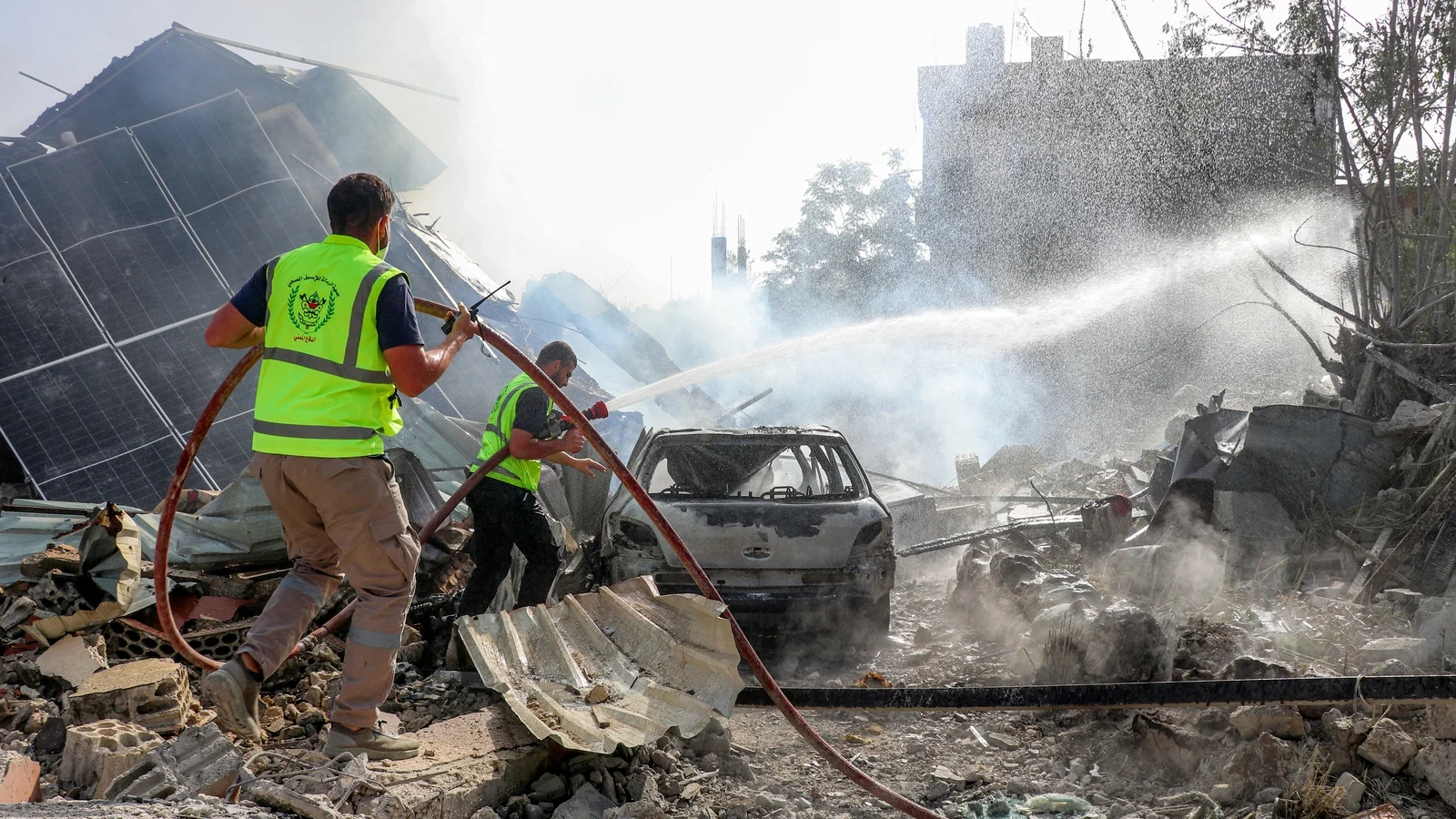
There is a strange silence in southern Lebanon that does not mean peace. It vibrates with the memory of engines and alarms, with the echo of ambulances that once raced through olive groves toward makeshift hospitals. Since the truce that took hold on April 17, Israeli strikes have continued to fall on towns and roads — and Lebanon’s health ministry now counts 380 people killed and 1,122 wounded in that period alone.
Those figures, announced by Health Minister Rakan Nassereddine at a crowded press briefing, sit heavy on the page: they are part of a broader tally that stretches back to the opening of hostilities on March 2. The ministry says the total toll from Israeli strikes stands at 2,882 dead — including 279 women and 200 children — and thousands more injured. Among the dead are 108 emergency and health workers; 16 hospitals have been damaged, officials say.
“It feels like a ledger of grief,” a nurse in the southern town of Tyre told me on the phone, her voice raw. “We treat the living and bury the dead. The ambulances are for the wounded — not targets.” She asked not to be named. Her words echoed Nassereddine’s blunt accusation: that attacks are striking medical vehicles and workers, contrary to Israeli claims that ambulances and clinics have been militarised.
The geography of a tense pause
In south Lebanon, a faint line on many maps has become a psychological boundary. Israel’s so-called “yellow line,” drawn roughly 10 kilometres north of the UN-recognised blue border, is where Israeli troops say they have been operating — well beyond their own declared limits and into the valleys and rivers that knit rural life together.
Over the past week, Israeli forces said they carried out a days-long raid along the Litani River, clearing what they called “terrorist infrastructure” and seizing tunnels, weapons depots and launchers. Photos released by the military showed soldiers moving across a river bridge and armored vehicles hugging the riverbank; Lebanese officials and local residents — including people from the outskirts of Zawtar al-Sharqiyah — reported exchanges of fire.
“We woke to the sound of helicopters,” recalled Rami, a farmer who tends citrus trees near the Litani. “The kids sat on the roof and watched tanks. The animals were terrified. It’s not the sound of war so much as the routine of it now.”
Israeli statements say more than 100 targets were struck in the operation and that “dozens” of Hezbollah fighters were killed. Hezbollah, for its part, insists its operatives are counted among official government casualty figures and denies allegations it is using ambulances as cover. The truce brokered by Washington explicitly allows Israel to respond to “planned, imminent or ongoing attacks,” language that has left enough ambiguity for both sides to claim moral justification.
At ground level: stories you won’t see in briefs
Walk through the streets south of the Litani and you will find tea shops with broken windows and coffee cups collecting dust; men who once argued over football scores now speak only of missing relatives. In a clinic that still functions beneath a tarpaulin, a volunteer medic, Leila, held up a chart of the wounded.
“We have every kind of injury: shrapnel, burns, chest wounds,” she said, smoothing the paper with a thumb. “Children come with nightmares and we stitch their bodies and try to stitch their minds. People think a ceasefire is a pause for breathing. For us it has been a day-to-day fight for survival.”
These human stories are set against stark numbers. The Lebanese ministry breaks down recent casualties to include 39 women and 22 children since April 17; 249 medical workers have been wounded since March. Such figures give scale to the grief, but they cannot capture the smell of a hospital corridor after a midnight strike or the small kindness of neighbours sharing bread.
Law, trauma, and theatres of justice
While these scenes play out in villages, another drama is unfolding in Israel’s legislature. In a rare cross-party consensus, the Knesset approved a law to create a special military tribunal to try militants captured during the October 7 attack that killed at least 1,200 Israelis — the deadliest assault on Jews since the Holocaust, officials say. The law passed with 93 votes in favour.
The tribunal will preside over hundreds of cases and could even apply the death penalty in the most grievous charges — an option that has not been exercised since 1962, when Adolf Eichmann was executed. Supporters argue the court is a necessary mechanism to process trauma and restore a battered legal order. Critics warn of the dangers inherent in a military court trying politically charged crimes.
“Accountability is essential,” said an international law professor based in Jerusalem, speaking on condition of anonymity. “But the risk is that trials could become instruments of catharsis rather than instruments of justice. Due process must not be the casualty of grief.”
Who pays the price — and who makes the decisions?
The violence has not been contained to tidy headlines. It feeds broader debates about proportionality, the laws of war, and the responsibilities of outside powers. Lebanon’s leaders have called on the United States to press Israel to halt strikes that have intensified even as talks are due to resume in Washington this week. The stakes are high: a misstep could reopen a much larger front.
And then there is Gaza. The campaign that followed October 7 has left the strip in ruins; Palestinian health authorities and international monitors report tens of thousands of deaths — a figure that is itself contested but impossible to ignore when you walk past piles of rubble and see lines of displaced families clustered around UN tents.
What does justice look like in a landscape that feels both juridical and medieval? Who counts as a combatant and who as a civilian? When a hospital is damaged or an ambulance struck, how do we untangle the fact from the allegation?
These questions matter because the answers will shape policy, accountability, and the future of a region that has been living with layered conflicts for decades. They matter because for every statistic, there is a name and a life interrupted.
Invitation to reflect
As readers, as observers, we are often offered summaries: ceasefire in place, talks ongoing, numbers tallied. But behind each line on the spreadsheet there is a neighbour grieving, a child carrying a bandage, a doctor choosing which patient to treat first. If you could sit with any one of them for an hour, what would you ask?
Maybe we should start by asking how to make peace feel less like a temporary reprieve and more like a durable promise — one that protects ambulances and clinics, that honours due process without spectacle, and that recognizes the dignity of every civilian on both sides of an invisible border.
- Since March 2: Lebanon reports 2,882 killed by strikes, including 279 women and 200 children.
- Since the April 17 ceasefire: 380 killed and 1,122 wounded in Lebanon, per the health ministry.
- Health workers killed: 108; hospitals damaged: 16.
- Israel: Knesset passed law to create a military tribunal for October 7 attackers (93–27 vote).
These are facts we can verify. But the deeper truth is lived in kitchens and clinics and in the quiet places where people stitch their lives back together. If the ceasefire is a bridge, it is fragile. We must walk it carefully — with attention, with empathy, and with an insistence that human lives be the measure of success.