In the shadow of Washington: strikes, funerals and fragile diplomacy on Lebanon’s southern shore
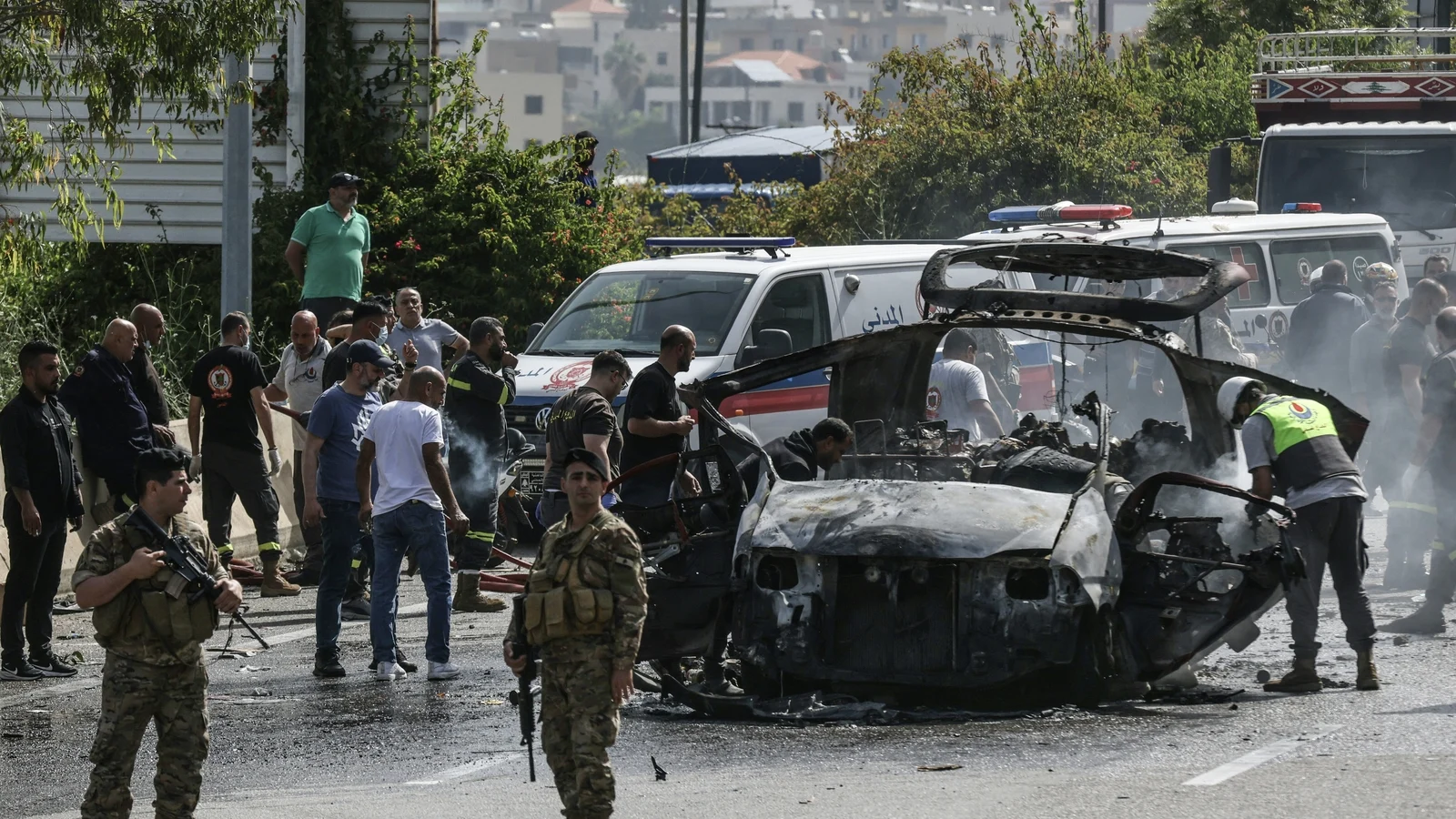
On a coastline where lemon trees meet the Mediterranean and cars weave past fisherman’s nets, the ordinary rhythms of life were punctured by the sound of explosions. In a single day this week, ambulances threaded through smoke and the coastal highway south of Beirut became a corridor of charred metal and grief.
Lebanon’s health ministry counted 12 people killed in a series of strikes that hit cars and small pockets of the country’s south — mostly around Jiyeh, Sidon and parts of the Tyre district. Authorities said two children were among the dead. Photographs from the scenes showed twisted, blackened vehicles and rescue workers carrying bodies into waiting ambulances; at one site near Jiyeh, a burnt-out car still smelled faintly of fuel and burned rubber.
“We heard the blast first, then people screaming,” said Maya Hassan, a shopkeeper in Sidon, who watched ambulances go by that afternoon. “You learn to live with sirens, but you never stop counting the cost.” Her voice cracked when she added, “We are tired of burying people we knew.”
On the cusp of diplomacy
These strikes came on the eve of a new, U.S.-brokered round of direct Lebanon–Israel negotiations in Washington — the most tangible push yet to untangle a frozen, volatile border dispute. For Beirut, the talks are being led by veteran diplomat Simon Karam, a signal that Lebanon is taking the process seriously, even as gunfire and drone skirmishes continue on its soil.
Israel argues it reserves the right, under the terms of the ceasefire issued on April 17, to strike “planned, imminent or ongoing attacks.” Since that ceasefire, AFP’s tally of health ministry figures reported more than 400 deaths in Lebanon. Meanwhile, Lebanese authorities say that since Hezbollah’s wider escalation in early March, more than 2,800 people have been killed across the country — including at least 200 children.
“Diplomacy cannot proceed in a vacuum of violence,” said Dr. Lina Haddad, a Beirut-based conflict analyst. “If the talks are to succeed, there must be trust — and trust cannot be built on charred cars and funerals.”
The human footprint
In Sidon, the grief was visible and ceremonial. Dozens gathered to mourn two civil defence personnel killed in an earlier strike. Their coffins, draped in Lebanon’s flag, passed under an honour guard of colleagues clutching rescue helmets and flak jackets — a striking tableau of public service laid bare in wartime.
“They were the people who came when others ran,” said Captain Rafiq Al‑Taj of the civil defence force, palms blackened from hauling debris in other attacks. “You cannot measure the loss. A rescue team is a small family in a country that keeps losing its families.”
The funerals, the late-night vigils, the impromptu soup kitchens set up by neighbours — these are the textures that statistics cannot convey. Yet statistics matter: they help the world quantify the scale of a crisis and, sometimes, galvanise action. The tally is stark — hundreds dead since the ceasefire, thousands since March — and the numbers keep rising.
Drones, UN peacekeepers and the new geography of warfare
One of the haunting features of this conflict is the increasing presence of drones. Hezbollah has been using low-cost fibre-optic drones to harass Israeli positions and, according to multiple accounts, to conduct strikes. These devices — small, agile, often launched from concealed locations — have altered the battlefield, complicating the calculus of risk and reprisal.
UNIFIL, the United Nations Interim Force in Lebanon, has flagged growing concern over drone activity in and around its positions. Their statement warned that explosions in or near UN bases have put peacekeepers at risk, and reported several detonations near the force’s Naqura headquarters. “This is not theoretical,” a UNIFIL spokesperson told me. “Our personnel are being endangered. Drones are changing the nature of what a buffer zone means.”
The Israeli army said it struck Hezbollah infrastructure, weapons storage facilities and rocket launchers across south Lebanon. Hezbollah, for its part, claimed ambushes and attacks on Israeli troops operating north of the border’s so-called “yellow line” — a zone roughly 10 kilometres north of the formal frontier that Israeli forces have been operating within.
Voices from the ground — fear, defiance and weary pragmatism
A schoolteacher in Tyre, who asked to be identified only as Samir, describes a weary calculus. “We wake, check the news, call relatives. Then we try to teach children colours and numbers while we plan for the next knockout on the phone,” he said. “You teach resilience by necessity.” His school has been damaged by nearby shelling; the blackboard now bears a line of dust where glass shattered during the last strike.
Hezbollah’s deputy leader, Naim Qassem, has warned that fighters will make the battlefield “hell” for Israel if operations continue — language that hardens resolve on both sides. “When words grow sharp, guns answer in ways that aren’t easy to reverse,” Dr. Haddad said. “Words are good for headlines, but ceasefires are kept by restraint.”
Why this matters beyond Lebanon
What unfolds along Lebanon’s southern coastal highway is not an isolated incident confined to local actors. It is a flashpoint in a broader regional dynamic: a battlefield where state and non-state forces test boundaries, where small drones and asymmetrical tactics meet conventional militaries, and where civilians increasingly bear the brunt.
Consider the ripple effects: refugee flows strain neighbouring communities, port closures disrupt trade pipelines, and every cemetery fills with a story that might seed future grievances. The Washington talks are a narrow corridor for de-escalation — but without local buy-in, without mechanisms that protect civilians on the ground, agreements risk being fragile paper amid real gunfire.
And the humanitarian needs are vast. International envoys have warned that rebuilding and recovery — in Gaza as well as parts of Lebanon — will take years and billions in aid. “Removing the rubble, rehousing a million people, restoring water and sanitation — this is a generation of work,” one international official observed, reflecting the scale of the challenge.
What comes next?
There are no easy answers. The Washington talks could open a path to a durable arrangement over maritime borders and access to offshore resources. Or they could become just another diplomatic waypoint in a long, volatile road. Success will require more than signatures — it will require de-escalation on the ground, protection of civilians, and credible enforcement of whatever terms are agreed.
So I ask you, reader: what responsibility does the international community bear when diplomacy sits just a continent away from the blast radius of missiles? When civilians queue for bread beside a memorial to neighbours killed in a strike, what does peace look like?
For now, families in Sidon and Tyre patch clothes, mend nets and fold flags over coffins. Diplomats prepare briefing notes in Washington. And drones continue to hum in the twilight, reminding everyone that the future of this stretch of coastline will be decided not only in grand halls, but in the lives of those who still walk the roads between sea and mountain.
- Reported deaths in Lebanon since the April 17 ceasefire: more than 400 (AFP tally, health ministry figures)
- Reported deaths since early March escalation: more than 2,800, including over 200 children (Lebanese authorities)
- Key locations affected: Jiyeh, Sidon, Tyre, Burj al‑Shemali
- Diplomatic milestone: U.S.-brokered talks in Washington, led for Lebanon by Simon Karam