Behind the Headlines: A Quiet Suburb, a Loud Verdict
There are neighborhoods in Salt Lake County where snow-capped mountains frame tidy lawns and the scent of coffee drifts from porches at dawn. In the past week, one of those neighborhoods has felt anything but quiet: the echo of a courtroom sentence has settled over it, and people are still trying to make sense of how ordinary life can crack so spectacularly.
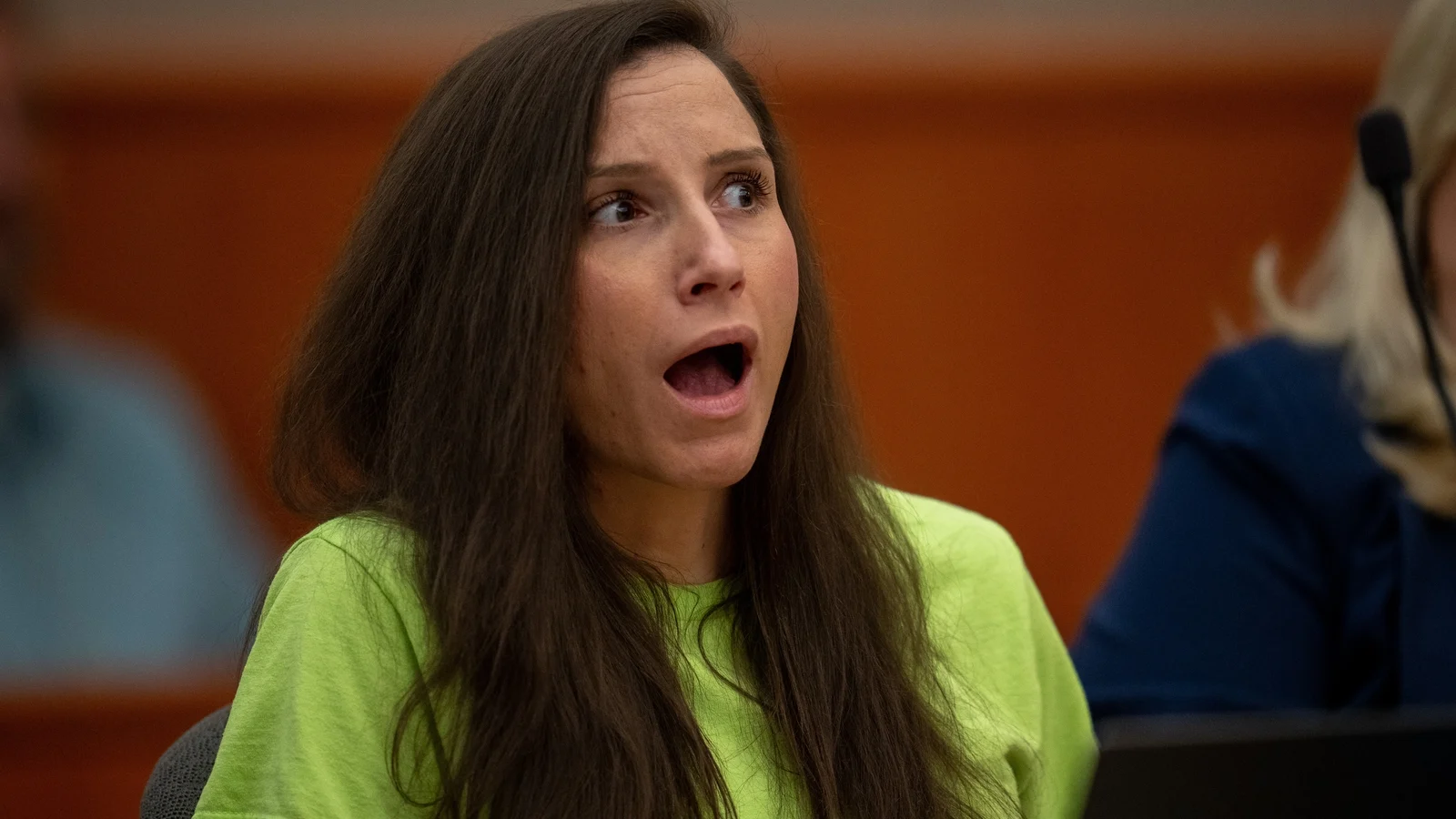
The story is as grim as it is strange. A jury found Kouri Richins guilty of murdering her husband, Eric, in 2022. On the day the judge handed down his ruling, he declared her too dangerous to ever be free, and she was sentenced to life behind bars without the possibility of parole. The name made headlines because of the odd, tender detail that came between the crime and the trial—a children’s book she published about grief, a book she said she wrote for her three sons.
A cocktail, a secret policy, and a family’s fracture
Prosecutors painted a methodical picture: cocktails laced with fentanyl, an extraordinarily potent synthetic opioid, and insurance policies allegedly taken out in secret. They say that on one occasion she spiked a sandwich and made her husband violently ill; on another she served him a drink laced with what they say was five times a lethal dose of fentanyl. The financial incentive, the state argued, was stark: she stood to gain roughly $6 million between inheritance and life insurance.
“It reads like a modern gothic,” a local crime reporter told me, leaning back and rubbing his temple. “You have suburban calm, you have family photos, and then you find an opioid—an invisible killer—threaded into it.”
Fentanyl is, by most measures, uniquely terrifying. It’s 50 to 100 times more potent than morphine and has become the leading driver behind the surge in U.S. overdose deaths in recent years. According to the Centers for Disease Control and Prevention, more than 100,000 Americans died from drug overdoses in recent years, with synthetic opioids such as fentanyl implicated in a large and rising share of those fatalities. In court, toxicology evidence and the testimony of forensic experts took on the cold precision of a lab report—but the human consequences were anything but tidy.
What the children said
In hearings that felt like a community-wide act of holding its breath, remarks from the Richins children were read into the record by therapists. “I will not feel safe if you are out,” one son wrote. Another said his mother “was always drunk” and added, with heartbreaking bluntness, “I do not miss her.” And the line that refracted the whole case into its purest human pain: “I miss my dad, but I do not miss how my life used to be.”
Those words—childhood rendered in raw, court-room prose—did more to explain the verdict than any forensic chart. They reminded everyone that a family’s private grief had become a public reckoning.
The book that caught attention
The children’s book, titled Are You With Me?, arrived in the world with a different aim, as the author presented it: a tender attempt to help three boys through grief. The image of a mother writing about sorrow while under criminal suspicion made for unnerving contrast. To supporters, it was an act of caregiving; to prosecutors, it became part of a narrative that obscured motive.
“Art can be sincere,” a psychologist who specializes in trauma wrote to me over email. “But it can also be a mask. The presence of a book doesn’t erase the sequence of behaviors that led to a death.”
Community ripples and the Utah context
Utah is a place where community ties and religious life often thread through daily routines. Churches host potlucks and charity drives; neighbors know one another’s birthdays. When a case like this unfolds, it disrupts that fabric.
“You don’t expect something like this here,” said a woman who runs a small bakery near the neighborhood. “We tidy our gardens; we sign up for youth soccer. Stuff like this makes you look at your neighbors differently.”
Locals have shared a mix of anger, sorrow, and bewilderment. Friends of Eric set out flowers and candles outside his home; some community bulletin boards filled with messages that alternated between condolence and outrage. Social media, predictably, was loud—full of claim and counterclaim, and a river of opinion where nuance often drowned.
Law, motive, and the courtroom drama
In the courtroom, the state played a darkly rational case: planning, purchase, and payoff. The defense maintained Ms. Richins’ innocence and, during the proceedings, she acknowledged infidelity in the marriage—“Secrets diminish self respect,” she told the court—but insisted she did not kill her husband.
“I’m broken,” she said in court, her voice recorded in news accounts. “Broken without your dad, broken without you boys.” Those lines—malevolence and heartbreak braided together—made people uncomfortable, because they held within them both guilt and the familiar ache of loss.
Defense attorneys argued that inconsistencies, not intent, explained the evidence; prosecutors said the pattern was unmistakable. In the end, the jury sided with the state.
What this case says about larger trends
Beyond the particulars, the case cuts into several broader veins troubling the country. First, it is a grim reminder of how fentanyl has moved from the margins to the center of mortality and criminality. Second, it highlights how financial incentives—life insurance, inheritance—can anesthetize moral boundaries when mixed with secrecy and opportunity.
Finally, it raises questions about public grief in an age of performative vulnerability. What does it mean when someone who claims to write to soothe her children is accused of engineering their pain? How do we parse sincerity from strategy when both use the same language of love?
Questions for readers to consider
- What do you do when the symbol of motherhood—books for children, lullabies, bedtime stories—becomes weaponized or suspect?
- How should communities respond when a trusted neighbor is found guilty of a crime that targets the most intimate of relationships?
- And beyond individual culpability, what responsibilities do we have to stem the tide of fentanyl and to better protect families from the modern scourge of synthetic opioids?
After the sentence
The judge’s words—“too dangerous to ever be free”—closed this chapter in a legal sense. But for neighborhoods and children, the reverberations will run longer. Courts can lock doors; they cannot stitch a childhood back together. The boys, who now must grow up under the shadow of this verdict, are the living evidence that justice is rarely tidy. It is messy, bureaucratic, and full of human leftovers.
One of Eric’s former colleagues told me, voice low: “We remember a father who coached Little League, who showed up at PTA nights. People like him are what hold a community together.”
As readers in far-flung corners consider the facts—fentanyl’s potency, the lure of millions in insurance, the notes kids left for a court—the case asks us to reckon with how close violence can sit next to ordinary life. It asks us to ask hard questions about trust, grief, and the narratives we accept without examining.
Will anything about the way we live next door change? Perhaps. Perhaps the story will fade to the periphery, another cautionary tale filed away by time. Or perhaps it will be a nudge—small, stubborn—to look a little more closely at the quiet corners of our own lives, and to care for the invisible harms that can rip families apart.