Under the Red Flags: A Summit that Smelled of Orchids, Oil and Danger
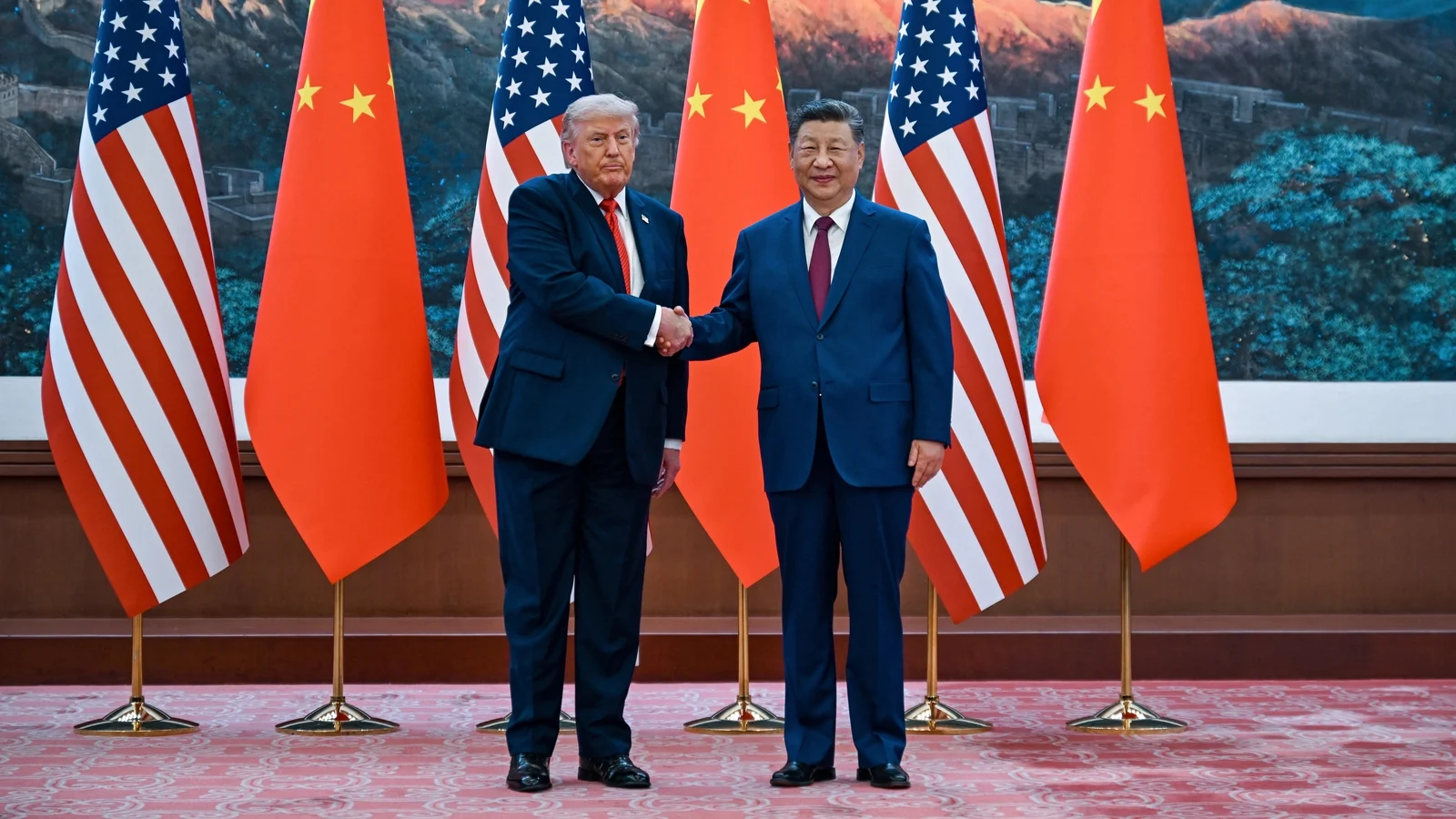
Beijing in spring is a study in contrasts: ancient temples muffled by modern traffic, incense and diesel, ceremonial red banners and a business class humming about AI chips. It was in that braided city — the Great Hall of the People, a crop of children with paper flowers waving at the motorcade — that two leaders of the 21st century staged a meeting that felt part state pageant, part chess match.
Chinese President Xi Jinping welcomed U.S. President Donald Trump with all the choreography of diplomacy: an honor guard, a slow procession of flags, an audience of ministers and generals. But behind closed doors, in a meeting that ran more than two hours, the tone changed. Mr. Xi delivered a blunt—some would say unflinching—message: resolve the Taiwan problem carefully, or risk pushing U.S.-China ties into a “highly perilous situation.” In less poetic language, he warned that missteps could lead to collisions, even conflict.
“We spoke plainly,” said a senior Chinese diplomat who asked not to be named. “The message was: Taiwan is not a side issue. It is existential for China. Mishandling it could have consequences for the whole world.”
Pageantry and Private Warnings
The ceremony outside the Great Hall — rows of guards, the polished boots and brass, the children on the plaza — could have been lifted from a travel brochure. Later, the two presidents toured the Temple of Heaven, historically where emperors asked for good harvests. Flowers, photographers, and the odd selfie kept the optics bright.
But the optics were only the cover story. According to Beijing’s readout, Mr. Xi praised recent U.S.-China economic and trade team talks in South Korea as reaching “overall balanced and positive outcomes.” Both sides say they want to preserve the fragile trade truce struck last October — the agreement that saw the U.S. suspend a slew of tariffs and Beijing back away from weaponizing rare-earth exports.
“Trade is the easy part at these meetings,” said Dr. Mei Lin, a trade scholar at a Beijing university. “But easy is relative. There are deep distrusts, and both capitals need wins. For Xi, it’s stability and technological sovereignty. For Trump, it’s jobs, planes and energy deals he can point to back home.”
Cash, Chips and CEOs
Mr. Trump came with a delegation that read like a Fortune 50 roll call: chiefs of industry and technology, from Elon Musk to Nvidia’s Jensen Huang and Apple’s Tim Cook. They flew with the president in search of smoother trade lanes, greater market access, and, in some cases, permission slips for high-tech components. Reporters later noted that Washington had cleared roughly a dozen Chinese companies to buy Nvidia’s H200 AI chips — an important, if symbolic, concession — though deliveries had not yet begun.
“We want fair rules and a level playing field,” a U.S. trade adviser traveling with the delegation told me. “And we want to reduce the chronic imbalance that built up over decades — planes, grain, energy. It’s about jobs, plain and simple.”
The Taiwan Fault Line
Taiwan — a vibrant democracy of 23.5 million people in the western Pacific — has long been the thorniest issue between Beijing and Washington. The island lives in a gray zone: the People’s Republic of China claims it as a province, while Washington, constrained by no formal diplomatic recognition, is nevertheless bound by the Taiwan Relations Act to help Taipei defend itself.
Last fall a proposed arms package worth about $14 billion was circulating in Washington: fighters, missiles, defensive systems that Taipei sees as essential, and Beijing sees as provocation. Xi told Trump that such arms sales were a red line. The Chinese foreign ministry framed the exchange in stark terms: mishandling Taiwan could send bilateral ties down a dangerous path.
“We told them plainly,” said a trade official who attended part of the meeting. “This is the most important issue we face. It’s not about paper maps; it’s about security and national pride.”
Trump, for his part, was pointedly silent when asked on the grounds whether Taiwan had been discussed as photos were taken at the Temple of Heaven. The U.S. White House brief afterwards emphasized cooperation on trade, agriculture, and even an interest from Beijing in buying American oil to reduce dependence on Middle Eastern sources — a line that carries weight as global markets strain under geopolitical instability.
Straits, Oil and the Wider World
Outside this bilateral drama sits a wider, messier world. One-quarter of the world’s seaborne oil transits the Strait of Hormuz at any given time — crude and natural gas vital to economies from Shanghai to Stuttgart. With conflict in the Middle East disrupting shipments, the global energy map has been rearranged, and both presidents signaled an interest in reopening the key waterway and stabilizing markets.
“It’s in China’s interest to calm things down,” said Marco Rubio, speaking aboard Air Force One, echoing the U.S. talking point. “Chinese ships are stuck in the Gulf. A prolonged slowdown would blow back on exporters across the board.”
Analysts, however, were skeptical that Beijing would lean on Tehran. Iran remains a strategic partner for China — a counterweight in a world dominated by Washington. Pressuring it to capitulate would exact a price Beijing may not be willing to pay.
Domestic Politics, Global Stakes
There is theater at home too. For Mr. Trump, who has seen his approval ratings buffeted by war and domestic turmoil, a successful trip promises talking points for a domestic audience hungry for economic wins. For Mr. Xi, whose political base is more consolidated, the calculus is different: stability, strategic autonomy and continued technological advancement.
Still, both sides have practical reasons to keep trade moving. The U.S. wants to sell Boeing jets, farm goods and energy to chip away at a bilateral trade imbalance that has long been a political bugbear. China wants access to advanced chipmaking equipment and fewer restrictions on semiconductor flows — the lifeblood of everything from smartphones to submarines.
Voices From the Street
To capture the local color, I walked past a noodle stall near the Temple of Heaven. The owner, Ms. Liu, wiped her hands and watched the limousines roll by.
“We notice the guests,” she said, laughing softly. “More cameras, more foreigners. But we mostly care about prices — oil, wheat, the cost of meat. If they can make things cheaper for us, fine. If not, we will keep selling noodles.”
On a subway platform, a university student named Zhou Xia offered a different perspective. “We want peace,” she said. “War or a new cold war will only make our lives harder. But we are proud of our country. If others poke our core issues, we will stand firm.”
What This Meeting Means — and What It Doesn’t
What emerged from the summit is both obvious and worrying: interdependence and rivalry remain tangled. The two giants share supply chains, shareholders and a mutual interest in preventing runaway conflict. Yet beneath the handshake and the banquet lies an uncomfortable truth: there are limits to what diplomatic theater can achieve when national security, pride and economic competition are at stake.
So what should we watch next? Will the tentative trade mechanisms agreed in theory translate into concrete market openings, more U.S. beef and Boeing orders, and smoother chip exports? Will the United States sign off definitively on the Taiwan arms package? Will Beijing nudge Tehran toward moderation, or will it prioritize strategic allies?
Ask yourself this: in a globalized world, how much do you want geopolitics to be sorted by state dinner optics, and how much by clear, enforceable rules that protect people’s livelihoods? The leaders have posed their cards. Now the world will wait to see whether they’re playing for a win-win or a winner-takes-all table.