A Quiet Corner of the Continent, a Loud Global Alarm
On a humid morning at a roadside market near the DRC-Uganda border, a woman wrapped in a brightly patterned pagne folds a handful of plantain leaves into a bundle and looks up, eyes clouded with worry.
“People are whispering,” she says, folding a leaf with slow, careful hands. “They say the sickness is back. We do not know who will come next.” Her voice is practical, not theatrical—this is not a story but a disruption in the rhythm of daily life.
What the World Health Organization Has Declared
This week the World Health Organization raised the alarm: the outbreak of the Bundibugyo species of Ebola virus that has surfaced in eastern Democratic Republic of Congo and in Uganda has been designated a “public health emergency of international concern” (PHEIC).
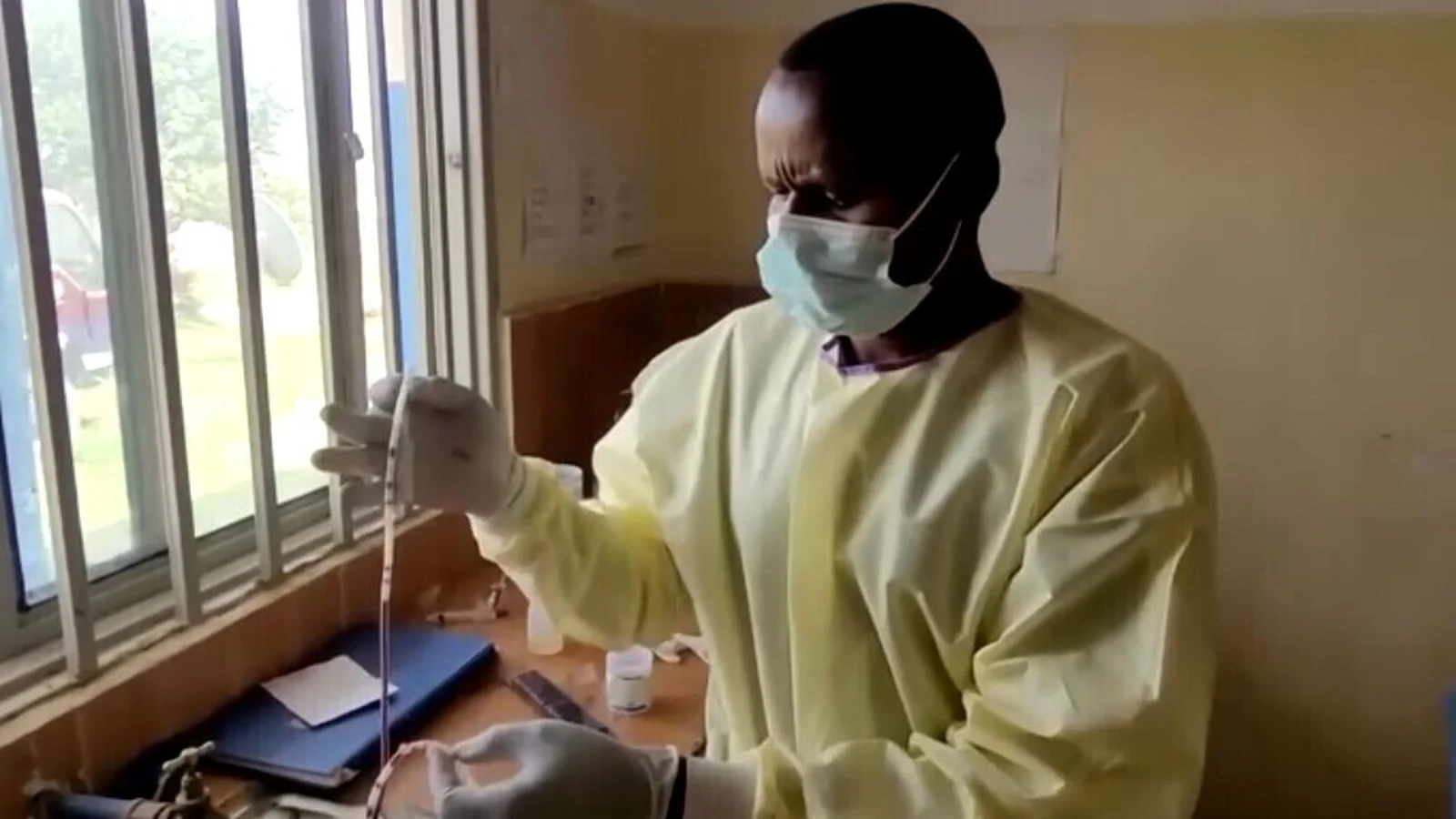
In plain numbers—southern and eastern health officials and WHO briefings say roughly 246 suspected cases have been reported, with eight of those confirmed in the laboratory. Up to 80 suspected deaths are under investigation. Those figures are unsettling not just for what they record but for what they likely miss: the WHO has warned that the positivity rate among initial samples and the steady growth in suspected cases suggest a larger outbreak than currently visible.
Why this declaration matters
A PHEIC is only declared when an event is extraordinary, poses a risk of international spread, and may require a coordinated global response. Here, WHO officials are balancing two hard truths: this outbreak is dangerous—but it is not the same as the Zaire strain of Ebola, for which vaccines and some therapeutics exist.
“We are deploying every tool we have to slow transmission,” said a WHO epidemiologist in Geneva in a brief recorded statement. “But Bundibugyo is less familiar to us. There are no approved, species-specific vaccines or therapies readily available, which complicates containment efforts.”
On the Ground: People, Ports and Borders
In Kampala, Uganda’s vibrant capital, two unrelated lab-confirmed cases—one fatal—have been logged among travelers from the DRC. In Kinshasa, a case was identified in a returning traveler from Ituri province. These are not merely numbers on a chart; they are people crossing familiar routes—buses that ply lakeside roads, traders who depend on daily cross-border commerce, and families who visit kin on both sides.
“The border has always been porous,” says Jean-Baptiste, a motorcycle taxi driver who ferries passengers across the Bunia checkpoints. “If you close official posts, people still find paths through the forest. We know the land; we know the short cuts.” His concern is practical: enforcement, he says, can push movement into unmonitored channels and make tracing harder.
That fear is reflected in WHO guidance: countries are urged to activate disaster and emergency-management mechanisms and to step up cross-border and internal road screening—but not to shut down borders or trade indiscriminately. Closing ports can paradoxically increase disease spread by driving it underground.
Practical steps being urged
- Isolate confirmed cases immediately and provide supportive care in safe settings.
- Trace and monitor contacts daily for 21 days—the known upper limit of Ebola’s incubation period.
- Restrict national travel for suspected cases and prohibit international travel for contacts until the 21-day monitoring period is complete, except for medically necessary evacuations.
- Maintain trade and open official crossings with enhanced screening to prevent unmonitored movement.
The Human Cost—And What Makes Bundibugyo Different
Bundibugyo ebolavirus is not new; it was first identified in Uganda in 2007. But unlike Ebola-Zaire, for which rVSV-ZEBOV vaccine campaigns and monoclonal antibody therapies have been game-changers in recent outbreaks, Bundibugyo has no widely approved, species-specific vaccine or targeted therapeutics.
“We are effectively fighting in a lower-visibility mode,” says Dr. Amina Kallayi, an infectious disease specialist who has worked in several outbreaks across Central and East Africa. “Vaccines for Zaire have been a monumental tool, but they cannot be assumed to work the same way against other ebolaviruses. When you lack that layer of protection, everything else—early detection, rapid isolation, contact tracing, community engagement—becomes that much more urgent.”
For families, the consequences are immediate and grim. “My brother cried when the ambulance took his wife,” recounts a man from Ituri who asked that his name not be used. “No one can touch her. We pray, but the prayers do not fix the fever.” Funeral practices, close family care, and crowded clinic waiting rooms—familiar social fabrics—turn into risk amplifiers without careful adaptation and trust-building.
Why We Should All Care
At first glance, this might appear localized: an outbreak in eastern DRC and a few cases in Uganda. But the globalized world has a long memory of how quickly local outbreaks can ripple outward—through air travel, trade, and migration. The PHEIC is a call for international solidarity not panic. It is an appeal for resources, for laboratories, for logistics that stretch into remote places where roads are seasonal and diagnostic capacity is sparse.
“This is a test of our collective readiness,” says Dr. Samuel Ortega, a public health scholar who studies outbreak response. “Investments in surveillance, in frontline health workers, in rapid diagnostics, and in community engagement are what prevent escalation. If we ignore these outbreaks until they become regional crises, the human and economic costs multiply.”
Lessons and the wider conversation
Think about the past decade: the West African epidemic that reshaped global emergency response, the 2018–2020 outbreaks in DRC that introduced ring vaccination strategies, and the incremental progress on therapeutics. Each event raised questions about equity: who gets access to vaccines and drugs, and how do we strengthen fragile health systems so that they don’t fall into predictable crisis?
Are we prepared to mobilize testing, isolation, and personnel at the scale needed—and to do it in ways that respect local customs and livelihoods? Can international assistance be fast, flexible, and culturally sensitive? These are political and moral questions, not just technical ones.
What You Can Do—and What Comes Next
For readers far from the region: remember that global health is not distant. Early investment, clear reporting, and responsible journalism matter. Follow reputable public health channels for guidance and avoid sensationalism that stigmatizes communities already bearing the brunt of disease.
For the international community, the next steps are concrete: increase funding to support rapid diagnostic labs, respect WHO recommendations on not closing borders precipitously, and support community-led messaging so that people understand safe care and safe burials without losing dignity.
“Trust is the vaccine we don’t have,” says Marie-Therese, a community health volunteer in Bunia. “People will come to clinics if they believe the clinic will help, not punish them.” It’s a small line, the kind of human truth that statistics can’t capture but that determines whether alerts become control or catastrophe.
So ask yourself: in a world of shared vulnerabilities, how much are we willing to invest now to avoid much greater cost later? The answer will be written not in the halls of international agencies alone, but in the markets, clinics and borderlands where this outbreak is unfolding—places where care, courage and small acts of cooperation save lives.