Midday alarms over Võrtsjärv: how a stray drone jolted Estonia’s calm
It was the sort of quiet afternoon that feels stitched into the Estonian countryside — birch shadows sliding across fields, the surface of Lake Võrtsjärv catching light like a sheet of pewter, and small towns humming gently with their weekday routines. Then, just after noon, the sky spoke.
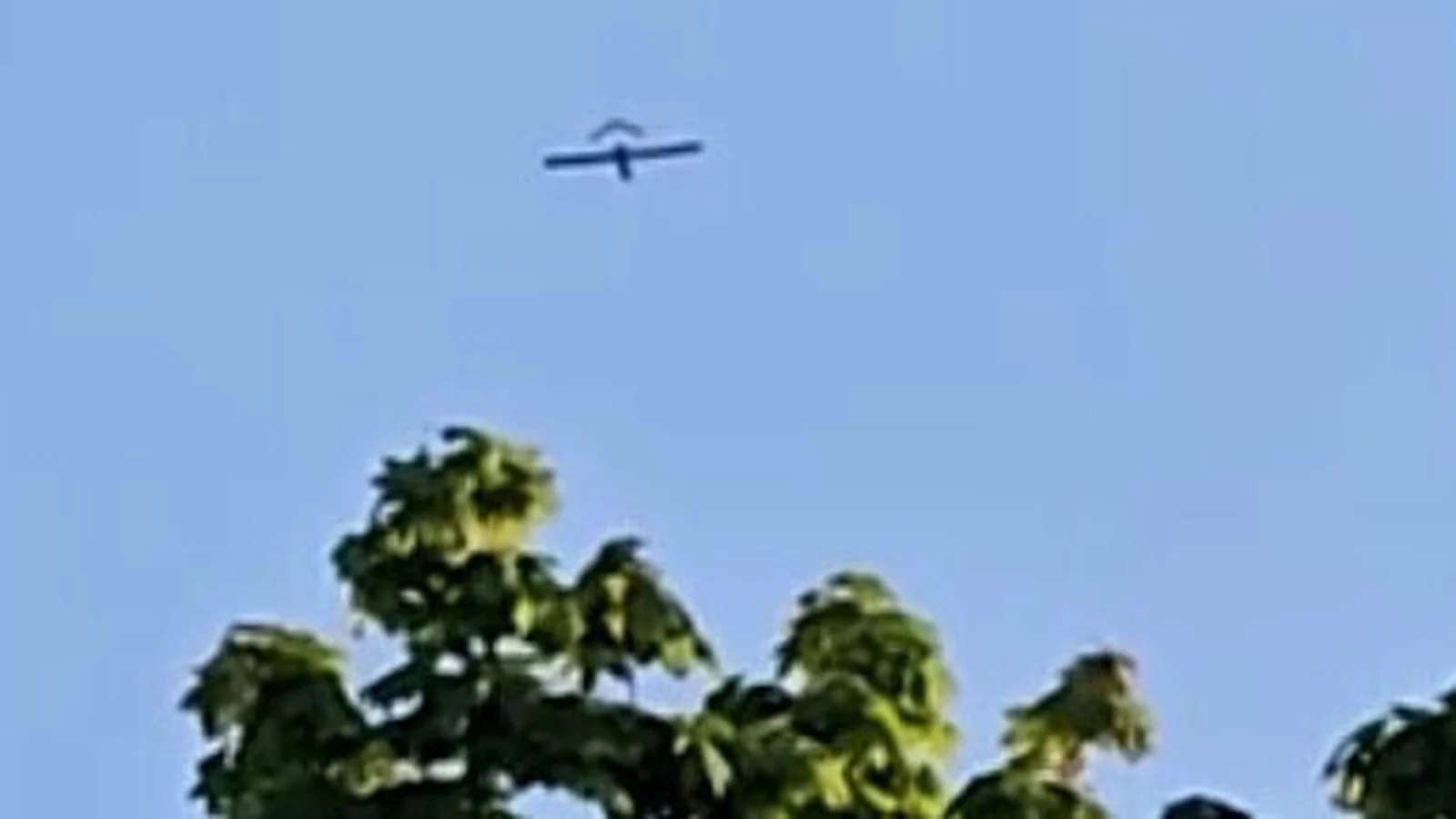
Residents of southern Estonia heard the whine of jets and the low, insistent tone of a military alert. Within hours, tiny shards of wreckage lay scattered near Poltsamaa, cordoned off by police and examined by investigators. Officials announced that a NATO fighter — an F‑16 flown from Romania — had shot down a suspected Ukrainian drone after Estonian and Latvian radars tracked it entering Estonian airspace.
“Our radars picked up a potential threat before it crossed the border,” Estonia’s defence minister later told reporters in Tallinn, his voice calibrated between caution and concern. “When the object entered Estonian territory, we activated the agreed procedures immediately.”
A brief chronology
The timeline reported by Estonian authorities was crisp and unsettling in its simplicity: radar detection, alert across six southern and eastern counties, interception by allied fighters, and fragments falling into a rural municipality. The air threat alert closed after roughly an hour, but the reverberations were only beginning.
Police have blocked access to the site where debris landed, and forensic teams are combing for serial numbers, charred components and anything that might reveal where the drone came from, how it navigated and why it crossed into NATO space.
Voices from the shore: locals respond
People who live near Lake Võrtsjärv — Estonia’s second-largest lake, a broad inland sea of some 270 square kilometres — are still replaying the midday drama as if it were a film. “I was pulling up my nets when I heard the jet,” said Aino Jõgi, a 62‑year‑old fisherwoman from a village on the lake’s western edge. “You don’t expect the sky to be dangerous here. You expect the geese.”
At a nearby bakery, customers exchanged worried looks. “We saw a flash over the trees and figured something had fallen,” said Markus, a cashier who gave only his first name. “For the past years we’ve been used to distant news — now it knocks on our door.”
Not every voice was alarmed. “We are on NATO territory,” shrugged a local farmer. “If something flies over, better they handle it fast. But still — it’s unnerving. My granddaughter asked if war had come to our village.”
Diplomacy on the phone and claims of interference
Within hours, Tallinn and Kyiv exchanged words. Estonia’s defence minister said he received a phone call from Ukraine’s defence minister offering apologies for the incident. Kyiv, embroiled in a brutal conflict with Russia, has repeatedly warned that its weapons and drones can be disrupted by electronic warfare that forces them off course.
Marko Mihkelson, chair of the Estonian parliament’s foreign affairs committee, wrote that the most likely explanation was Russian electronic interference — a familiar tactic that juggles civilian danger with strategic deniability. “When communications and GPS go awry, a fighter‑launched drone becomes little more than a piece of metal falling from the sky,” Mihkelson warned.
Expert perspective: how drones slip the leash
To understand how a drone intended for one target ends up over a friendly country, listen to the engineers and analysts. “Modern conflict zones are now saturated with jamming devices and spoofing signals,” said Dr. Elena Petrov, a European analyst in electronic warfare. “A drone relying on GPS or radio guidance can drift miles if adversarial forces manipulate those inputs. It’s less a deliberate incursion than a side effect of a high‑intensity electronic battlefield.”
Experts also note that the proliferation of inexpensive drones, and their use by both state and non‑state actors, has turned the sky into a crowded, contested commons. “Drones are cheap enough to be disposable, but when they cross borders the stakes are anything but cheap,” another security analyst remarked.
Regional ripple effects: Finland, Latvia and a NATO puzzle
Estonia’s incident is not an isolated ripple. Just days earlier, Finnish authorities issued an alert about suspected drone activity around Helsinki — suspending airport traffic and telling residents to stay indoors, though no drone was ultimately found. Latvia, Estonia’s southern neighbor, has also seen its own airspace concerns increase.
The broader pattern is unmistakable: conflict in Ukraine is leaking into the Baltic airspace, turning national borders into risk zones for unintended encounters. NATO has maintained an air policing presence in the Baltics for years; the alliance rotates fighter jets among member states, and Romania’s F‑16s are part of that collective shield.
- Estonia and the other Baltic states joined NATO in 2004; the alliance’s collective defense clause means that airspace violations are not just local issues.
- Estonia, with a population of roughly 1.3 million, has invested heavily in defense and digital resilience — a strategy born of history and geography.
- Electronic warfare and drone proliferation are reshaping how small states experience security in real time.
So what now? risk, rules and the everyday
For small towns whose lives are threaded through centuries of quiet routines, the question is intimate: how do you wake up to international conflict? For policymakers, the challenge is procedural and political: how to keep airspace secure without escalating confrontations, and how to manage incidents that begin as technical failures but quickly acquire geopolitical meaning.
“We have to be ready for accidents,” said an Estonian border official who asked not to be named. “But we also need clarity — who takes responsibility when a device crosses a border because it was jammed? How do we prevent a mistake from spiraling?”
Beyond the immediate technical fixes — better identification systems, more resilient navigation for drones, clearer communication channels between Kyiv and NATO capitals — there is a cultural conversation taking shape. Can technology be kept humane? Can states find ways to mitigate harm to civilians and preserve the everyday rhythms of life under a cloud of drones?
Questions to carry with you
As you read this, consider: how close do we want warfare technologies to come to our families and streets? How should democracies safeguard public space without militarizing it? And finally, what responsibility do actors in conflict zones have for spillovers that affect nations far from frontline battles?
There are no easy answers. But in a world where a piece of metal can cross a border and change the tenor of a noon at the lake, the small questions — about safety, responsibility and neighborliness — have become urgent. For the fishermen of Võrtsjärv and the parents pacing at their kitchen tables, the phenomenon is no longer an abstraction. It is a reminder that geopolitics, like weather, moves through the places we call home.