At the edge of the sea and the edge of a decision: Tehran’s latest peace paper
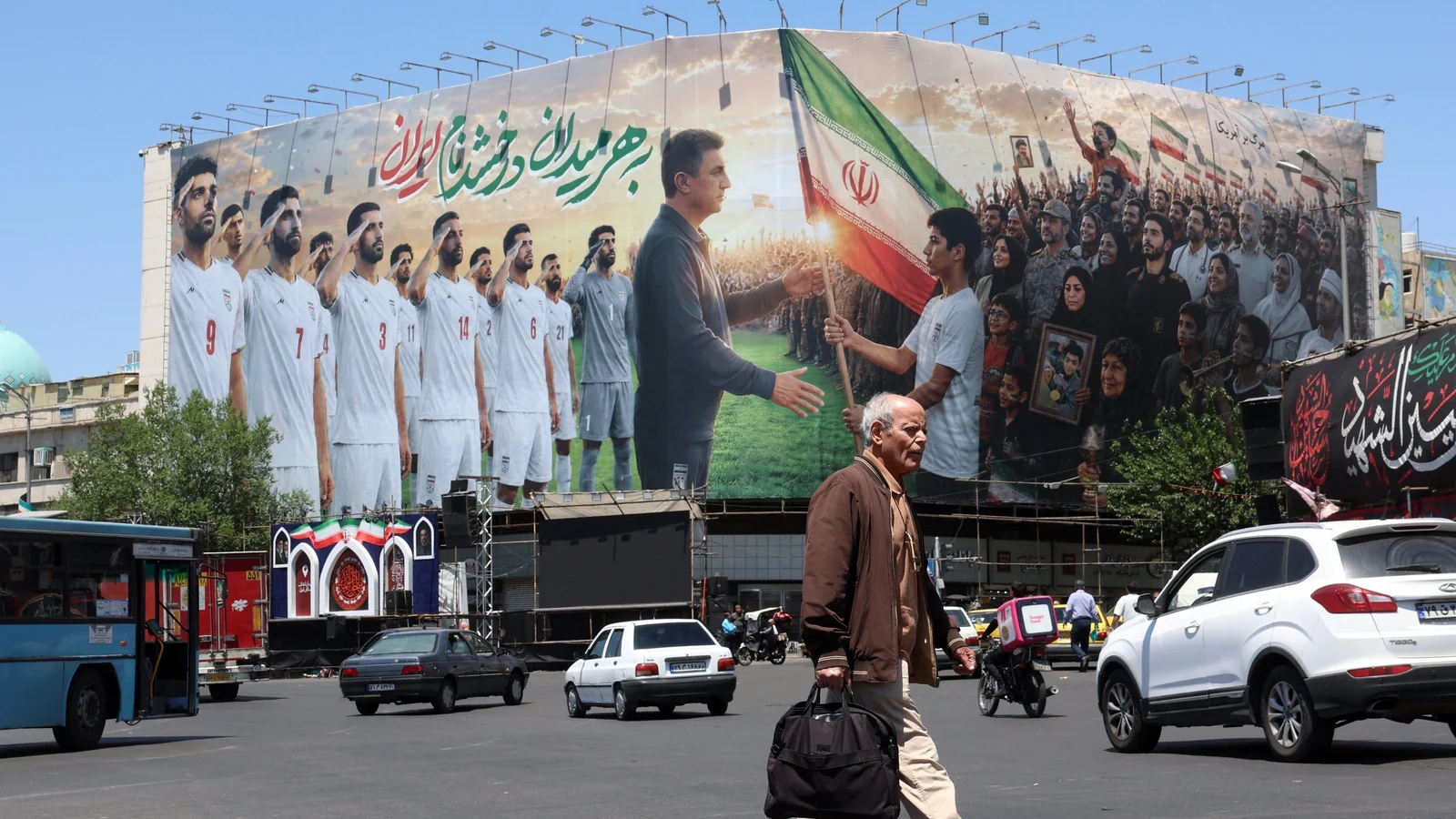
Early morning in Tehran has a smell to it—brewed black tea, exhaust, and the faint smoke of samovars at the small cafes where men still gather with newspapers and the day’s worries. This week, those worries have a single, brittle shape: a paper passed quietly between capitals that asks for an end to a war that has scarred the region.
Iran’s foreign ministry has laid out a list of conditions it calls a path to peace: hostilities must stop on every front, US military forces should withdraw from positions close to Iranian borders, the longstanding sanctions regime must be lifted, frozen Iranian funds must be returned, reparations should be paid for damage caused during the conflict, and the US maritime blockade must be ended. Deputy Foreign Minister Kazem Gharibabadi summarized those demands in terse, official language to state media, but the appeal felt, on the streets, far less diplomatic and far more urgent.
What Tehran is asking for
- An immediate cessation of hostilities across the region, including Lebanon.
- Withdrawal of US forces from areas perceived as proximate threats to Iran.
- Full lifting of sanctions and release of frozen assets.
- Reparations for destruction caused in the course of the conflict.
- An end to the US marine blockade that has strangled trade and daily life.
These are not novel requests. They echo earlier offers and grievances that have run like a seam through decades of Middle Eastern politics. What gives this moment its charge is the backdrop: a conflict that has left thousands dead, hundreds of thousands displaced, and a vital artery of global commerce—the Strait of Hormuz—temporarily closed or perilously contested.
Leaders, intermediaries and the halting language of diplomacy
Washington’s response has been a study in public contradiction. President Donald Trump, who last week dismissed an earlier offer as “garbage,” announced that he had paused planned strikes after receiving Tehran’s fresh proposal and suggested there was a “very good chance” of a deal that would curb Iran’s nuclear ambitions. “If we can do that without bombing the hell out of them, I would be very happy,” he told reporters, his words a blunt mix of threat and reluctant diplomacy.
Behind the public sparring are quieter channels. Pakistan, which hosted the only round of peace talks last month, emerged as an intermediary, sharing Tehran’s text with Washington. “They keep changing their goalposts,” a Pakistani official said, worried about the clock as much as the politics. “We don’t have much time.”
That sense of urgency is not fanciful. The Strait of Hormuz is not just a local waterway—it is one of the chokepoints of the global economy. Historically, somewhere between 17 and 20 million barrels of oil per day have passed through its narrow waters, about a fifth of the world’s seaborne oil trade. Any disruption ripples into markets, into pump prices, into household bills from Shanghai to São Paulo. That is why the leaders of Qatar, Saudi Arabia and the United Arab Emirates reportedly asked Washington to hold off on strikes: not out of affection for Tehran, but out of fear of economic shockwaves.
The human toll beneath the headlines
Numbers do their work, but they do not speak. The war killed thousands in Iran before a ceasefire briefly held in April. Israel’s campaign in Lebanon killed thousands more and drove hundreds of thousands from their homes. Iranian strikes on neighboring states and on Israel have killed dozens. These are not statistics to be filed and forgotten; they are people—families exiled from neighborhoods they built, fishermen who no longer trust the sea, children for whom sirens are a familiar lullaby.
“We wake up counting the power outages and the promises,” said Fatemeh, a shopkeeper across from the old bazaar in Tehran, her hands stained with dye from the bolts of cloth she sells. “If the money comes back, maybe I can pay for electricity. If the fighting ends, maybe my brother can come home. But promises have a way of falling between the teeth of history.”
In a makeshift shelter outside Beirut, 47-year-old Karim folds a thin blanket around his shoulders and looks past the camera. “We didn’t choose to be a bargaining chip,” he said. “We lost our house. My children lost their school. How do reparations turn into our kitchen table?”
Where negotiations might bend—and where they won’t
There are glimmers of flexibility. Multiple sources suggest the United States may be willing to unfreeze a portion—perhaps a quarter—of Iran’s assets held in foreign banks. That amount amounts to tens of billions of dollars, a life-changing sum in a country where inflation and shortages have become daily realities. Washington has also signaled a willingness to allow limited, supervised nuclear activity under the International Atomic Energy Agency (IAEA), a concession designed to preserve face for both sides while maintaining technical oversight.
Tehran, for its part, insists nothing short of lifting all sanctions will be acceptable. “Partial measures leave our people hungry and our industry idle,” one senior Iranian official told state media. “We will not accept a half-peace that keeps the chokehold in place.”
Washington publicly denies it has eased oil sanctions during talks. Diplomacy on this scale is as much theater as it is negotiation—postures are struck for domestic audiences, hardliners get placated by tough rhetoric, and mediators whisper behind the curtains.
Unseen engines: proxies, drones and the new geometry of war
This conflict has not been a single front. Iran’s network of proxy militias and the drones launched from Iraq and other theaters have blurred lines and made the war asymmetric. For every decision made in a marble-paneled room, there are fighters, smuggled weapons, and makeshift bomb factories that do not respond to memoranda. The result is that even if capitals sign an agreement tomorrow, the work of verification and de-escalation on the ground will be painstaking—and dangerous.
“Negotiations can turn off formal hostilities, but they cannot instantly untangle a decade’s worth of regional entanglements,” said Dr. Miriam Alvarez, a nonproliferation expert who has watched Middle Eastern negotiations for thirty years. “You need inspectors, you need confidence-building measures, you need local buy-in. Otherwise agreements are paper without practice.”
What would peace look like—and what will it cost?
Imagine a day when young men in Beirut no longer sleep in temporary housing, when the fishermen of Bandar Abbas cast nets without scanning the horizon for drones, when an Iranian entrepreneur can access a foreign bank account without months of permits. That is the human promise of diplomacy. But there is a catch: trust is a currency harder to mint than cash. It demands verification, concessions, and a willingness from populations to accept imperfect compromises.
So what should the world ask for? Security, certainly. A reduction of proximate forces. Freedom of navigation in vital waterways. Oversight by neutral bodies like the IAEA. Reparations that actually reach victims. And, crucially, a political framework that addresses underlying grievances—economic strangulation, regional rivalry, and ideological posturing.
Will this peace proposal be the turning point or another waypoint on a longer, grinding road of crisis and negotiation? The answer lies not just in Washington or Tehran, not just in capitals and ships and capitals, but in the small, stubborn choices of ordinary people—shopkeepers, teachers, exiles—who will live with the outcome.
As you read this, perhaps with a cup of coffee or tea, ask yourself: what would you trade to avoid another night of sirens? Is peace worth imperfect terms? The diplomats will haggle over legalese; the rest of us will live with the consequences. For now, the paper sits on a table somewhere, ink drying, and two sides consider whether it is a bridge or a mask.