Across the Vistula: A New Chapter Between Warsaw and Budapest
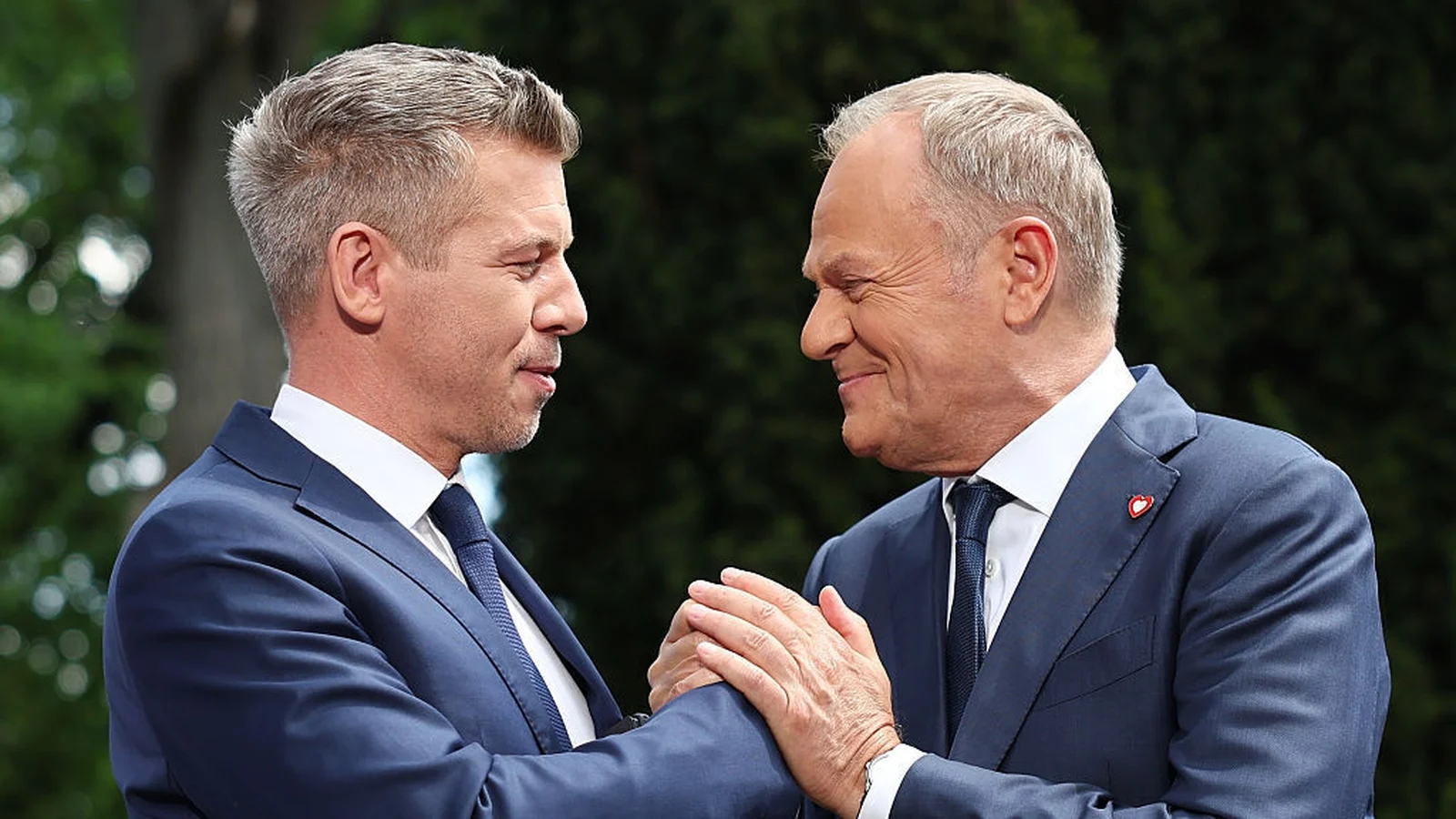
He arrived in Warsaw not as a triumphant outsider but as a man carrying the fresh ink of an election victory and a folder full of reconciliatory appointments. Péter Magyar, Hungary’s new prime minister, spent his first official foreign trip this month walking the corridors of European possibility with Poland’s Donald Tusk — a meeting that felt less like routine diplomacy and more like the sound of a long-closed door being nudged open.
For nearly two hours the two leaders spoke behind the cameras, and longer still in the quiet of intergovernmental rooms where energy maps, rail corridors and the fate of minority language rights lay spread across conference tables. Then they stepped out into the light and spoke plainly: this is a reset.
Why Warsaw?
To understand the symbolism, you must know what came before. Viktor Orbán’s 16-year run altered the tone, and sometimes the texture, of Budapest’s relations with its neighbors and with Brussels. In the final years of his tenure Hungary’s asylum to a former Polish justice minister and his deputy — wanted in Poland on accusations of misappropriating public funds — deepened a chill with Warsaw.
Magyar’s Tisza party swept April’s election and turned the page. In Warsaw, the chemistry was immediate. “We want to be partners again, not rivals,” Magyar told reporters, his voice a mixture of pragmatism and purpose. “Central Europe is too small and too important to stay divided when the challenges ahead — energy, security, migration — are so large.”
Meetings that Mapped a New Agenda
The two-day agenda read like a checklist for rebuilding ties: economic cooperation, defence coordination, infrastructure projects, and a vow to find common ground on Ukraine’s European future.
“If we align on energy and transport, we unlock more than pipelines and railways — we restore trust,” Donald Tusk said beside Magyar at a morning press briefing. “Poland and Hungary can be a force for convergence inside the EU, not fragmentation.”
Accompanying Magyar were key ministers — defence, economy, energy, transport — and Hungary’s new foreign minister, Anita Orbán (no relation to the former prime minister), each set to negotiate intergovernmental accords with their Polish counterparts. The Hungarian delegation also visited Kraków and planned to close the trip in Gdańsk, meeting figures who trace the arc of Poland’s modern democratic history.
Local color: Kraków and Gdańsk
In Kraków’s narrow lanes, the prime minister’s brief evening with Cardinal Grzegorz Ryś felt like a civilizational nod — a handshake between spiritual guardians and political stewards. A stallholder near the market square, Maria, who has sold pierogi for 22 years, watched the motorcade and joked, “If they fix the trains, I’ll finally go visit my sister in Debrecen. That’s the real diplomacy.”
Gdańsk, a port that still hums with the memory of Solidarity and Lech Wałęsa’s long shadow, will host the final act of this visit — an encounter between Magyar and Wałęsa. “We are returning to conversations about what binds us,” said Piotr Nowak, a retired shipyard worker who remembers strike lines and radio broadcasts. “Not just what divides.”
Energy: The ‘Lowest Hanging Fruit’
Energy cooperation emerged as the most immediate, tangible outcome on offer. Poland is preparing a new LNG import terminal in Gdańsk, set to begin operations in 2028, and Warsaw has reportedly offered Hungary access to those supplies — a runway for Budapest’s pledge to end Russian energy dependency by 2035.
“It’s realistic and practical,” said Wojciech Przybylski, editor-in-chief of Visegrad Insight. “Energy is the lowest hanging fruit: Poland can provide supply and network access; Hungary needs alternatives. This is where you get early wins, build trust, and then tackle harder political issues.”
To put the stakes in context, Hungary imports a significant share of its gas and oil from Russia — a vulnerability Magyar’s government has pledged to eliminate. The timeline is ambitious. But with pipeline interconnectors, LNG access and cross-border grids, Warsaw and Budapest can at least aim for momentum.
Money, Rule of Law, and the EU’s Leverage
Politics in Brussels is rarely far from money; it’s often all about it. Hungary is seeking the release of roughly €18 billion in EU funds that were frozen during the previous government’s disputes with Brussels over rule-of-law concerns. Magyar’s campaign promised to unlock those funds, and his counterpart in Poland has recent experience: Tusk’s government successfully unblocked cohesion money after taking office in December 2023.
“When financing flows, projects start,” said Anna Kowalska, a political scientist at the University of Warsaw. “Roads get paved, hospitals get updated. That creates constituencies for cooperation.”
But the releases are conditional. Brussels has made clear that respect for judicial independence, public procurement standards and anti-corruption frameworks are not optional. For Hungary, navigating those demands while satisfying domestic constituencies will be a delicate balancing act.
Ukraine: Language Rights and Accession Hurdles
Perhaps the thorniest subject was Ukraine’s long-term place in the European family. Under the previous government, Budapest’s opposition to Ukraine’s EU ambitions hinged on cultural protections: in particular, the language rights of the Hungarian minority in western Ukraine.
Magyar and Tusk discussed ways to safeguard those protections. “If Ukraine guarantees linguistic and cultural rights, Budapest is far more open to supporting accession steps,” Magyar said. Yet the Tisza party has pledged a referendum on any final decision — a powerful domestic lever that could complicate swift EU-level alignment.
It’s a reminder: geopolitics is not only about maps and gas pipelines. It’s also about schools where children are taught, street signs in two languages, and the everyday practices that anchor communities. “Nationhood is lived in classrooms,” said Dr. Elena Baranyi, an expert on minority rights. “Ask yourself: what does being Hungarian mean to someone growing up on the other side of the border?”
From Bilateral Talks to a Regional Revival
Magyar invited the leaders of the Visegrad Group — Poland, Hungary, Czechia and Slovakia — to meet in Budapest next month. The alliance’s momentum had stalled as Warsaw and Budapest drifted; a renewed Visegrad coalition could regain influence in EU policymaking if it speaks with one voice on cohesion, infrastructure and security.
“Both capitals sit under the same umbrella,” Przybylski told me. “That makes it easier to coordinate and exert larger influence.”
What Does This Mean for the World?
At surface level, this visit is about trade corridors and gas terminals. But at a deeper level it is about the direction of Europe: will it knit together regionally to meet global challenges, or will individual countries retreat into transactional, short-term calculations? The answer matters not just to Central Europeans but to anyone watching how democracies reconcile domestic politics with shared European responsibilities.
So here’s a question to you, reader: do you think regional alliances like Visegrad can stabilize the European project, or do they risk creating blocs within blocs? Does the promise of quick wins — energy supplies, unlocked funds — outweigh the slow, sometimes painful work of restoring rule of law and trust?
Closing Scene
At the end of the second day, walking the quay in Gdańsk as gulls cried over the Baltic, a veteran dockworker I spoke with shrugged, shrugged and said, “We’re all tired of being told Europe is about Brussels. Sometimes we need neighbours next door to help fix the roof.”
Magyar’s visit didn’t fix everything — it couldn’t. But it set a tempo: practical initiatives, hard conversations about minority rights, and a promise to sit down again. If the next steps match the language of this trip, Central Europe could find itself a little more connected, its maps redrawn not by tension but by cooperation. And if you believe in the small, human acts of diplomacy—meeting, listening, agreeing to try—then this was a visit worth watching.