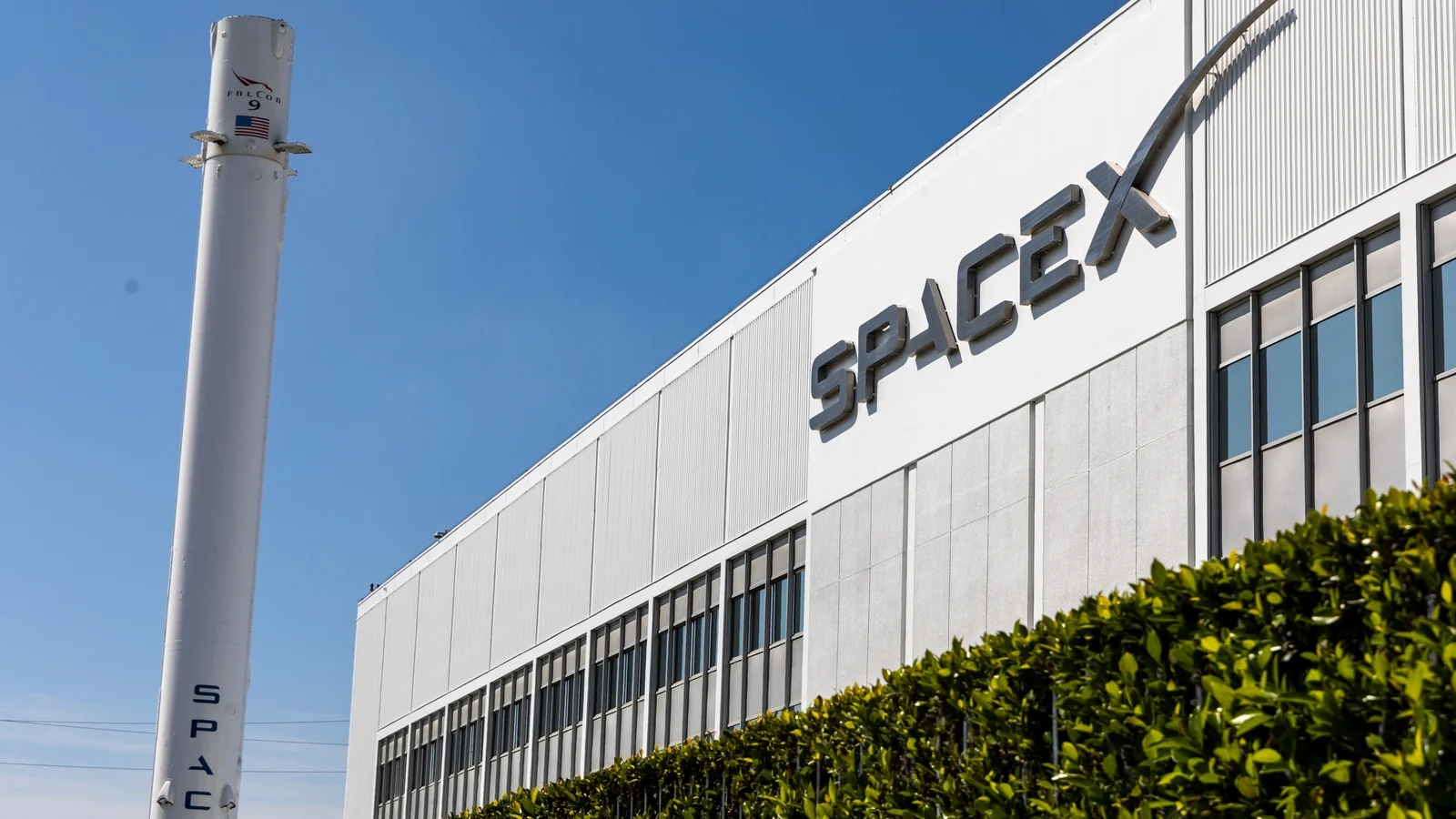
When a Rocket Company Files to Go Public, the Whole Sky Feels Smaller
Something seismic landed on Wall Street this week, and it wasn’t a meteorite — it was paperwork. SpaceX, the rocket-and-satellite company that has rewritten the rulebook for private spaceflight, quietly filed an S-1 prospectus aiming to raise up to $75 billion in what could become the largest initial public offering in history.
Read that again. Seventy-five billion dollars. A single float that, if it hits its targets, could eclipse every blockbuster listing we’ve ever seen. The filing lifts a rare veil on 24 years of near-mythic secrecy, giving investors and curious citizens their first clear look at the company’s finances, ambitions, and risks.
Numbers You Can’t Pretend Not to See
The headline figures are striking and contradictory — the kind that make analysts sharpen their pencils and neighbors on launch day glance skyward. SpaceX reported roughly $18.7 billion in revenue for 2025, yet an operating loss of $2.6 billion as it plowed capital into next-generation rockets and sprawling AI infrastructure.
Starlink, SpaceX’s global broadband constellation, emerged as the firm’s engine: $11.4 billion in revenue last year, nearly a 50 percent jump from the previous year. It’s the cash cow keeping engineers awake at night and investors salivating.
But the AI side tells another story. The combined businesses that include xAI and the social-platform arm generated $3.2 billion in 2025, while posting an operating loss of $6.4 billion. Capital expenditures in that segment alone hit $12.7 billion in 2025 and a dizzying $7.7 billion in the first quarter of 2026 — money poured into racks, cooling systems, and the holy grail of training data centers.
“We’re building capacity that rivals entire national compute footprints,” said a senior infrastructure engineer who asked not to be named. “You don’t just buy this stuff off the shelf. You build it like a city.”
Money Talks — and Contracts Whisper
The filing also revealed a startling commercial arrangement: SpaceX has agreed to lease spare capacity in two of its COLOSSUS data centers to Anthropic, another AI company, at a rate said to be $1.25 billion per month through May 2029. Corporate America writing checks like the sums are round numbers. Investors will be watching whether these partnerships are short-term lifelines or the new normal.
Control, Governance, and the Man in the Middle
One thing the paperwork makes plain is that this won’t be a typical public company. The IPO unfolds under a dual-class share structure that concentrates voting control. Elon Musk — already the world’s richest person and the public face of the enterprise — would retain roughly 85 percent of voting power while owning around 42 percent of the equity. In human terms: he keeps the keys to the car even if others own some of the seats.
“That sort of control is a double-edged sword,” said Helena Park, a corporate governance scholar at a university business school. “It allows a visionary to steer long-term bets without short-term market pressure. It also raises questions about checks, balances, and accountability.”
SpaceX itself acknowledged the risk in the filing, noting that Musk “will have the power to control the outcome of matters requiring shareholder approval, including election of all our directors.” That frankness will hardly pacify those who fret about executive power in the age of hyper-scale tech.
From Earth to Orbit: A New Kind of Infrastructure
Beyond the listing is a bigger, bolder thesis: compute in orbit. SpaceX’s prospectus sketches a future where solar collectors and AI servers float above clouds and geopolitics, offering what the company calls the only truly scalable energy solution for skyrocketing AI power demands.
The plan is audacious. The company says it could begin launching AI-compute satellites as early as 2028, with a long-term target of delivering 100 gigawatts of compute capacity into orbit each year. To get there would require thousands of launches annually and roughly one million metric tons of payload lofted into space — numbers that make “ambitious” sound quaint.
“We’re talking about building a whole new class of infrastructure,” said an industry analyst. “If anyone can imagine doing it, they have to be able to launch at scale. That’s SpaceX’s core competency.”
Regulators Are Watching
Not everyone is ready to sign off. The Federal Aviation Administration has made clear that reliability needs to be demonstrably higher before it would greenlight such a ramp-up. FAA officials noted that in 2025 SpaceX completed about 170 launches and deployed roughly 2,500 satellites — huge numbers by any measure, but still a step away from the tens of thousands of flights per year being discussed internally.
“We need to see a lot more reliability,” said one FAA source who spoke after a recent forum. “Scaling to the numbers they’re talking about increases complexity and risk exponentially.”
On the Ground: People, Places, and Launch-Day Rituals
This isn’t an abstract corporate exercise. In Hawthorne, California, when a Falcon 9 lights up the sky, traffic slows, shopkeepers step outside, and conversation turns to trajectory and telemetry.
“You can smell the rocket fuel sometimes, like summer bonfires,” said Lina Ortega, who runs a tiny café near SpaceX headquarters. “People come by with phones, with kids, with binoculars. It’s part of our life now.”
Further south at Boca Chica, Texas — where techno-tourism and small-town life brush up against launch pads — Maria Hernandez, who runs a taco stand, says launches have been a roller-coaster of income and disruption. “We get busier on launch days, sure,” she laughed. “But there’s also road closures and worries. People here love the spectacle, but they also want safety.”
Why This Matters Beyond the Ticker Symbol
What should the global reader take from this? First, the SpaceX filing isn’t just a financing event; it’s a manifesto for the next decade of industry — one that stitches together broadband, space logistics, and AI compute into an interdependent ecosystem.
Second, it raises urgent policy questions. Who regulates data centers in orbit? How do nations weigh national security, commercial opportunity, and the commons of low Earth orbit? Can private firms be trusted to balance profit with planetary stewardship?
Third, the IPO spotlights the broader economic frontier: the insatiable appetite for compute power, driven by AI, is reshaping capital flows and geopolitical strategy alike. SpaceX’s own market estimate — a total addressable market of $28.5 trillion across its businesses (excluding China and Russia) — underlines the scale of ambition.
Parting Thoughts: A Sky of Promise and Uncertainty
There will be drama, courtroom headlines, and more filings to come. The S-1 arrives on the heels of a legal loss for Musk in a dispute with OpenAI and as competitors like Anthropic eye public markets of their own. Market watchers are already speculating about a Nasdaq listing under the ticker SPCX and whispering about potential mergers and alliances that could reshape entire industries.
But beyond the spreadsheets and ticker symbols, the filing asks a deeper question: how do we, as a global society, want our shared skies to be used? Do we set guardrails before the highway is paved, or do we let innovators build and figure out the rules later?
Whatever happens next, launches will continue to illuminate the horizon — literal and figurative — and the conversation about who gets to own and govern our future off-planet is only getting started. Are you ready to watch it unfold?