A New Chapter in Central Europe: A Warsaw Welcome and the Quiet Work of Rebuilding Trust
On a bright spring morning in Warsaw, a small convoy rolled through the city’s baroque streets as if the calendar had turned a page. Cameras flashed. Flags unfurled. It was not a ceremonial visit for its own sake; it felt like the first deep breath after a long and bruising political hold-your-breath.
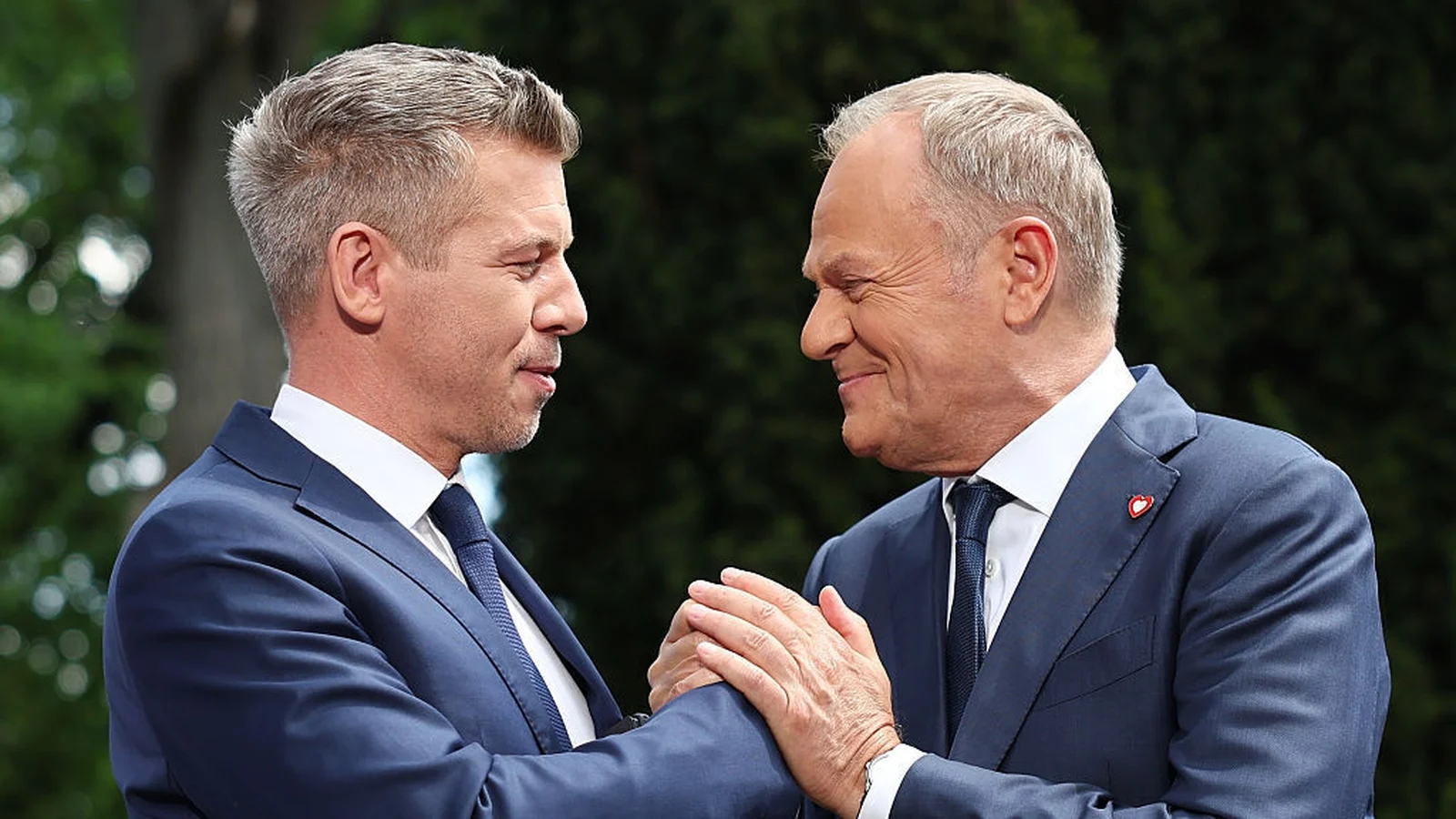
Péter Magyar, Hungary’s newly sworn-in prime minister, chose Poland as his first stop abroad. The symbolism was deliberate. This two-day visit—talks in Kraków, meetings in the capital and a scheduled evening in Gdańsk—was less about pomp and more about the practical work of stitching two neighbors back together after years of strain.
Why Warsaw?
The story of Hungary and Poland in the last decade reads like a study in parallelism and occasional divergence. For 16 years Viktor Orbán’s Fidesz dominated Budapest and often found common cause with conservative forces in Warsaw. Yet in the last years of Orbán’s rule ties frayed. A diplomatic rift over asylum for a former Poland justice minister, disputes over EU norms and a growing disconnect on Europe policy cooled what had been a close rapport.
Now a different Hungarian government—center-right Tisza—has swept into power, and with it a readiness to reset. “We arrived to talk, not to posture,” Péter Magyar said at a joint press moment with Poland’s prime minister. “Our region merits clarity, cooperation and common purpose.”
Donald Tusk, who has reasserted Poland’s pro-EU path since his return to government, responded in kind: “We share geography, history and many strategic interests. It’s time to turn those shared conditions into joint policies.”
A pragmatic agenda
Where the ribbon-cutting could have been symbolic, the agenda was pragmatic. Energy security, transport links, defence coordination, and the sticky issue of Ukraine’s push toward EU membership were all on the table. Hungary’s ministers for defence, economy, energy and transport accompanied Mr Magyar, underscoring that this was an intergovernmental push, not just a bilateral handshake.
“Energy is the easiest place to start,” observed Wojciech Przybylski, editor-in-chief of Visegrad Insight. “Poland has infrastructure potentials; Hungary has an urgent need to diversify. Cooperation here is low-hanging fruit, with real, immediate returns.”
Gas, ports and plans to sever a dependence
At the heart of many of the talks was the practical problem that has terrified policymakers across Europe since 2022: how to reinvent energy systems built on Russian gas. Hungary’s new government has set 2035 as the target year to eliminate reliance on Russian energy—an ambitious timeline that will require new supply routes, storage and political will.
Poland hopes to help. The government in Warsaw has been building a liquefied natural gas terminal in Gdańsk, slated to begin operations in 2028, which it is offering as a supply route for neighbors. For Hungarians, the prospect of tapping a northern corridor—moving away from pipelines dictated by past geopolitics—seems to be both practical and symbolic.
“We want to stand on our own feet when it comes to energy,” said Hungary’s energy minister, who joined the trip. “That’s security, plain and simple.”
Money, the EU and the art of unlocking funding
Then there is the arithmetic of Brussels. Hungary currently has roughly €18 billion in EU cohesion funds frozen because of concerns over rule-of-law backsliding under the previous government. Tisza’s victory in April put a new team in position to negotiate their release. Poland, which recently saw funds unfrozen after its own confrontation with the EU, has an obvious interest in seeing a fellow Central European economy reconnected to Brussels’ financial lifelines.
“This is not just about cash,” said Anna Kowalczyk, a Warsaw-based EU policy analyst. “It is about reintegrating Hungary into the common rules and norms of the Union. That makes the political stakes higher than any cheque.”
Ukraine, language rights and the narrow corridor to acceptance
Perhaps the most delicate thread in the talks concerns Ukraine. Kyiv’s EU ambitions ran into resistance from Budapest under Fidesz, which insisted that the language rights of Hungary’s minority in western Ukraine be protected. The new Hungarian government has signalled it would like to see those rights safeguarded—a move that could remove a key block to backing Ukraine’s accession path.
Still, domestic politics complicate matters: Tisza campaigned on holding a referendum about aspects of EU enlargement and minority protections. “We must give our people a voice,” an adviser to the Hungarian prime minister told me, “but we also must be responsible on the international stage.”
Mr Magyar hinted at a possible meeting with Ukraine’s Volodymyr Zelensky next month and floated plans to convene the Visegrad 4—Poland, Hungary, Czechia and Slovakia—in Budapest. The Visegrad group has been less active in recent years, but a resurgent, pragmatic iteration could help coordinate regional policy on energy, infrastructure and the EU’s eastern flank.
On the ground: Kraków’s cafes, Gdańsk’s shipyards
The trip was also threaded with cultural touchpoints. In Kraków, Mr Magyar met Cardinal Grzegorz Ryś in a city where the smell of espresso mixes with centuries of history. “When leaders come here, they come to speak to history, too,” said Magdalena, a café owner in the Old Town, watching a small bus of officials pass by. “But what we notice most are jobs, prices and whether the trains run on time.”
In Gdańsk, the shadow of Solidarity and the memory of Lech Wałęsa still resonate. Meeting Wałęsa—a figure whose activism helped topple communism in 1989—was a deliberate nod to democratic symbolism. “We’re not just trading gas and roads,” a Polish historian remarked. “We’re reminding each other of the values that underpin our cooperation.”
What does this mean for Europe?
Ask yourself: what does it take for neighbors to rebuild trust? Is it contracts and pipelines, or something deeper—a willingness to accept shared rules, to listen to minority concerns, to be accountable to supranational institutions? The Poland-Hungary reset points to all of the above.
If the first foreign visit is a test case, Hungary’s choice of Poland suggests that Budapest wants to be recognized as a partner, not a pariah. It wants money unstuck, energy alternatives activated, and a seat at the table on Ukraine without appearing to leave its electorate behind.
For the EU, the stakes are clear: cohesion across Central Europe matters. If Brussels can find a path to reintegrate Budapest—through conditional funding, measured dialogue and practical projects—the Union stands to gain a more united internal front at a time of external pressure.
What to watch next
- Will the €18 billion in frozen funds be unlocked, and under what conditions?
- Can plans for LNG access from Gdańsk be operationalized and linked to Hungary’s 2035 decarbonization goal?
- Will a Visegrad summit in Budapest restore the group’s relevance for regional security and infrastructure projects?
- Most stringently: will Hungary’s approach to Ukraine’s minority language rights satisfy Kyiv and Brussels?
Poland and Hungary share a long and tangled history. Their leaders are now trying to turn a new page—one written in contracts, not just rhetoric. Whether this will withstand the test of domestic politics, EU conditionalities and the grinding realities of energy markets is a story that will unfold over months, not days.
So as the convoy left Warsaw and the politicians returned to their capitals, a different kind of work began: the slow, often unglamorous labor of policy, compromise and the making of trust. That is the story worth following—and one that will tell us much about the future of Central Europe and the resilience of the European project itself.