When a Flotilla Becomes a Test for Europe: Ireland, the EU and a Moment of Conscience
There are images that refuse to be forgotten. In one grainy clip, a man in a leather jacket strides between rows of people kneeling on a sun-baked deck, their hands behind their backs. He waves a flag. He laughs. He calls for them to be kept behind bars for a long time. The video has ricocheted around social feeds, newsrooms and the halls of power in Brussels — and now it has landed on the desk of Europe’s leaders as an urgent moral and diplomatic puzzle.
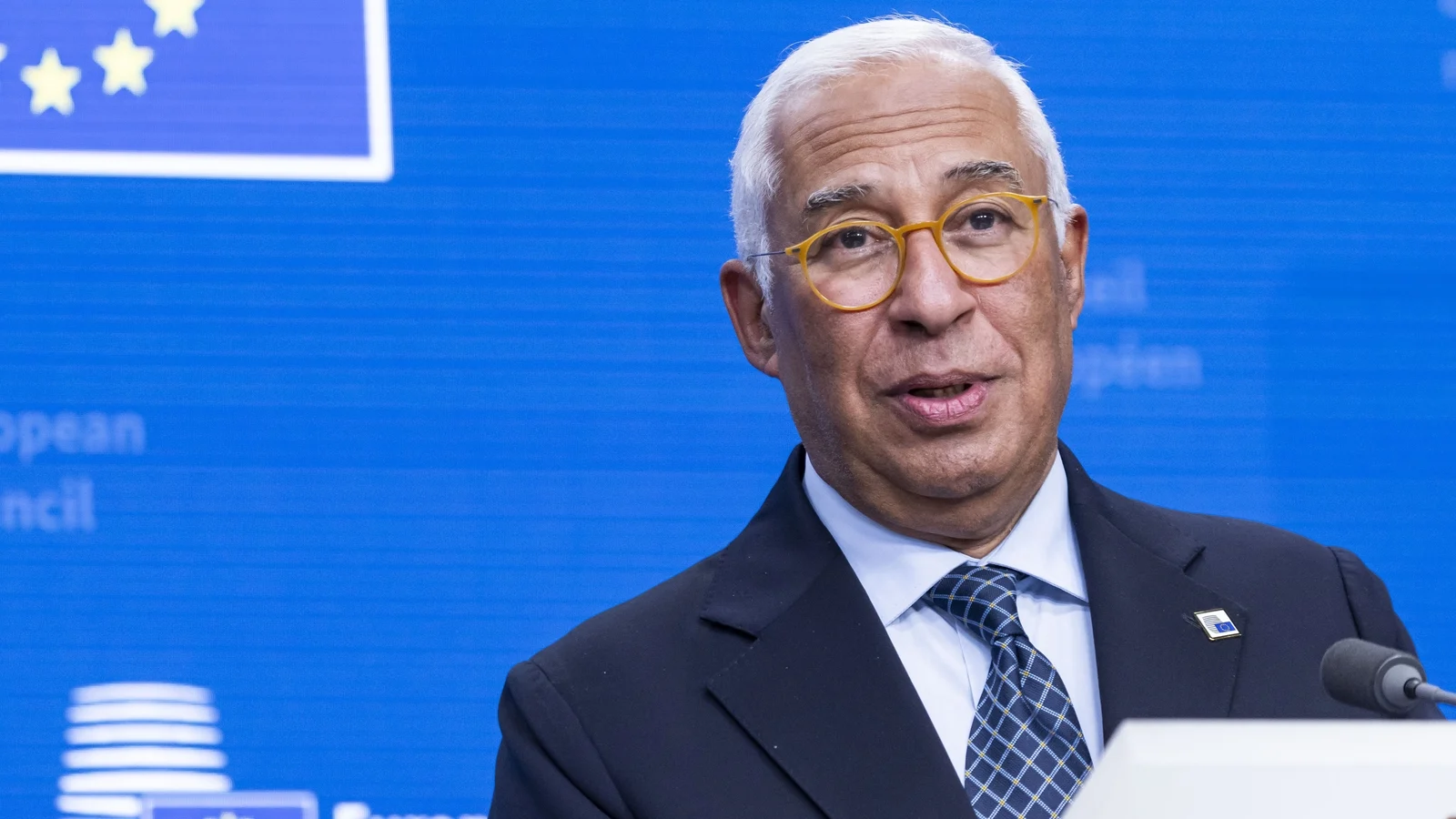
On behalf of Ireland, Prime Minister Micheál Martin has formally asked António Costa, President of the European Council, to place the treatment of EU citizens aboard the Global Sumud Flotilla on the agenda at the upcoming EU summit on 18–19 June.
“We can no longer treat this as business as usual,” Martin wrote, according to a draft seen by reporters. He argued the images and the reported detention of EU nationals in international waters amount to “illegal detention” and are part of a worrying pattern of behaviour that, in his words, shows “a growing disregard by Israel for international norms.”
What happened at sea — and why Europe is watching
The Global Sumud Flotilla, a civilian convoy of boats carrying activists from across Europe and beyond, set out with an explicitly peaceful mission: to draw attention to the humanitarian crisis in Gaza and to assert the right to movement and protest. Organisers say at least 12 Irish citizens were detained; hundreds more from other EU countries and beyond were also taken into custody.
Itamar Ben-Gvir, Israel’s national security minister, appears in footage that circulated widely — a moment that many diplomats called chilling. Standing among detainees, visibly agitated, he can be heard taunting the captives and brandishing an Israeli flag. “Let them face justice here,” an off-camera voice reads in one version; in another, Ben-Gvir is quoted as saying they should “remain in prison for a long time.”
A spokesperson in Dublin described the footage as “shocking and unacceptable,” and called for answers. “These are citizens of the European Union,” said one official. “When EU citizens are detained in international waters, it raises questions of law, of jurisdiction, and of basic decency.”
Why the EU-Israel Association Agreement now hangs in the balance
Martin’s letter didn’t stop at condemnation. He urged European leaders to consider suspending all or parts of the EU-Israel Association Agreement — a cornerstone framework that governs trade, political cooperation, and privileged access between Israel and the European Union. Suspending such an agreement would be a rare and serious diplomatic step, one that would escalate tensions between Brussels and Jerusalem.
Why would leaders even contemplate such a move? Because, Martin and others argue, the flotilla incident sits atop a pile of grievances: seven months after a declared ceasefire, Gaza’s humanitarian situation remains dire; settlement expansion in the West Bank continues; settlers’ attacks on Palestinian communities have increased; Israeli plans to introduce the death penalty for Palestinians tried in military courts have been floated; and UNIFIL peacekeepers in southern Lebanon have themselves been targeted.
“We are watching a concatenation of events that undermine the very basis of a peace process,” said Dr. Samir Haddad, an international human rights lawyer based in Amman. “When trade is decoupled from respect for human rights and international law, it weakens the moral authority of institutions that purport to uphold them.”
Voices from the boat, the street and the capital
“I was on the deck when they boxed us in,” said Aoife Byrne, an Irish teacher who volunteers with pro-peace groups. “We sang, we prayed, and then they came. We were handcuffed, put on the floor. I kept thinking of my parents back home. Do they know I’m alive?”
Across Dublin, the flotilla’s detentions stirred a quiet fury. “I want our leaders to act — not just issue statements,” said Eamon Lynch, a community organiser in Cork. “If we bellied up to trade deals without strings, we must be ready to pull them if our values are being trampled.”
From Jerusalem, reactions were predictably different. “Security forces acted to prevent illegal attempts to breach a blockade,” said Yossi Harari, a spokesman for an Israeli ministry. “Those detained are subject to our legal processes.” The Israeli government has framed the operation as a necessary security measure; critics say the response was heavy-handed and provocative.
“The optics matter,” noted Eva Müller, a senior EU diplomat who asked to speak off the record. “European publics are watching. Governments must balance geopolitical ties, economic interests, and the expectations of their voters who demand human rights be taken seriously.”
What the EU has already done — and what it could do next
The flotilla episode is not an isolated diplomatic skirmish. Last week, EU foreign ministers unanimously agreed to sanction a number of violent settlers in the West Bank, and the European Commission has proposed measures to restrict trade in goods originating from settlements. Those are concrete steps, but they fall short for some campaigners.
- At least 12 Irish citizens detained, organisers say.
- Hundreds of non-Irish participants detained, according to flotilla organisers.
- EU summit: scheduled for 18–19 June, where leaders can add the flotilla to the agenda.
- EU: 27 members represented by the European Council President.
“Targeted sanctions and labeling rules are a start,” said Dr. Anna Rossi, who studies EU foreign policy. “But there is a limit to what piecemeal measures achieve. Suspending an association agreement would be a major diplomatic signal — it would say the EU is willing to put values before convenience.”
What’s at stake for ordinary people
Beyond the legal texts and summit manoeuvrings, the story touches human lives. Families who cannot travel, fishermen whose livelihoods are curtailed, activists who risk arrest to bear witness, and communities in Gaza that remain in the grip of a humanitarian emergency.
“We are not numbers,” said Fatima al-Masri, a shopkeeper from Gaza who lost relatives in the conflict. “When people cross a sea to show solidarity, it is because we are drowning and someone reached out a hand. How many hands must be cut off before the world feels the pain?”
Questions to carry home
What happens when trade policy collides with human rights? Should commercial agreements be conditional on compliance with international law? And who gets to decide when the scale tips from cooperation to complicity?
These are not abstract queries. They are decisions that will be debated in Brussels, whispered in capital corridors, and argued over kitchen tables from Galway to Gaza. They will test whether the European Union can move beyond statements to meaningful acts that align its economic partnerships with its proclaimed values.
As the EU summit approaches, the flotilla footage remains stubborn in the mind. It asks of leaders something that images always demand: not merely explanation, but action. Will the bloc meet that demand? Or will the waves that carried the Sumud boats be reduced to a ripple in the tide of geopolitics?
For anyone watching, the question is personal as well as political: if you believe in the sanctity of human rights, what price are you willing to pay to defend them?