A Surprise Shipment of Soldiers, a Conference in Sweden, and the Fraying Threads of Alliance
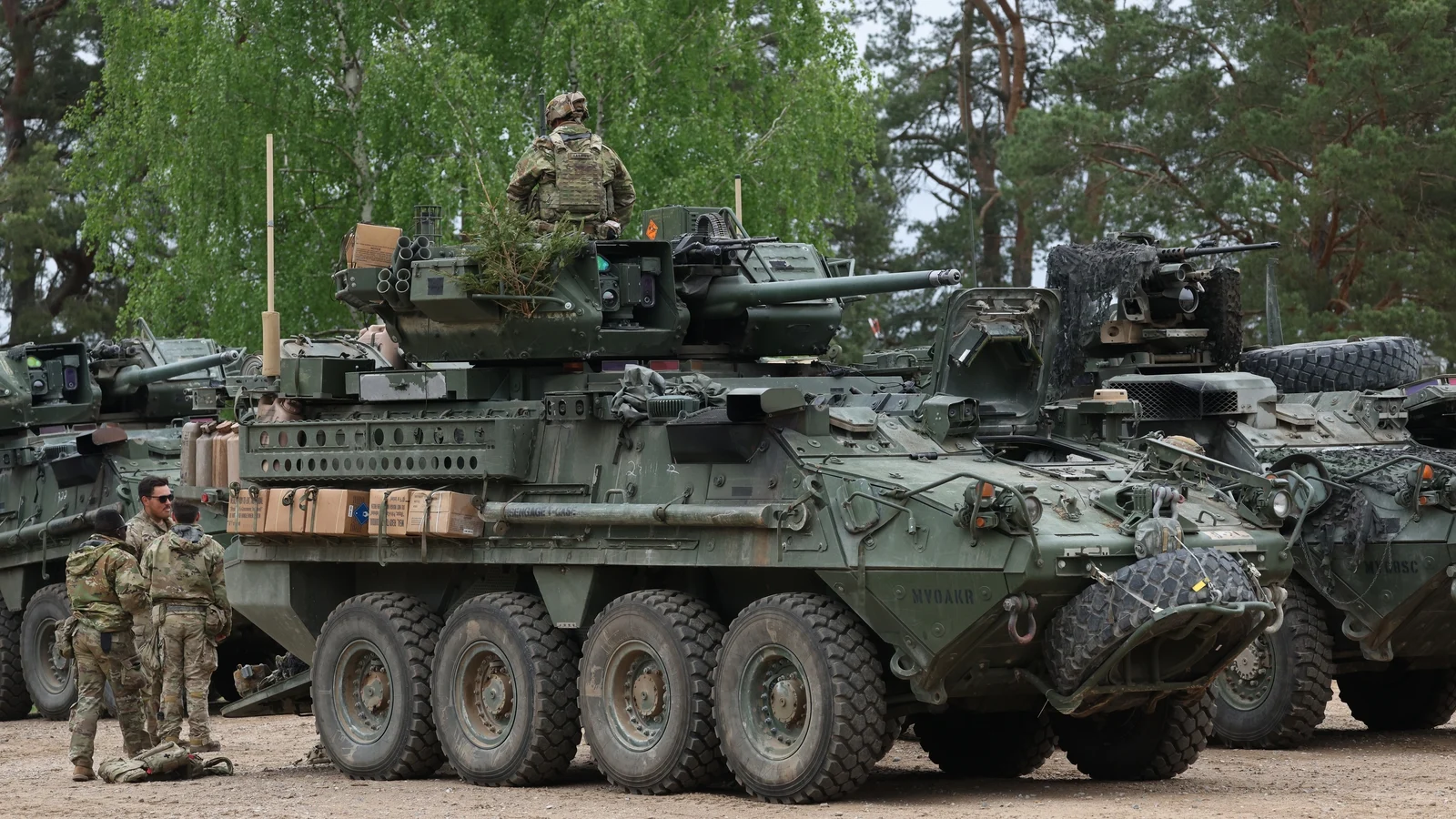
There are moments in geopolitics that feel like a car horn blaring in a quiet neighborhood: sudden, loud, and impossible to ignore. Last week one of those horns sounded from an unlikely source — a social media post by the most powerful office in the United States — declaring an immediate redeployment of 5,000 American troops to Poland.
The announcement landed like a splash of cold water in Helsingborg, Sweden, where foreign ministers from across NATO had gathered to soothe frayed nerves, map out logistics around a fast-moving Iran war and, above all, reassure one another that the alliance still holds. In the fluorescent-lit corridors of that seaside town, the noise coming from Washington seemed to overwhelm discussions that had been carefully prepared for weeks.
What happened — and why it matters
At its core the headline is stark and simple: the United States said it would send 5,000 more troops to Poland. But diplomacy is never just arithmetic. This decision — announced publicly and abruptly — came after a string of other unsettling moves: a previously signaled withdrawal of 5,000 US troops from Europe, the shelving of a Tomahawk missile deployment to Germany, and talk in Washington of narrowing the pool of military capabilities the US would make available to NATO in times of crisis.
NATO leaders rushed to manage perceptions. “Of course, I welcome the announcement,” one senior alliance official told reporters in Helsingborg, insisting that military commanders were already “working through the details.” Behind the words, however, was a larger conversation about trust, reliability and whether long-standing assumptions about transatlantic security are still true.
On the ground in Poland
Cross the border into eastern Poland and the news is felt differently. In a café near the market square of Rzeszów, a city that has hosted waves of military movements and refugees in recent years, the barista shrugs and pours coffee into a paper cup. “Security is a feeling,” she said. “If people see soldiers and convoys, they sleep a little better. But we also want arrangements to be clear, predictable — not surprises.”
On the busy street outside, a truck driver who hauls freight between Poland and Germany stopped to comment. “We are on the fault line of history sometimes,” he said. “When big powers move pieces on the board, it affects our lives. It’s not only about politics — it’s about fuel prices, about work, about children’s futures.”
Stormy signals and strained ties
The timing and tone of the declaration matter as much as the troop count. In the weeks before, Washington had publicly criticised several NATO partners for denying American forces access to bases and airspace for operations related to the Iran conflict. “You have countries denying us use of these bases — then why are you in NATO?” a senior US official asked bluntly in Miami. The remark echoed through conference halls and capital city salons, an unsettling question for an alliance built on mutual defence.
European ministers in Helsingborg tried to cool tempers. They reiterated commitments to helping keep the Strait of Hormuz — the narrow Persian Gulf chokepoint through which about one-fifth of seaborne oil traditionally flows — open for global commerce when conditions permit. But assurances can only go so far when allies are also watching troop spreadsheets and the public theatre of domestic politics.
Experts weigh in
“This is a classic example of the personalization of foreign policy,” said Dr. Lina Alvarez, a security analyst who studies alliance cohesion. “Decisions are being telegraphed through endorsements, through personal relationships with foreign leaders. That may produce quick gains in goodwill in the short term, but it injects volatility into what should be institutionalized commitments.”
Another analyst at a London think-tank pointed to a more prosaic problem: logistics. “The United States historically stations roughly sixty thousand personnel in Europe across many bases and missions,” he said. “Shifting 5,000 troops is not only political theatre — it also strains transport, housing and integration with host-nation forces.”
What this means for Taiwan and beyond
The ripple effects are global. In Washington, the acting US Navy secretary announced a temporary pause in arms sales to Taiwan — a package reportedly worth around $14 billion — citing the need to preserve munitions for ongoing operations in the Middle East. The pause sent immediate ripples in Taipei and Beijing alike, raising questions about the United States’ capacity to juggle competing commitments in an increasingly crowded world.
“When munitions are scarce, decisions are moral as much as logistical,” observed Mei Chen, a retired officer in Taiwan’s reserve. “We hope our partners make choices that do not leave us vulnerable.” For Beijing, the pause is a diplomatic lever; for Taipei, it’s a reminder that global crises are interconnected.
So what are we to make of this moment?
Here are a few blunt takeaways:
- Alliances are living organisms: They require routine care and predictable behavior. Sudden policy swings — especially when informed by domestic political calculations — erode the sense of shared destiny.
- Geography still matters: Places like Poland and the Strait of Hormuz are not abstractions. They are border towns, ports, oil tankers, farmers, and families whose lives are shaped by distant decisions.
- Global problems collide: A conflict in one region can compromise deterrence and arms supply in another. The pause in arms sales to Taiwan is linked, in an unglamorous way, to ammunition stocks in the Middle East.
Questions to sit with
As you read this, ask yourself: do you trust allies enough to weather inconvenient truths together? Should alliances be more decentralized so individual members can act without surprising others? And crucially, how much should domestic politics — endorsements, electoral promises, personality-driven diplomacy — dictate decisions with strategic, international consequences?
When the dust settles, what will matter is not only where the 5,000 troops end up sleeping but whether this episode becomes a pattern: announcements made in public fora before diplomatic channels are briefed; military moves treated as political instruments; and alliances tested by the strain of multiple, simultaneous crises. That pattern, more than any single troop movement, will tell us whether the transatlantic fabric is fraying — or merely being rewoven for a new, uncertain century.
In Helsingborg, diplomats will keep talking. In cafés in Poland, people will keep serving coffee. And in capitals from Taipei to Tallinn, officials will be quietly doing the arithmetic that turns headlines into policy. The question is whether that arithmetic will be deliberate, shared and predictable — or whether it will continue to be startled into being by a late-night post that tells the rest of the world what has already been decided.