Smoke over the orchards: rescuers killed in southern Lebanon as politics and war collide
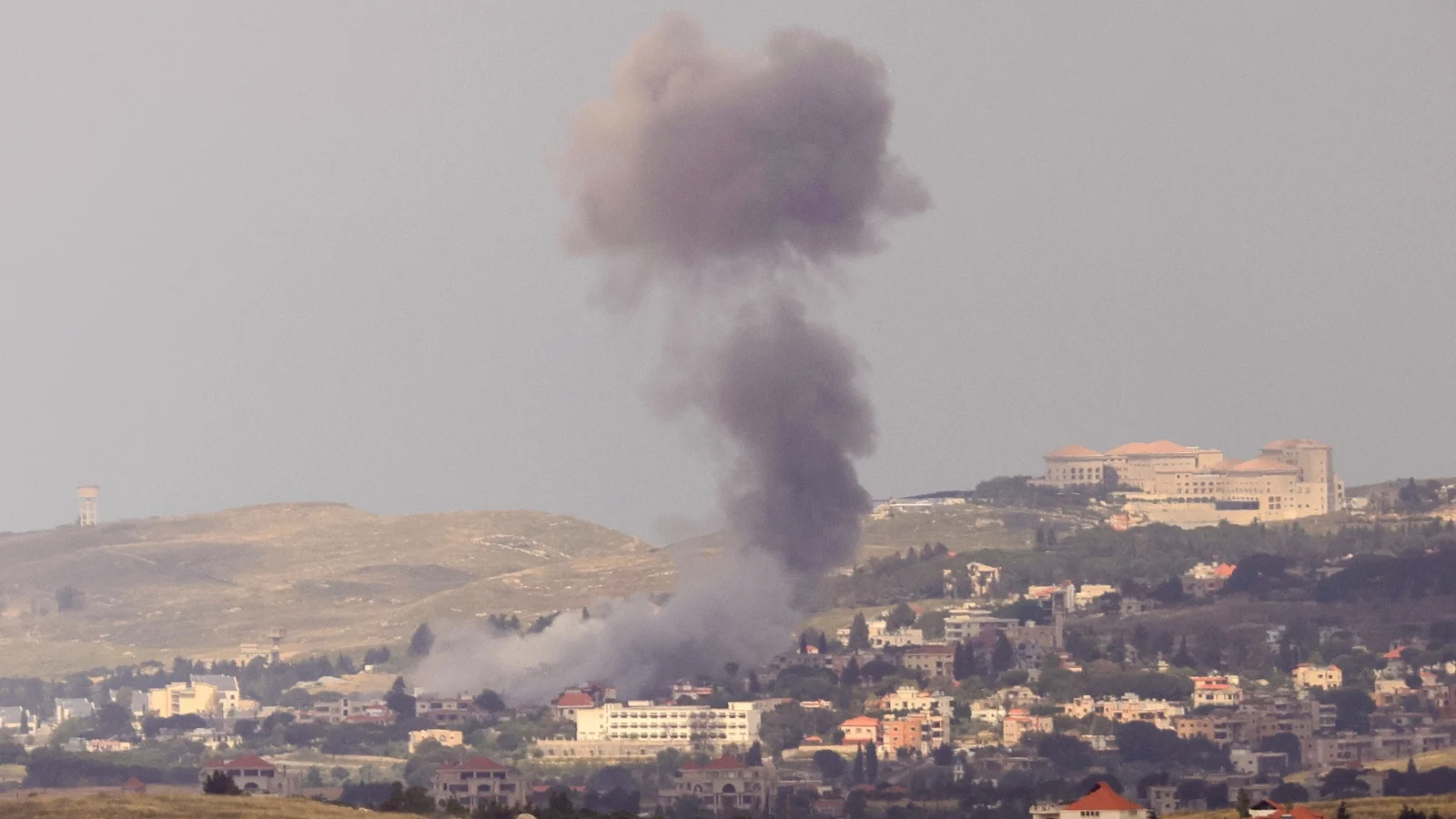
The morning air in Deir Qanun al-Nahr tasted of dust and metal. By the time the sun climbed above the low, olive-dusted hills, neighbors were counting the dead.
Six people were killed in what the Lebanese health ministry described as an Israeli strike on the village — among them two volunteer rescuers from the Risala Scouts association and a Syrian child. Earlier, another strike in the southern town of Hanaway had slain four more rescuers from the Islamic Health Committee. The casualties punctured a fragile lull along the border, leaving communities stunned and aid workers shaken.
“We come when our neighbors call for help,” said Nabil, a rescue volunteer who asked that his last name not be published. “We don’t carry flags when we run to pull someone from a collapsed house. We carry stretchers and flashlights. Today, the stretchers came back empty.”
Who were the rescuers?
The Risala Scouts is a grassroots rescue and relief association with ties to the Amal movement; the Islamic Health Committee operates in the south with links to Hezbollah’s support networks. Both groups are made up of local volunteers—drivers, paramedics, photographers—people who have long filled gaps in Lebanon’s overstretched emergency services.
They are also part of the complicated tapestry that makes the south of Lebanon different from Beirut: a place where clan and party ties, municipal services, and volunteer networks overlap in ways that can be both lifeline and liability.
- Six victims in Deir Qanun al-Nahr, including two rescuers and a Syrian girl.
- Four rescuers killed in Hanaway in an earlier strike, according to the health ministry.
Between duty and suspicion: the Lebanese army responds to US sanctions
Just as families were burying the dead, the Lebanese army issued a carefully worded statement defending its integrity. The message was simple and formal: officers and soldiers are devoted to the nation, bound by duty, and not informed in advance about the US sanctions that had just been announced.
The sanctions — imposed by Washington on nine people it described as linked to Hezbollah — included, for the first time, a serving Lebanese army colonel, identified as Samir Hamadi, and Khattar Nasser Eldin, an officer in another state security service. The US Treasury said the men had shared “important intelligence” with Hezbollah over the past year.
“This is unprecedented,” said Leila Haddad, a Beirut-based analyst who has worked on civil-military relations in Lebanon for over a decade. “Sanctioning serving officers sends a jolt not only to the armed forces’ institution, but to the fragile equilibrium that allows the army to operate amid militias and political factions.”
Tension in a delicate ecosystem
Lebanon’s army has long tried to sit at the center of a polarized country: an institution that must preserve national cohesion while operating in a landscape where non-state actors command deep loyalty among segments of the population. That balancing act has grown harder as regional tensions spilled over from Gaza, and as sanctions and counter-accusations ratchet up pressure.
“Our loyalty is to the people and the uniform,” said Captain Hani Fawaz, a staff officer in an army unit who spoke on condition of anonymity. “But when international actors point fingers at individuals, it complicates our work. We don’t want to be seen as a tool for one side or another.”
Hezbollah, for its part, condemned the US move as intimidation. “This is a political act designed to bolster the aggression against our country,” a spokesperson for the group said in a statement. The remarks reflect the broader narrative that many in Lebanon hear: foreign intervention, whether by sanctions or military strikes, often lands amid civilians more than it does among strategists in distant capitals.
What this means for civilians and humanitarian work
Rescue organizations and medical teams rely on assumptions of neutrality to reach the wounded. When volunteer rescuers are targeted or killed, those assumptions fray. The immediate loss is human and local: a brother, a neighbor, a mother. The long-term cost is systemic: fewer volunteers willing to run into danger, less trust between communities and organisations, and a shrinking space for humanitarian action.
“When rescuers are afraid to respond, the entire community pays the price,” said Miriam Kassis, who coordinates medical training in southern villages. “We teach first aid and how to stabilize someone for transport. But courage can only go so far when there is no guarantee you won’t be attacked in the act of helping.”
For Syrian refugees, too, the stakes are raw. The Syrian girl killed in Deir Qanun al-Nahr is one among many civilians who live in liminal spaces along the border — neither fully integrated in their host communities nor able to return home. Their vulnerability underscores how wars ripple outward into populations already living on the margins.
Local color: the towns behind the headlines
Drive through this part of southern Lebanon and you will pass citrus groves, knobby fig trees, and small concrete houses painted in bright pastels. Men gather at tea shops beneath awnings, discussing crop prices and the latest radio bulletin. On market days, women walk home with bin bags of fresh herbs and tins of olive oil. It is an ordinary life made precarious by extraordinary politics.
“We are farmers, teachers, shopkeepers,” said Fatima, a teacher whose school in a nearby town has been hosting displaced families. “We are not looking for a fight. But when the noise comes, it takes the children away from their classrooms and the elders to the basements. We keep living because that’s what we do, but every day is a question: will it be safe tomorrow?”
Wider implications: a microcosm of regional friction
This episode in southern Lebanon reflects broader dynamics in the Middle East. Proxy lines — where state actors engage through aligned militias rather than direct confrontation — make it difficult to isolate military objectives from civilian life. Sanctions that target individuals thought to be conduit points for militant groups are a tool in Washington’s box, but they also risk undermining trust in local institutions if their application appears blunt or politically selective.
Moreover, the deaths of rescue workers highlight a universal dilemma: in modern conflicts, the helpers are often exposed to the same violence that afflicts civilians. When those helpers are part of partisan networks, even if they provide essential services, the line between neutral humanitarian worker and political actor can blur in the eyes of external powers.
How should the international community protect civilians and maintain humanitarian space when wars are fought amid irregular forces and overlapping loyalties? And how do local institutions preserve legitimacy under the twin pressures of foreign sanctions and armed groups?
What to watch next
Expect intensified scrutiny: of the individuals sanctioned, of how the Lebanese army navigates internal cohesion, and of whether aid organizations can continue to operate in southern Lebanon without greater protection.
- Monitoring whether further strikes erode the ceasefire.
- Watching for additional sanctions or diplomatic moves that could alter local allegiances.
- Assessing humanitarian capacity as volunteer networks are weakened.
Closing: faces, not footnotes
In Deir Qanun al-Nahr, a mother wrapped her daughter’s small body in a blanket and walked slowly to the cemetery. She walked past houses where tea still evaporated in the afternoon heat, where a radio hummed with the day’s news. These are the scenes that statistics cannot fully capture: the interrupted stories, the interrupted breakfasts, the quiet of a village that has to be both resilient and afraid.
The politics of sanctions and counter-strikes will be debated in far-off meeting rooms. But the consequences land here, in the cracked concrete of rural courtyards and the hands of volunteers who run toward danger because someone has to. If we are to understand the conflict’s reach, we must attend to those hands.
What would you do if your neighbor needed help and the only way to reach them might be to risk your life? It is a question at once intimate and universal — one that the people of southern Lebanon are answering, moment by poignant moment.