A New Wave on an Old Border: Ebola’s Quiet Creep into Everyday Lives
They say borders are lines on a map, but for people who live where two countries meet they are a rhythm — market days, shared water pumps, motorcycles that ferry onions and children and gossip across the river. In the past week, that rhythm was interrupted. Uganda announced three new confirmed Ebola cases, bringing its total to five since the cluster was first detected on 15 May. The names — a Ugandan driver, a Ugandan health worker and a woman from the neighbouring Democratic Republic of Congo — read like a cross-section of daily life. They are not just headlines; they are people whose jobs and lives connect communities on both sides of the frontier.
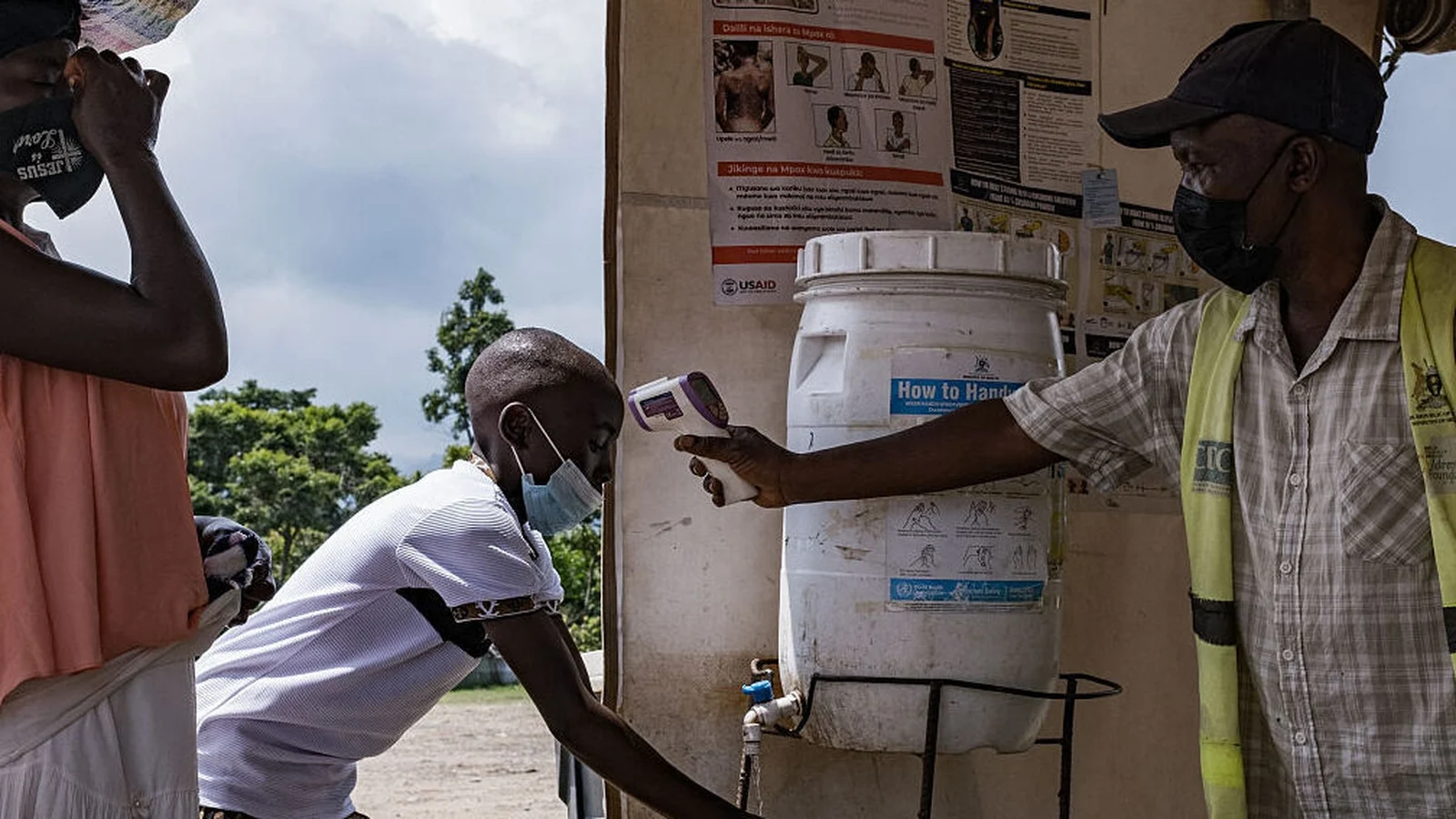
“The driver was the one who kept the town fed,” said James, a 34-year-old boda-boda rider who asked that his surname not be used. “He took goods back and forth every day. We all used to joke about how he never stood still. Now everyone is afraid to step on a bike.” His voice caught on the final word. Fear, once an abstract concept, has a shape here: masks on faces, fewer customers in the market, and the sudden stillness of crossings that were previously always humming.
What we know so far
Public health officials are moving with an uncommon urgency. Uganda’s Ministry of Health confirmed the three new cases on Saturday, noting that surveillance, case management, contact tracing and awareness campaigns are being strengthened nationwide.
The outbreak is linked to the Bundibugyo strain of ebolavirus (BDBV), a variant first recognised in Uganda in 2007. Unlike the Zaire strain — for which licensed vaccines and certain treatments exist — Bundibugyo currently has no approved vaccines or specific therapeutics. Global reports place the suspected toll at roughly 177 deaths and nearly 750 suspected cases in the wider outbreak area, and the World Health Organization has warned these numbers are likely to rise. Bundibugyo has been observed to carry a case-fatality rate of up to about 40% in previous outbreaks.
These figures are more than statistics. They represent families, funerals, clinics stretched thin. “We are dealing with an unpredictable enemy,” said Dr. Miriam Kato, a Ministry of Health spokesperson. “Our strategy now is speed: find contacts, isolate, support the sick and keep the public informed without panic.”
Life along the border: small economies, big disruptions
In small towns that stitch Uganda and the DRC together, the suspension of public transport to the DRC — announced after two earlier cases involving Congolese nationals — has immediate consequences. Traders who once ferried cassava and charcoal across the border find their stalls half empty. Nurses who worked in both countries must decide where to go. Families split across the frontier are forced to delay funerals and weddings.
“My sister lives three hours away in the Congolese town,” said Aisha Namutebi, a Ugandan health worker and mother of three. “We used to visit each other every month. Now I don’t know when I’ll see her again. The worry is twofold — about the virus and about the livelihoods that are vanishing.” She folded her hands as if to steady a thought that kept slipping away.
Mongbwalu, a town in Ituri province of the DRC, offers a more austere image: smouldering remains of an MSF emergency tent and streets where aid workers move with caution. Such sights underscore the fragile nature of response infrastructure in areas that have endured years of conflict and displacement.
The race for tools: vaccines, pills and the limits of fast science
What happens next depends in large part on the medical countermeasures available. So far, there are no approved vaccines or specific treatments for Bundibugyo. A handful of experimental vaccines and therapies are being evaluated, and some existing Ebola medical options are under scrutiny for potential cross-protection — though support for such use is currently limited to animal data in most cases.
“We are balancing hope and caution,” said Professor David Mwanga, an infectious disease specialist at a regional university. “A drug or vaccine that worked for Zaire may not work for Bundibugyo. We must test, but in the middle of an outbreak testing takes on a moral dimension: who gets access, under what authorization, and how quickly can the safety be monitored?”
One candidate currently mentioned by global authorities is Gilead Sciences’ experimental antiviral obeldesivir, described by the WHO as a promising option. The WHO has also indicated that developing a vaccine could take six to nine months — a timeline that, while impressive by normal standards, feels long to a woman sitting beside an empty market stall.
The reality is that most promising candidates have not been tested in humans for Bundibugyo and would require emergency or compassionate-use authorization to be deployed in the DRC or neighbouring countries. That route is possible, but it raises logistical and ethical questions: how to monitor for side effects, how to obtain informed consent in crowded clinics, how to make distribution equitable across borders and communities.
Stories that make the crisis personal
A US missionary who tested positive for Ebola and is being treated in Germany has been given drugs aimed at reducing symptoms and other supportive therapies, US health officials said. Her case highlights a staggeringly uneven global health landscape: when treatments are available, they often reach foreign nationals and expatriates faster than the local people whose lives are at stake.
“We must not allow geography to determine who gets care,” said Maria Lopez, a WHO representative speaking to reporters. “Preparedness must be global and just. Otherwise, we are simply moving the problem around.”
Broader currents: why this matters beyond East Africa
Outbreaks like this illuminate larger themes about our interconnected world. Cross-border trade and migration, fragile health systems, displacement by conflict, and systemic underfunding of research on less-common viral strains all conspire to make some regions especially vulnerable. The ebb and flow of people across small borders now becomes an axis of vulnerability for the global community.
Consider the economics: informal cross-border trade supports millions of families in central Africa. When transport stops, food prices can spike, children may be pulled from school, and informal savings are depleted. Consider the science: relatively small outbreaks of unfamiliar strains do not command sustained investment in the same way headline-making pandemics do. Consider trust: public health measures require community buy-in, and that trust has to be rebuilt if it’s damaged by misinformation or neglect.
How should the world respond? Not with alarm, but with coordinated care: surge funding for surveillance, rapid but ethical deployment of experimental tools, support for local health workers who are risking themselves every day, and communication that respects local cultures and languages. “We need to meet communities where they are,” said Dr. Kato. “That means listening as much as it means prescribing.”
What you can do and what to watch for
For readers far from the region, this outbreak may feel distant. But it’s not. Infectious diseases exploit gaps — in health systems, in coordination, in compassion. The best defenses are global solidarity and sustained local capacity.
- Watch for updates from trusted sources: WHO, national ministries of health, and respected humanitarian organisations on the ground.
- Support charities that strengthen local health systems and protect frontline workers.
- Think beyond headlines: ask who is missing from the conversation, whose voices are not being heard in planning and response?
As dusk fell over the border towns this week, a thin column of smoke curled from a roadside cooking stove. Children played in a nearby alley. Life, stubborn and mundane, continued. That persistence is why outbreaks must be taken seriously: not to stop life, but to protect its ordinary rhythms — market mornings, motorbike rides, the shared cup of tea — that stitch communities together. Are we ready to act in time to keep them unbroken?