Waterloo on the doorstep: Why a little bye-election in Makerfield suddenly feels like a continental showdown
On a raw morning in a former mining town, the anniversary of a battle that once decided Europe’s fate has been repurposed. June 18 — the day the guns fell silent at Waterloo in 1815 — now doubles as the polling day for the Makerfield bye-election. The symbolism is deliciously British and slightly absurd: a 211-year-old victory remembered as a backdrop to a local contest that might shift the direction of national policy.
But anyone who thinks this is merely a trivia-laden stunt is misreading the stakes. This is not just another candidate trying to win a seat. It is the carefully plotted opening move in a game of thrones inside the Labour Party, and a skirmish in Britain’s still-unfinished argument with the European Union.
The man, the plan, the mission
Andy Burnham, mayor of Greater Manchester and a familiar face in these parts, has come home to stand for Parliament not out of habit but out of necessity. The mayoralty is safe; the Labour leadership is not. Winning Makerfield is his ticket into Westminster — and his only practical path to a ballot to challenge Sir Keir Starmer for the party leadership.
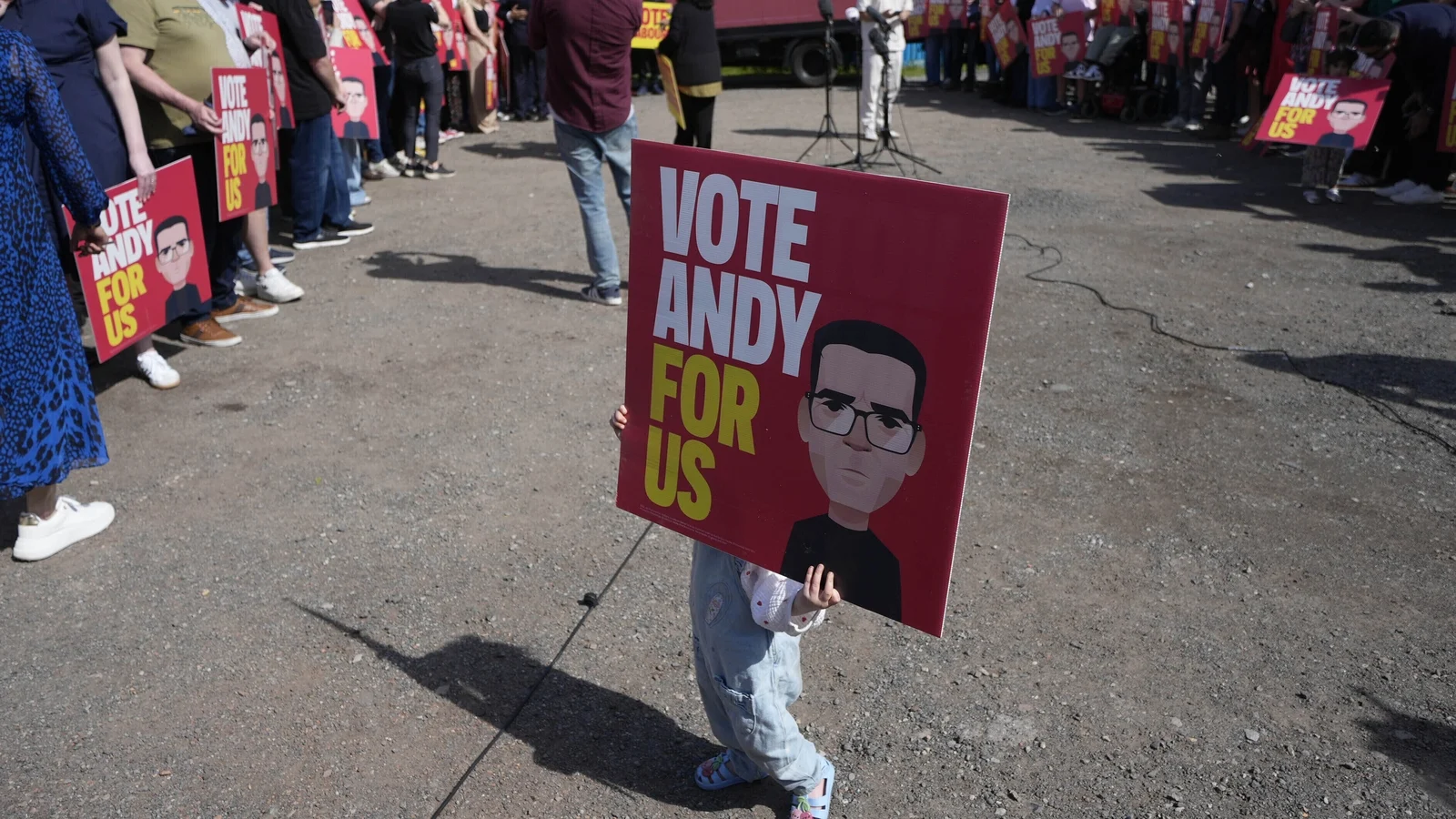
“This isn’t about me,” Burnham told a crowd gathered on a gravel patch at his campaign launch, wind nipping at the fluttering “For Us” banners. “It’s about this place. It’s about the shops on the high street, the kids who can’t afford a home, the people who’ve been ignored for decades.” He promised a “change bye-election” — not as a slogan, he said, but as a mission statement.
There’s a logic to it. Burnham’s political roots run in this soil; he used to represent Leigh and remains comfortably known to many voters here. In mayoral ballots he performed strongly across the wards that now form Makerfield. But his hometown advantage collides with a very different local mood: the constituency voted strongly for Brexit — by roughly 2:1 in 2016 — and in the most recent local elections Reform UK stormed the wards, taking 50.4% of the vote compared with Labour’s 22.7%.
“We’ve got a lot of people who feel like the rest of the country forgot them,” said Lisa Kavanagh, who runs a betting shop and a sandwich bar on the high street. “Andy knows these streets, he remembers the old factories, but that’s not enough. People want jobs that pay and houses they can afford.”
A mayor who wants to avoid a Europe fight — for now
Nationally, Labour under Keir Starmer has signalled a pragmatic tilt: closer relations with the EU without promising re‑entry. That stance is central to Starmer’s economic argument — that mending ties can help lift growth without reopening the bloody debates that consumed British politics for a decade.
Not everyone in Labour agrees. Wes Streeting, a prominent MP and one-time cabinet minister, has publicly said he would pursue rejoining the EU if he ever led the party — a stance that has already become a political lightning rod. Supporters of Burnham claim that such blunt talk is a political gift to the other side in a seat where Leave voters are plentiful.
“If the party is split about Europe, that split is going to play out in places like Makerfield,” said Dr. Hannah Miles, a British politics lecturer at a northern university. “Burnham’s choice to sidestep the rejoin-versus-not conversation is tactical. He knows this constituency. He wants to make it about bread-and-butter issues rather than referendums and flags.”
On the ground: high streets, housing, and the human argument
Walk past the rusting shutters and the charity shops and you’ll find the stories that are driving votes here: long commutes, shuttered factories, and housing costs that make moving out of your parents’ home feel like an impossible dream. Burnham’s answer is emphatic: build council homes at scale.
“We need the biggest council house building programme since the Second World War,” he declared in an interview. “Spend the money where you get the biggest return — homes that are cheaper to rent and cheaper to run.” He pointed to a figure he says is available in the public accounts — roughly £39 billion — that, in his logic, could be redirected towards new social housing.
There’s palpable urgency behind the claim. Research from property consultancy Hamptons — cited widely by housing advocates — estimates a shortfall of around 800,000 homes over the past decade, a gap driven in part by stamp duty reforms that discouraged buy-to-let investment. Hamptons has calculated the average rent has climbed around 44% since 2016 while the supply of homes to let shrank roughly a quarter. The knock-on effect is stark: housing costs are a primary driver of household stress and poverty across many northern towns.
“We moved here so our kids could get a decent school,” said Marcus Holden, a primary schoolteacher and single father of two. “But with rents rising and wages stagnant, even teachers feel squeezed. If someone’s offering real houses, not just more glitzy flats for investors, people will listen.”
Campaign cast and the ugly edges of politics
The contest is cluttered. Reform UK has a candidate on the ground, and Nigel Farage, who helped turbocharge the Brexit debate nationally, has lent his bluster to the campaign. A tiny splinter group called Restore Britain is standing, too, and the Conservatives and Liberal Democrats both have hopefuls. The Greens briefly suffered a candidate collapse when a social-media post forced a last-minute withdrawal; the official Loony Party has also signed up — a reminder that British politics still cherishes its eccentricities.
“We’re used to messy politics,” said Joanne Riley, an unemployed factory worker sipping tea outside the town hall. “But this feels like it’s about more than who wins here. It’s about whether politicians actually listen to places like this ever again.”
Why the result matters beyond Makerfield
Here is the uncomfortable arithmetic: a Burnham defeat would be more than a local embarrassment for Labour. It could slow or even scuttle the government’s plans to nudge the UK closer to the EU economically — a process that has been slated for discussion at a summit due to take place soon. It would also add momentum to the party’s internal critics and hand ammunition to political rivals who argue Labour is out of step with working-class voters.
Conversely, a Burnham victory would give his camp breathing room and potentially put Labour’s plans to deepen trade and regulatory cooperation with the EU back on course — or at least give them political cover to keep trying.
So what should a single constituency decide? Is it right that one bye-election should carry the weight of a national policy debate? Should local people be asked to settle an argument that has global ramifications — about trade, migration, sovereignty, investment and the future of British industry?
Polling day: a small place with big consequences
On June 18, voters in Hinley Green, Platt Bridge, Abram, Ashton, Orrell and Winstanley will file into community centres and church halls and pull levers that a few observers hope will send ripples into the centre of British politics. The scene will be unmistakably local: folding tables, tea urns, the occasional dog in a carrier, and arguments overheard about potholes and GP waiting times.
“I don’t expect any grand, sweeping answers here,” said Emily Carter, a local councillor. “I expect people to vote their pocketbooks. But whoever wins will discover quickly that national ambitions are taxed by local expectations. That, perhaps, is the most honest thing in British politics.”
So watch Makerfield if you care about where Britain goes next. Watch the smoke and the symbolism. But most of all, listen to the people whose lives this election is meant to change — the ones who have always been in the field. What happens here on a cool June day might tell us as much about Britain’s future as any summit table ever could.