Gunfire on Pennsylvania Avenue: A Night That Reminded Washington How Fragile the Ordinary Can Be
The air over downtown Washington had the thin, surreal sheen of an ordinary evening — a warm wind, the distant murmur of traffic, and the soft click of cameras from tourists on a late spring stroll. Then shots shattered that quiet. Within seconds, the familiar tableau of the White House lawn and the press pens became the scene of a tense, chaotic scramble that left one gunman dead, a bystander wounded, and the city once again on edge.
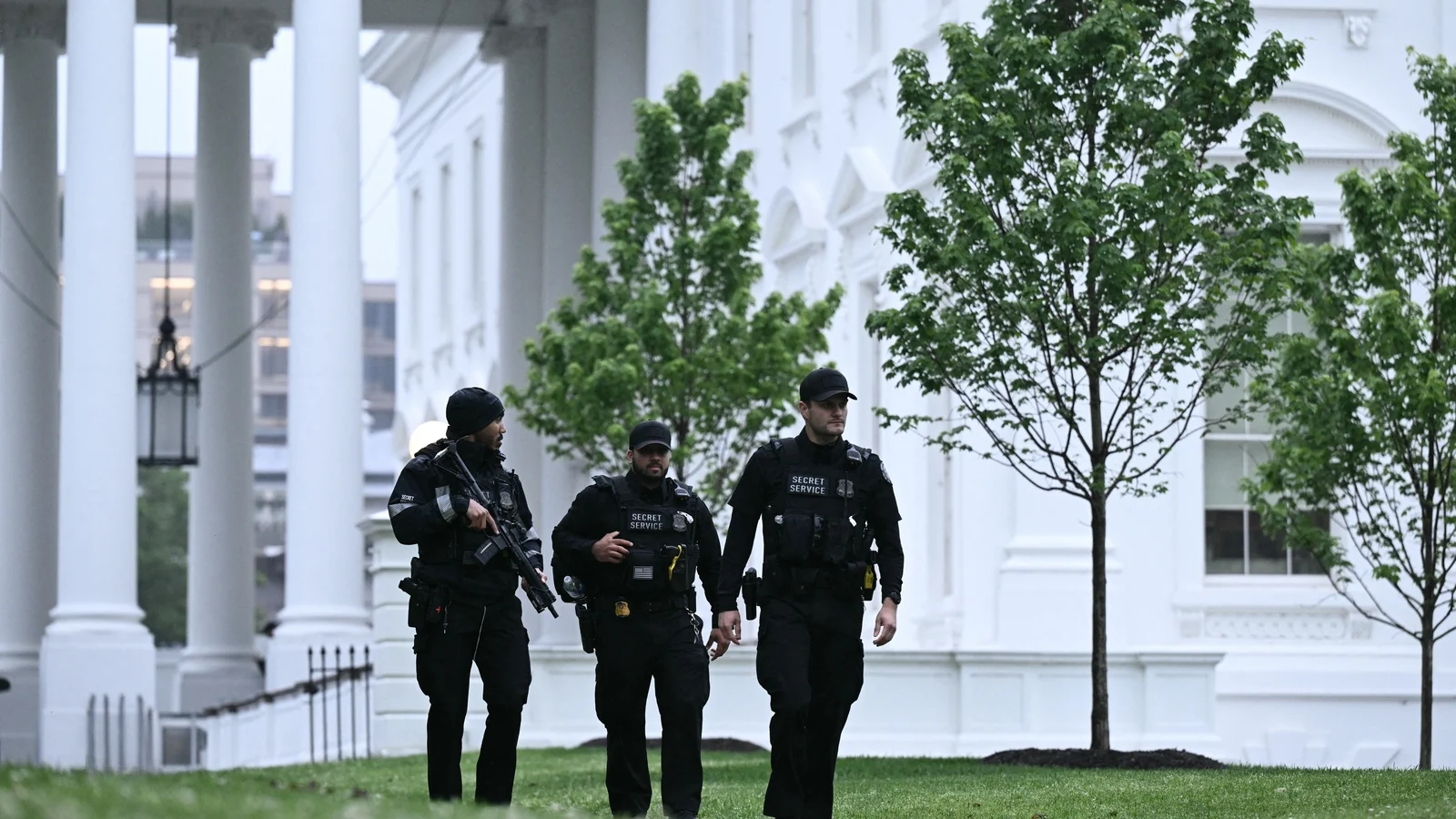
It was 17th Street at Pennsylvania Avenue — the corner where iconic photographs are taken and where visitors pause to look at the gates and the guard towers — that became a battlefield, briefly and terrifyingly. According to the Secret Service, an individual approached a security checkpoint and began firing at officers. Secret Service police returned fire; the suspect was struck, taken to a nearby hospital, and later pronounced dead. A bystander was also hit during the exchange and is reportedly being treated, though officials have not released the extent of their injuries.
Moments of terror, relived by those who were there
“It sounded like dozens of gunshots,” said Selina Wang, an ABC News reporter, who was livestreaming from the north lawn when the first round of fire erupted. “We were told to sprint to the press briefing room.” A video clip she shared shows journalists and staff ducking, calling to one another, and running — a small, panicked exodus from a place meant to be the eye of calm in American governance.
“I was taping a social piece when everything went black with noise,” said a visitor from California who asked not to be named. “You don’t expect to be part of a breaking-news video where you are the subject.” A nearby vendor who sells postcards and presidential memorabilia added, “We see tourists every day. For a second, they all looked like they were from somewhere else — distant, scared, like they’d been wrenched out of a movie.”
Official responses and a grim backstory
The White House was not empty at the time. President Donald Trump, who is reported to have been at the residence engaged in talks on foreign policy, later posted on Truth Social that the shooter had “a violent history and a possible obsession with our country’s most cherished structure,” and thanked the “swift and professional action” of the Secret Service. The agency says a “stay-away order” had previously been issued to the suspect — a detail that raises questions about how such restrictions are enforced and when they fall short.
“Any time a threat comes this close to the President and to this building, it is a reminder that the work of protection is never finished,” said a senior Secret Service official, speaking on the condition of anonymity. “Our officers train constantly for exactly these split seconds. Their actions prevented what could have been a far worse outcome.” The FBI announced it is assisting the Secret Service as part of a broader investigation.
How Washington handles the unthinkable
The scene around the White House was temporarily saturated with emergency vehicles and police tape, officers directing pedestrians away from the affected blocks. For residents and visitors alike, the area — normally a place of casual ritual, where joggers wind around the Ellipse and tourists cluster for photos under the cherry trees — felt foreign. That dissonance is part of what makes incidents like this so unnerving.
Security experts note the challenge here: the White House sits in a public-facing environment by design. “The symbolic proximity of the president to the people is part of American democracy,” said Dr. Elena Morales, a homeland security analyst at Georgetown University. “But that openness requires constant, adaptable defense. Checkpoints, stay-away orders, perimeter surveillance — all of these are layers. Sometimes a single determined individual finds a weak spot in the weave.”
Such incidents are not isolated in American history. From small-scale breaches to brazen attempts to reach the residence, the White House and its protective bubble have faced threats that vary wildly in method and motive. Whatever the motive in this case, officials are already parsing the past — trying to understand how a person with a reported fixation managed to get close enough to discharge a weapon in such a high-profile location.
Where this fits in a broader conversation
Beyond the immediate facts — who was injured, who responded, how the prosecutors will proceed — the shooting forces a larger civic reckoning. What does it mean when monuments and centers of power become objects of obsession? How do a city’s security protocols balance the need for openness with the imperative of safety? And at a societal level, what tools do we have to identify and intervene when someone begins to fixate on violence toward public spaces?
“We need to talk not only about policing, but about prevention,” said Dr. Thomas Ingle, a psychologist who studies extremist behavior. “Obsession and violent ideation usually have precursors: social isolation, untreated mental illness, a pattern of escalating threats. The court of public safety needs better tools for early intervention.”
Voices from the neighborhood
A woman who runs a small café two blocks from the White House wiped her hands on her apron and said, “We’ve had protests and lots of visitors, but this felt different. You could tell people were thinking — ‘Why here? Why us?’ People come to this neighborhood because it feels like the heart of the country. When that gets punctured, it leaves a bruise.”
Another local, a longtime postal worker, shrugged and said with a tired smile, “We keep doing our jobs. Mail still needs to go out. But you notice more patrol cars now. You see it in the kids too: they asked their teacher why planes didn’t land. You have to explain to children that sometimes the grown-up world is messy and scary. It’s not fair, but it is true.”
Questions to carry forward
As investigators gather shell casings, analyze camera feeds, and interview witnesses, certain questions will persist. How did existing “stay-away” measures fail to stop this approach to a high-security checkpoint? How can law enforcement better coordinate with mental health and community resources to identify potential threats before they reach a gate? And perhaps most quietly, how do we, as a public, accept the paradox of living in a free society that nonetheless requires strict protective measures for its highest officials?
These are not questions for one agency alone. They sit at the intersection of public safety, mental health, civil liberties, and civic design. They will be debated in briefings and on cable television, in the quiet offices of local NGOs and in the louder forums of social media. But beneath those debates are human stories: the bystander now in recovery, the Secret Service officers who will replay their responses, the tourists who will tell an unsettling tale for years to come.
After the sirens
By midnight the cordons had been partially lifted, streetlights flickered over the barricades, and Washington returned to the slow rhythm of a capital city trying to hold its balance. A few stragglers lingered at the edge of the tape, trading theories like baseball cards. Someone handed out extra hotdogs, a small, defiant gesture of normalcy. “You can’t live in fear,” said the café owner, handing a cup of coffee to a passerby. “But you also can’t pretend the fear isn’t real.”
Do we want to live in a world where the places that define us can be attacked without warning? How much freedom will we cede to feel safe? These are heavy questions, and tonight, for a little while, they were not abstract. They were the sound of gunfire on Pennsylvania Avenue, the shuffle of reporters into a briefing room, and the quiet hum of a city that keeps going — even when the ground trembles.
- Location: 17th Street and Pennsylvania Avenue, near the North Lawn.
- Involved: Secret Service returned fire; suspect transported to hospital and later died; one bystander shot and hospitalized.
- Ongoing: Secret Service investigation with FBI assistance; stay-away order previously issued to the suspect.
As the investigation continues, expect facts to emerge and hypotheses to be tested. In the meantime, take a moment to look at the familiar places you take for granted. What would it mean to defend them, and at what cost? How do we reconcile the openness that defines democratic life with the vigilance required to protect it? Tonight, Washington offered a stark reminder that that balance is never finished work.