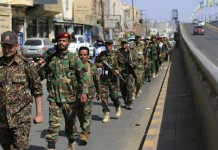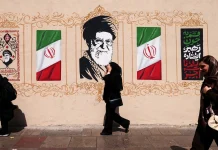
New fears over the security of global oil flows flared on Wednesday after Yemen’s Houthi rebels said they struck two Saudi oil tankers in the Red Sea, a move that could broaden the US-Iran war already tearing through the region.
The announcement landed as the United States carried out a new round of attacks on Iranian military targets, extending its campaign to a twelfth straight night of strikes on Iran.
The Houthis said they launched missile and drone attacks on two Saudi tankers they accused of having “violated the blockade”, identifying the ships as the Encelia and the Layla.
UKMTO, a British naval security monitor, reported that the master of a tanker had said the vessel was hit by an unknown projectile roughly 70 nautical miles southwest of Al Shuqaiq. The strike sparked a fire that crew members were battling, UKMTO said.
Saudi state media later reported that the Encelia, owned by a Saudi company, “was targeted while sailing in the Red Sea, resulting in a fire at the bow of the ship”, adding that all crew were safe.
The uptick in Red Sea tensions followed a Houthi warning that it would blockade Saudi ports, tightening the squeeze on major Middle East shipping corridors already rattled by clashes centred on the Strait of Hormuz.
Iran’s Revolutionary Guards, meanwhile, claimed they had prevented three oil tankers from moving through that strategic channel.
Hostilities around the Strait of Hormuz have derailed a preliminary US-Iran deal. In recent weeks, Iran has struck tankers using a route close to Oman’s coast to make the crossing, seeking to push vessels into Iranian waters and charge for safe passage.
“Three oil tankers, provoked and tempted by the child-killing American army, were trying to pass through the mine-laid route south of the Strait of Hormuz, but after one of them exploded and caught fire, the other two quickly turned around and turned back,” the Guards said in a statement quoted by Iranian state media.
The statement did not say when the incident happened.
“The powerful IRGC Navy emphasizes that the Strait of Hormuz is under our control… and any ship that is deceived by the US and intends to pass without coordination with the Islamic Republic of Iran will suffer the same fate,” the Guards added.
Iranian Foreign Minister Abbas Araghchi
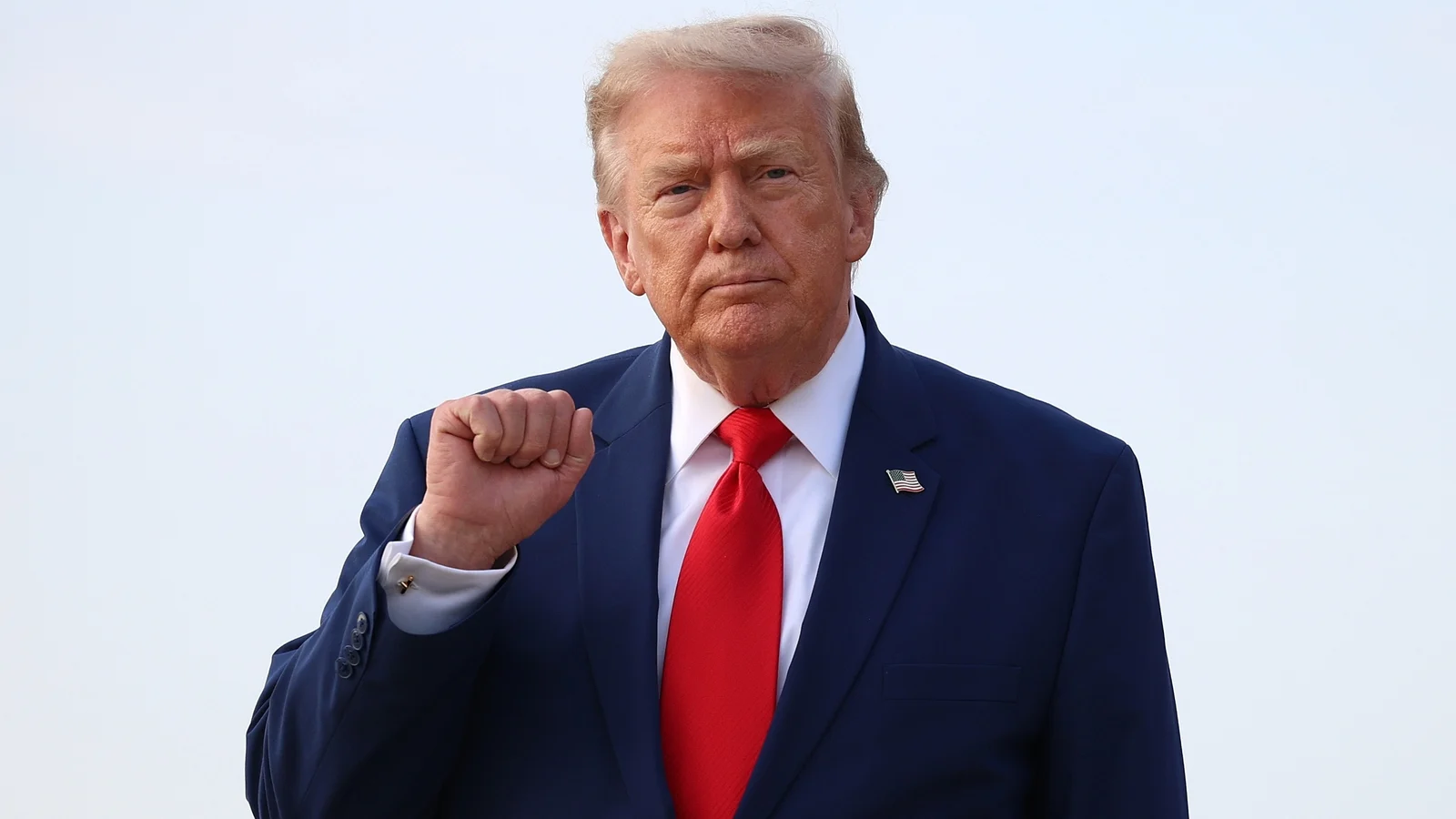
Iran’s statements came after US President Donald Trump warned he would retaliate against any attack on shipping in Hormuz by striking Iranian infrastructure, prompting Tehran to threaten an “eye for an eye” response as the two sides traded escalating messages.
“Any time the Islamic Republic of Iran shoots at a ship in the Strait of Hormuz, whether it be by Missile, Rocket, Drone, or any other device or weapon, the United States will bomb and destroy ONE BRIDGE OR POWER PLANT,” Mr Trump wrote on social media.
Iranian Foreign Minister Abbas Araghchi said Iran would mirror any blow to its infrastructure.
“Our defence doctrine is clear: eye for an eye,” Araghchi wrote on X. “Any aggression against Iran, including our infrastructure, will compel a powerful and decisive response.”
Iran’s state broadcaster cited the military as saying US threats “will have no result other than the expansion of the war”.
As he travelled to an airbase to receive the remains of four US service personnel, Mr Trump dismissed opinion polling that suggested the war was unpopular.
Three of the troops were killed in an Iranian strike on a military base in Jordan, and one died during a controlled detonation of an unexploded Iranian drone in Iraq.
“Americans don’t want high gasoline prices but they’re not against the war,” Mr Trump said.
Oil markets reacted sharply. Brent crude, the global benchmark, briefly pushed above $95 a barrel on Wednesday for the first time in nearly six weeks. Prices later pared back some gains but were still up about 3%.
‘Out-of-control military spending’
Against that backdrop, the US House of Representatives narrowly approved an annual defence policy measure that would authorise a record $1.15 trillion for the Pentagon.
In a sign of deepening polarisation during Mr Trump’s presidency, the 2027 National Defense Authorization Act (NDAA) passed 216-212, despite the bill’s history of attracting broad bipartisan backing.
The legislation, which still requires Senate approval, sets funding about $250bn higher than the 2026 NDAA.
House Armed Services Committee Republicans said in a statement the bill would help replenish “depleted stockpiles”, as the United States uses large quantities of projectiles in its war against Iran.
Democratic Representative Jerry Nadler said he opposed granting Mr Trump and Defence chief Pete Hegseth “$1.15 TRILLION for their out-of-control military spending and irresponsible actions”.
“The NDAA is a costly, bad bill that funds an illegal war and undermines our democracy,” he added.
Mr Trump has also pushed the so-called Golden Dome missile defence project for the US mainland, modelled on Israel’s “Iron Dome”.
US strikes
US Central Command said the latest strikes began at 9.30pm GMT yesterday (10.30pm Ireland time), targeting Iranian military sites with the aim of “further degrade Iran’s ability to threaten civilian mariners and commercial vessels transiting regional waters”.
Kuwait’s army said early today that it was intercepting hostile drones after several days of Iranian strikes on the country.
“Kuwaiti air defenses are currently responding to hostile drone threats,” the army said on X. “Any explosions that may be heard are the result of air defense systems intercepting hostile targets.”
Jordan reported it had downed four missiles and four drones. Air-raid sirens also sounded in Bahrain, where an AFP correspondent in Manama heard an explosion.
The Iranian military and the Revolutionary Guards confirmed they had targeted US assets in all three countries.
Red Sea threat
Mr Trump said he would “take care of” the Houthis if they acted on their threat to blockade Saudi ports.
How effectively the Houthis could impose such a blockade remains uncertain, but the warning could deepen the disruption already triggered by the Hormuz closure, potentially limiting Riyadh’s ability to bypass the strait for some oil exports.
The International Chamber of Shipping said the Houthis had been transmitting radio warnings to ships.
The message warned that “in case of non-compliance of Yemeni armed forces decision, those ships will be in our target, over”.
Middle East shipping routes have already shaken by fighting over the Strait of Hormuz
During the Gaza war that erupted in October 2023, the Iran-aligned Yemeni rebels hit shipping in the Red Sea and Gulf of Aden, driving vessels into lengthy diversions around Africa and triggering a US bombing campaign.
According to shipping tracker Kpler, the newest threats appear to have persuaded several ships to turn back before entering waters off Yemen, even as nearly 30 vessels still transited the Bab al-Mandab on Tuesday.
AFP analysis of maritime data found at least nine ships reversed course after the Houthi blockade announcement, including three that had loaded oil at Saudi Arabia’s Red Sea Yanbu terminal.