From conflict zones to courtrooms, some of the most striking images made by photojournalists over the past year have arrived in the heart of Sligo, where a new outdoor exhibition is turning Queen Maeve Square into a global window on current events.
The World Press Photo exhibition, hosted by Sligo County Council, forms a flagship event within Ireland’s cultural programme for its Presidency of the Council of the European Union.
Visitors can walk through the free exhibition, which is mounted on 16 scaffolding towers at Queen Maeve Square from today until 11 September.
Those attending can take self-guided tours using QR codes, available in multiple languages, that explain the stories behind 118 photographs selected from the annual World Press Photo Contest.
View: Click through images in our gallery below
The contest drew 57,376 entries last year from 3,747 photographers working in 141 countries, with 42 winners chosen.
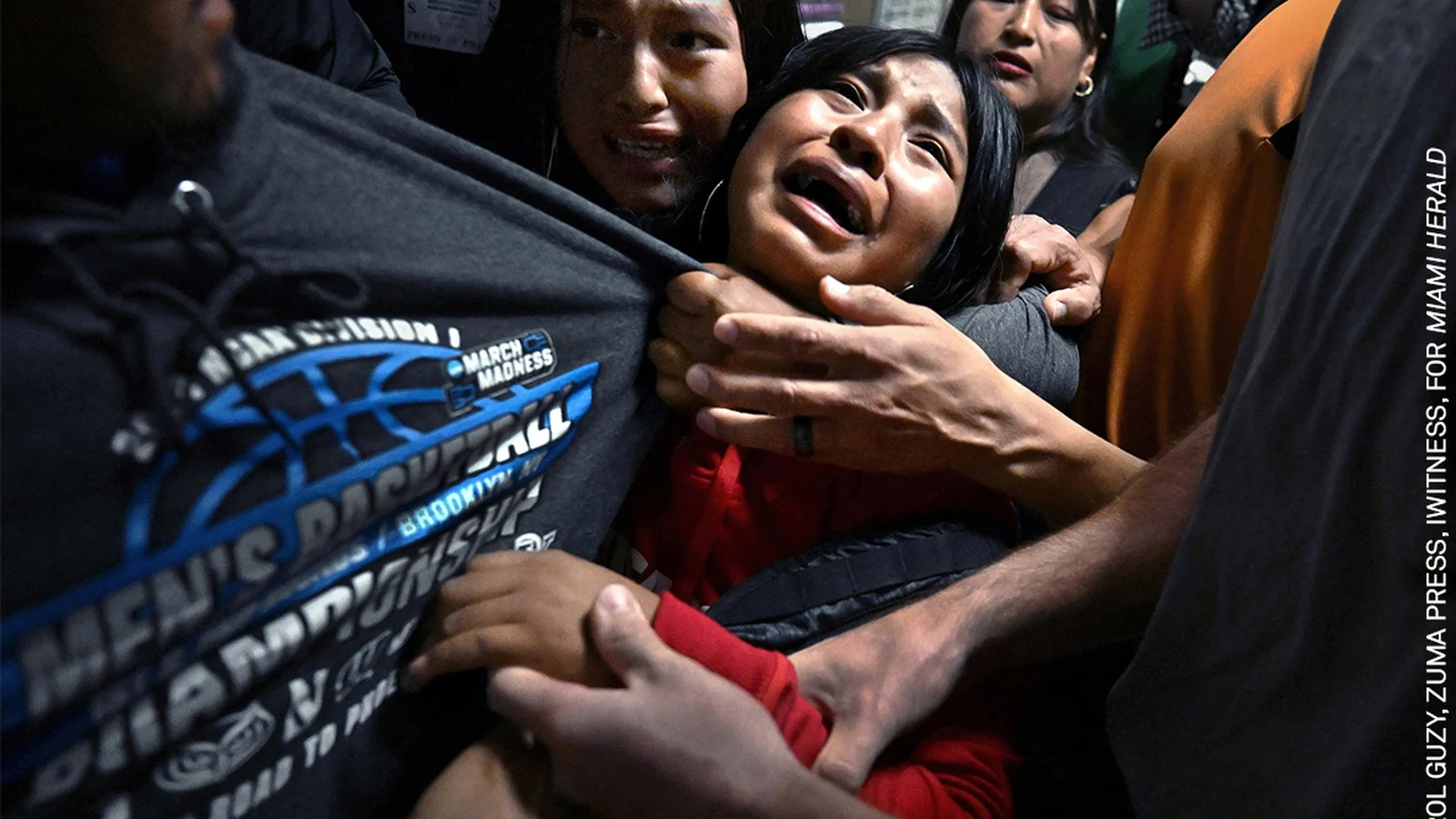
Named World Press Photo of the Year 2026 was ‘Separated by ICE’, an image captured by Carol Guzy for the Miami Herald.
Guzy photographed the scene inside a Federal Building in New York, one of the few US federal buildings where photographers were granted access.
The picture documents a family being separated by state agents after an Ecuadorian migrant was detained by US immigration agents following a court hearing last August.
The man, whom his family says has no criminal record and who served as the household’s sole provider, was taken from his wife and children.
Guzy said the recognition underlines why the story resonates far beyond the United States.
“We bear witness to the suffering of countless families, but also to their grace and resilience that transcends adversity that has been quite humbling,” she said.
World Press Photo executive director Joumana El Zein Khoury said the image captures the anguish of children losing their father in a setting she described as “built for justice”.
She said it stands as a stark and necessary record of family separation linked to US reform policies and is “a powerful example of why independent photojournalism matters”.
The two finalists in this year’s competition were ‘Aid Emergency in Gaza’ by Saber Nuraldin and ‘The Trials of the Achi Women’ by Victor J Blue.
‘Aid Emergency in Gaza’ shows Palestinians climbing onto an aid truck entering Gaza through the Zikim Crossing in an attempt to obtain flour.
Nuraldin photographed the scene during what the Israeli military called a “tactical suspension” of operations to allow humanitarian assistance through on 27 July 2025.
The World Press Photo Jury said the image makes visible the scale and urgency of famine during the second year of the war in Gaza.
Nuraldin, who was born in Gaza, has documented life there since 1997.
The World Press Photo Organisation has said that more than half of the approximately 94 journalists killed on duty across 15 countries last year died in Palestine.
In Guatemala, the legacy of the country’s civil war includes the genocide of thousands of Maya Achi people by the military and local state-backed paramilitary forces in northern Central America.
The other finalist, ‘The Trials of the Achi Women’ by Victor J Blue for The New York Times Magazine, shows Doña Paulina Ixpatá Alvarado, a plaintiff who was held captive and assaulted alongside fellow Achi women, outside a Guatemala City court.
On 30 May 2025, three former civil defence patrollers in Guatemala were sentenced to 40 years in prison for rape and crimes against humanity.
For four decades, a group of Indigenous Maya Achi women lived in the same communities as the men who raped them.
Fifteen years ago, 36 women broke their silence, beginning — and ultimately winning — a 14-year legal battle against their abusers.
The World Press Photo jury said the portrait captures a moment of collective strength at the end of a long fight for justice.
They said the image’s classical, restrained style underscores the women’s dignity and authority, deliberately challenging what they described as historical narratives that cast survivors of sexual violence as powerless subjects.
Sligo’s presentation will be the only Irish stop on the 2026 tour and marks the exhibition’s first visit to Ireland since 2014.
World Press Photo was founded in the Netherlands in 1955 and operates as an independent non-profit organisation championing photojournalism and documentary photography.
The organisation said the stories presented in the exhibition shed light on the realities people are confronting around the world.