New Zealand PM loses majority, centrist party emerges as key power broker
 Caalamka
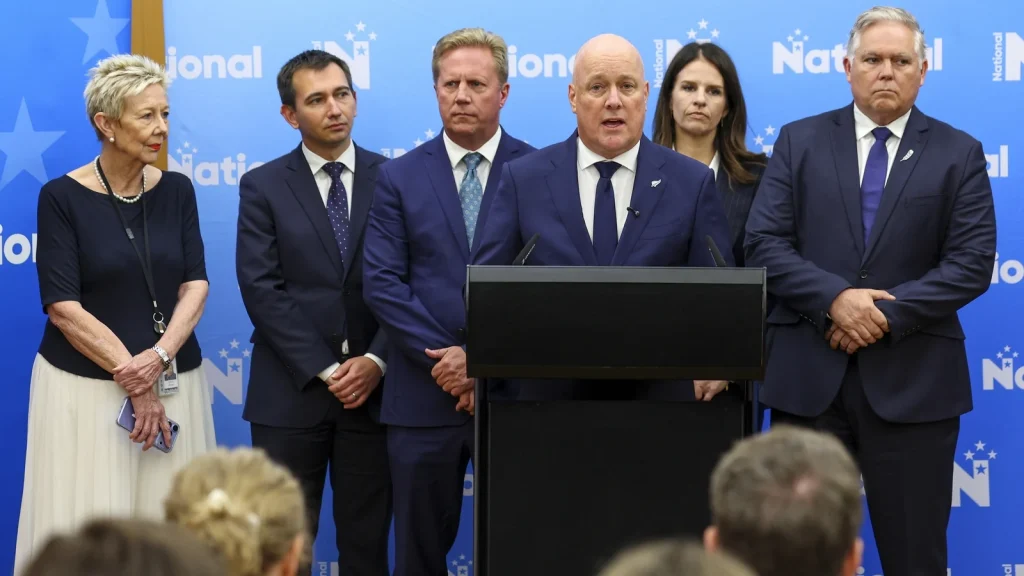
New Zealand woke to a sharper dose of political suspense on Friday after final election results stripped Prime Minister Christopher Luxon’s right-wing coalition of its parliamentary majority, leaving a newly arrived centrist party poised to decide who governs.
Early tallies from the 7 November poll had suggested Mr Luxon’s National Party-led bloc would hang on to power.
However, the contest proved so close that National surrendered two seats in the final count released today, pushing Mr Luxon’s coalition with the populist NZ First and the libertarian ACT to one seat short of a majority.
In the days after the election — a hard-fought campaign shaped largely by surging costs of living across the South Pacific nation — Mr Luxon said the vote had given him a mandate to form the next government.
He has remained in charge since the November 7 ballot, but acknowledged today that securing an agreement to continue governing will not be straightforward.
“I want to be upfront with New Zealanders. These negotiations may be challenging, and they could take some time,” he told journalists.
To command parliament, he now requires support from Opportunity, a centrist newcomer led by Qiulae Wong.
Failure to reach a deal could force the country back to the polls.
“Getting it right matters far more than getting it done quickly,” Mr Luxon said.
“New Zealanders need a government that is stable, that works together, and will last for the full term.”
Pledging kinder, gentler politics as well as action on climate change, her party became the first in decades to make parliament without a former cabinet minister as leader.
Opportunity leader Qiulae Wong tells journalists she is expecting ‘challenging’ talks
Ms Wong has vowed to work with whichever party has the largest number of seats.
But she has insisted that her party’s “bottom lines” on climate change action, cost of living and cleaning up politics are non-negotiable.
On the campaign trail, she ruled out working with a government in which NZ First leader Winston Peters was foreign minister, after he told a Chinese-born lawmaker to “go back to your own country”.
Speaking outside parliament following the final result, she told journalists she was expecting “challenging” talks.
‘Constructive and proactive’
And she also refused to rule out taking the country to another election.
“All we can do is be as constructive and proactive as possible to make this happen. But it’s not just us around the table,” she said.
Both Mr Luxon and opposition Labour Party leader Chris Hipkins have held lengthy meetings with Ms Wong in the wake of the election.
Ms Wong’s ascendancy to kingmaker in the next New Zealand government caps a remarkable rise since the 38-year-old former KPMG consultant took over the party – polling at about 1% in August last year.
She pitches “pragmatic politics” as an antidote to intensifying polarisation, arguing the country needs leaders who can lower the temperature and concentrate on practical progress.
After the election this month, she described Opportunity’s breakthrough as evidence of a shift after a decade marked by growing populism and extremism internationally.
“I think we are seeing a push globally for more pragmatic politics,” she told journalists.
“We’ve seen that populism doesn’t deliver results,” she said.
With the official numbers now confirmed, New Zealand may wait weeks — potentially even months — to learn what its next government will look like.
The last time voters went to the polls in 2023, Mr Luxon needed more than six weeks to assemble his coalition with NZ First and ACT.