They Came Back: A Quiet Night of Long Roads, Loud Hugs and a Country Reckoning
The midnight air outside Papiri tasted of dust and diesel and the thin, metallic tang of relief. Men and women who had not slept for nights clustered under the battered streetlights, faces lit by phones and prayer candles. Children—some small, some hardly taller than the school desks they had fled—arrived in small clusters, limbs trembling, mouths telling stories that started with gunfire and ended with the backseat of a motorbike.
“Another 130 abducted Niger state pupils released, none left in captivity,” President Bola Tinubu’s aide, Sunday Dare, wrote on X, a line that fluttered across screens and into the restless villages and city living rooms of Niger state and beyond. The announcement was at once a balm and a question: were all the nightmares over? Who paid? What will it cost them—emotionally, economically, politically?
What happened — and why counting lives became so complicated
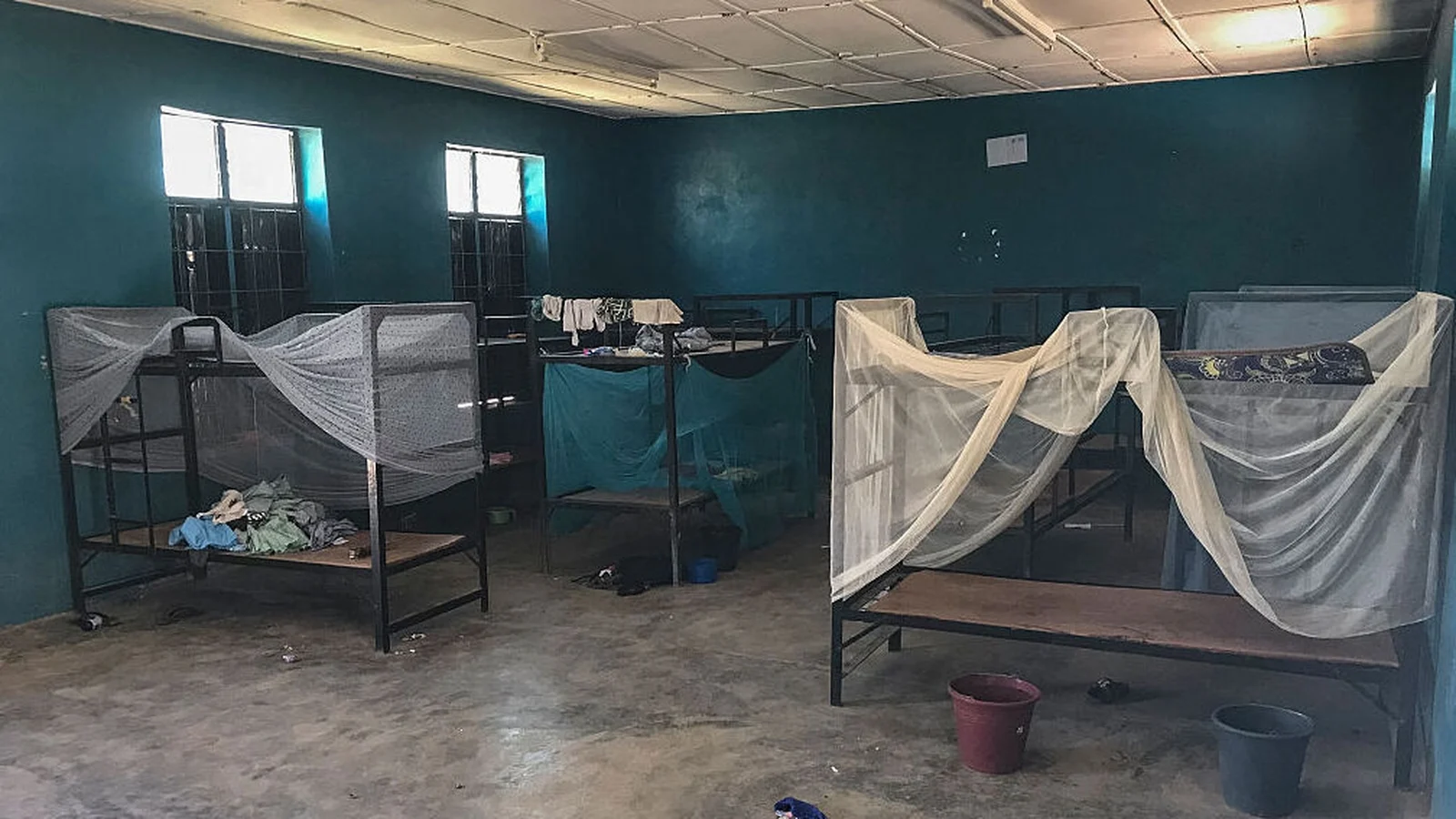
It began with one of those attacks that force a country to look in the mirror. In late November, gunmen swept into St Mary’s co-educational boarding school in the hamlet of Papiri, in north-central Niger state. Initial reports from the Christian Association of Nigeria said the tally was 315 students and staff unaccounted for. Then the numbers buckled under the realities on the ground: roughly 50 escaped immediately; around 100 were released earlier in December; another 130 were announced freed this week.
But numbers are never just numbers when people’s lives hang in balance. A United Nations source cautioned that many of those believed kidnapped had actually fled during the attack and made their way home through night roads, over red earth, sometimes walking or riding three or four hours on motorbikes to remote settlements. “Some children walked for hours, barefoot, guided by the light of the stars,” said one relief worker who asked not to be named. “Families were calling every relative, every neighbor. We had to map people like a human puzzle.”
Daniel Atori, a spokesman for CAN in Niger state, tempered the triumphal tone: “We’ll have to still do final verification,” he said. “Governor Mohammed Umaru Bago has called the bishop to confirm the releases, but the figure was not mentioned.” Sister Mary T Barron, Superior General of the Missionary Sisters of Our Lady of the Apostles, whose order runs St Mary’s, told reporters she had “heard this news this evening” but expected clearer details in the morning.
Scenes from a reunion
At the makeshift reception center in Minna, the capital of Niger state, the scene was equal parts joyful and bewildering. Mothers brushed hair from the foreheads of teenagers whose eyes had grown older in a matter of weeks. Fathers cried openly for the children they thought they had lost forever. “I didn’t sleep. I climbed onto the roof every night to listen for motors,” said Aisha Ibrahim, a mother whose son arrived limp in her arms. “When they came back I felt the floor leave me. It is like being born again.”
Teachers hugged students and then themselves, shaking, laughed through tears, and promised to turn the school yard into a place where children could feel safe again. “They were taken where we could not follow them,” said one teacher, her voice low. “Now they are home. That is what matters, but how do we teach them without the shadow?”
Kidnap-for-ransom: a business built on fear
To understand why this episode took hold of a nation, look at the contours of modern Nigeria’s insecurity. From jihadists carving out territory in the northeast to heavily armed “bandit” gangs in the northwest, violence has metastasized into a kind of shadow economy. Analysts who track militant finance say Nigeria’s kidnappings-for-profit have become organized and professional. A recent report by SBM Intelligence, a Lagos-based consultancy, estimated that between July 2024 and June 2025 these activities netted roughly $1.66 million.
“This is no longer random criminality,” said a security analyst who monitors ransom payments. “It is an industry. They have logistics, negotiators, handlers. They know where to strike for maximum effect—schools, churches, wedding parties. It is both a business model and psychological warfare.”
November itself was a brutal month: two dozen Muslim schoolgirls, 38 church worshippers, a bride and her bridesmaids—dozens taken in separate attacks across rural areas, each incident the latest in a catalogue of fear that stretches back to Boko Haram’s abduction of nearly 300 girls from Chibok in 2014. That episode became an emblem of global outrage and yet, over a decade later, the structural problems that enabled it remain stubbornly in place.
What the government won’t say out loud
There has been no public explanation of who seized the children from St Mary’s or how the government secured their release. Analysts and journalists familiar with past operations suspect that ransom payments were made—payments that, technically, are illegal. “There are back channels, there are intermediaries,” a veteran negotiator said. “We like to imagine that state power alone frees hostages. In many of these cases, it is a messy combination of force, negotiation, and cash.”
That reality creates a difficult moral calculus. Pay the ransom and more children might be taken next time; refuse and lives could be lost. The tension has spillover consequences: schools close, parents withdraw children, and communities—especially in rural, agrarian parts of Niger state—lose both trust and a generation’s education.
Looking past the headlines: the deeper wounds
When the buses and motorbikes finally brought the children back to Minna, the work of repair began. Nurses checked for illness and dehydration. Counselors listened as small voices stitched together fragments of terror. “We trained our team to be patient,” said one psychologist volunteering at the center. “Trauma is not a single event. It unspools slowly.”
There are practical obstacles as well: confirmation of identities; tracing children to villages that require three- or four-hour journeys by motorbike; stigmas in communities that suspect trauma survivors of being “changed.” The UN source said that some of the girls would be taken to Minna for further verification, a necessary step before they can be returned to their families and classrooms.
Beyond logistics, the release raises political questions that ripple to global capitals. The United States has publicly accused parts of Nigeria’s security crisis of having sectarian elements; those claims have inflamed debate at home and abroad. Nigeria’s authorities and many analysts reject labels like “genocide,” arguing instead that the violence is the result of complex local dynamics: resource competition, porous borders, and a failure of governance.
What should we, watching from elsewhere, remember?
It is tempting to reduce this to a stat—130 freed, 100 freed earlier, 315 initially reported. But numbers hide the texture of the lives they represent: the boy who learned to whisper in a tent, the girl who refuses to ride the school bus without her mother, the teacher who now counts heads three times and sleeps with one eye open. What do we owe these children beyond headlines? What responsibility rests on regional neighbors, on donor nations, on the international community to help rebuild not just security but trust?
“We are relieved, yes—but we are also scared,” said Pastor Emmanuel, a local clergyman. “If nothing changes, we will be back here again.”
Small steps, long road
- Immediate verification and reunification of the released children with their families.
- Trauma-informed care, including counseling and safe schooling mechanisms.
- Investment in rural infrastructure so families are not cut off and so verification can be done without days of travel.
- Transparent investigation into the abduction and how releases were negotiated to weaken the economics of kidnapping.
As night gave way to a pale dawn over Papiri, the mood was cautious. There were songs—some nervous, some jubilant—and the smell of food being prepared for reunions. Children ran with an energy that belonged to those who had escaped but were still learning how to be safe. In the years since Chibok, Nigeria has learned that rescue is only the start. Rebuilding a sense of normalcy, of security, of future, takes time, resources, and above all, a collective will.
So ask yourself: when the cameras leave and the hashtags drift into the history of our feeds, who will stay to teach, to nurse, to listen? The children have come home for now. The real work—of healing a community and of cutting the profitable roots of violence—has only just begun.