A Year That Felt Like a World in Fast-Forward
Walk through any city in 2025 and you could read the year’s story on faces and storefronts: worry lines at produce counters, headlines arguing over the borders of power, kids in parks watching lightning-bright drone shows while their parents argue about whether those same machines will take their jobs. This was a year of abrupt returns, fragile truces, and inventions that promised miracle cures and nightmares in the same breath. These are the threads I followed across continents — the moments that kept diplomats up at night and gave street vendors new reasons to worry or hope.
1) The Return: Power, Policy and Protest
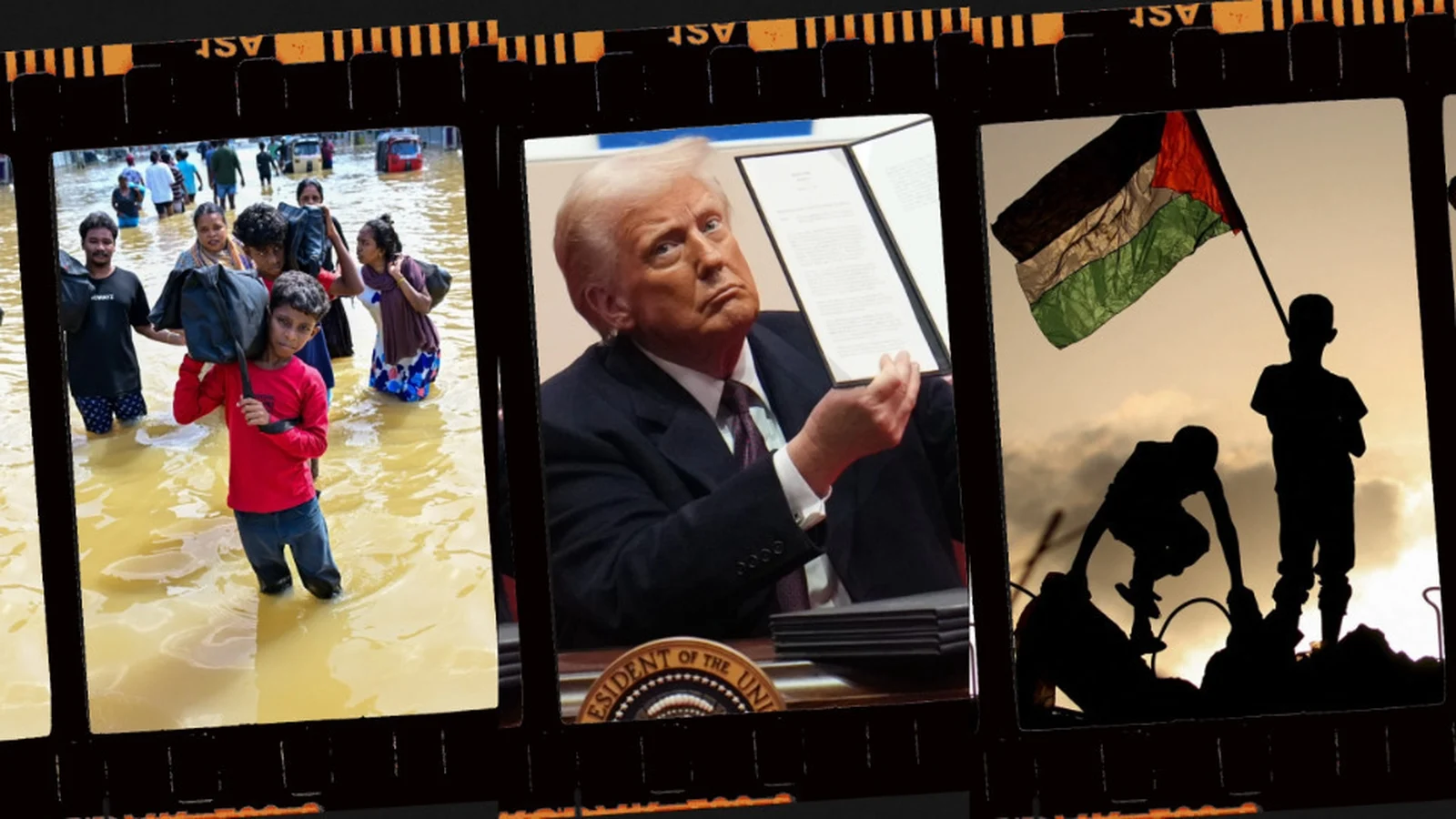
In January, the halls of Washington felt familiar and unfamiliar at once. The same figure as before, but a bolder playbook: protectionist tariffs, a stepped-up drive to deport undocumented migrants, and sweeping changes inside federal agencies. “We will put American jobs and families first,” a senior administration official told reporters, fingers tapping the podium with practiced force.
On city streets, the changes landed differently. “They sent the National Guard to our demonstration as if we were under siege,” said Marisol Hernández, a community organiser in a midwestern city that voted blue in 2024. “People were scared. That wasn’t the country I knew.”
Polls during the year showed a restive electorate, especially over cost-of-living pressures. Local election losses late in the year hinted at the political peril ahead. Whether this return reshaped policy for a generation or simply accelerated divides is a live question: will voters reward boldness, or punish governance that feels bruising?
2) Gaza: A Quiet Day After Two Years of War
After two years of relentless bombardment and a famine declaration that shocked aid agencies, an uneasy ceasefire arrived in Gaza. The truce allowed the last surviving hostages to return, and many of the dead — a war that would account for roughly 70,000 lives by year’s end — to be returned to grieving families.
“We walked back into what used to be our home. There was no roof, no kitchen, only a memory of oranges,” said Amina, who returned to the ruins of Gaza City clutching a charred photograph. Humanitarian corridors widened, but the UN and aid groups warned that supplies remained a fraction of what is needed.
The diplomatic work — disarming militias, rebuilding infrastructure, and charting a political future — proved delicate. Even as the guns quieted, regional sparks continued: strikes across Lebanon and even a brief confrontation that reached Iran’s facilities — all reminders that ceasefires are rarely the end of a story.
3) Ukraine: Negotiations and Unease
The war that began in 2022 did not simply pause; it mutated into a diplomatic chess match. New American leadership reset expectations: summits staged, alliances tested, and sanctions imposed. A high-stakes meeting in the far north ended early, a tableau of mistrust that diplomats will study for years.
“We are not bargaining over lives,” a Ukrainian adviser said in frustration after a leaked draft of a plan that Kyiv feared leaned toward Moscow’s terms. Yet talks continued through the autumn — a global reminder that peace can be as much about patience as it is about pressure.
4) Tariffs, Trade and the New Old Economics
A wave of tariffs on metals and strategic imports rippled across global markets, prompting headaches in manufacturing hubs from Germany to Guangzhou. Negotiations brought tentative deals with some partners, but trade tensions with neighbours lingered: talks with Mexico dragged on, and relations with Canada hit a sour note after a public dispute over a provincial ad.
For ordinary people, the effects were immediate: coffee and beef tariffs were removed mid-November to ease grocery bills, but the orchestration of supply chains had already shifted. “It’s like tightening a belt and then buying a new pair of trousers that don’t fit,” said an auto-parts supplier outside Detroit. “You feel it in every shipment.”
5) A New Shepherd in Rome
On a spring morning the colour of old parchment, white smoke curled above St. Peter’s. Cardinals had chosen a pope with an uncommon biography: Chicago-born, long years as a missionary in Peru, and a shepherd who called himself Leo XIV.
“The poor are not a program. They are the face of the Gospel,” the new Pope told a packed square, pledging continuity on care for migrants and the environment, while signalling restraint on changes to church doctrine that conservatives had feared. For many Catholics, his election offered a hopeful architecture for dialogue between reform and tradition.
6) Gen Z on the Streets
Young people — viral, mobile, and politically impatient — filled plazas from Rabat to Kathmandu. They carried punk flags and manga-inspired symbols, most notably a straw-hatted skull from One Piece that became a smiling emblem of resistance.
“We’re not just making noise online anymore,” said Miraj Dhungana, a student who led marches in Nepal. “This is about basic dignity: jobs, honest governance, space to breathe.” Some governments promised reforms. Others cracked down. More than 2,000 protesters in Morocco now faced prosecution; in Madagascar and Nepal, leaders were forced to resign under social pressure. The youth upheaval reminded the world that a generation raised on screens will not accept being told to shut off their cameras and wait.
7) The AI Gold Rush
Money poured into artificial intelligence with the intensity of a tech-era gold rush. Analysts estimated AI-related spending near $1.5 trillion in 2025 and projected $2 trillion the following year. Nvidia briefly danced past a $5 trillion valuation, a symbol of the sector’s fever.
“We are building tools more powerful than anything since the Industrial Revolution,” said an AI ethicist in London. “But we have not yet agreed on the rules.” Lawsuits over copyright, layoffs explained away as ‘AI restructuring’, and misinformation campaigns provided grim counterpoints to the optimism of entrepreneurs and investors.
8) The Louvre Heist: A Heist Story for a Viral Age
Under the Paris moon, a crew in work vests used ladders and scooters to walk away with a cache of crown jewels valued at €88 million. They dropped a diamond-studded crown en route — a cinematic misstep that became a meme.
“You feel embarrassed for the museum, yes — but also tickled by the audacity,” said a curator in the Latin Quarter. The robbery forced a global conversation about how we protect and display cultural treasures in an era of crowd-sourced attention and digital voyeurism.
9) Military Action and Regional Fears in Latin America
U.S. strikes against vessels accused of drug trafficking stirred bitter debate in the region. Washington insisted the operations were lawful; critics, including Caracas, cried political aggression, accusing the U.S. of using anti-drug campaigns as cover for broader ambitions.
“We are the ones whose lives are being patrolled,” said a Venezuelan fisherman watching foreign ships off his coast. The strikes left scores dead and a diplomatic fog that raised uncomfortable questions about sovereignty, counter-narcotics policy, and the thin line between law enforcement and intervention.
10) A Climate That Keeps Coming Back
Storms and fires turned 2025 into a geography lesson on extremes. Vietnam saw rainfall above 1,900mm in places, islands in the Caribbean were battered by Hurricane Melissa, and Europe burned and choked with smoke. Ireland’s Storm Éowyn broke wind records with gusts near 183 km/h, a brutal reminder that records are now a part of our everyday vocabulary.
Scientists were blunt: climate change is intensifying the frequency and force of these events. For communities who live by the seasons — farmers in the Mekong Delta, shepherds in southern Portugal, fishers in the Caribbean — the disruptions were not statistics but the erosion of a way of life.
What Kind of Future Are We Choosing?
So where do we go from here? Each headline of 2025 points to choices: about how we balance security and rights, rebuild after war, govern technology, and store up resilience against a wilder climate. The year closed as it began — loud with debate, rich in contradiction, and tight with resolve.
As you scroll past these stories on your phone, consider which thread feels closest to you. Is it the one that threatens your job, protects your family, or offers a new spiritual compass? The answers we reach in the coming years will not be written by leaders alone. They will be stitched from groceries bought and missed, from protests that swell and subside, from the lines at aid stations, and from the servers that run the models we increasingly trust. That’s the human work of history: messy, urgent, and ultimately ours to shape.