A Mar-a-Lago Meeting and the Tension That Trails It
It was a warm Florida afternoon — the kind where the Atlantic throws glints of light across manicured golf greens and the palm trees outside Mar-a-Lago sway like they’re listening in. Inside, the conversation was anything but sunny.
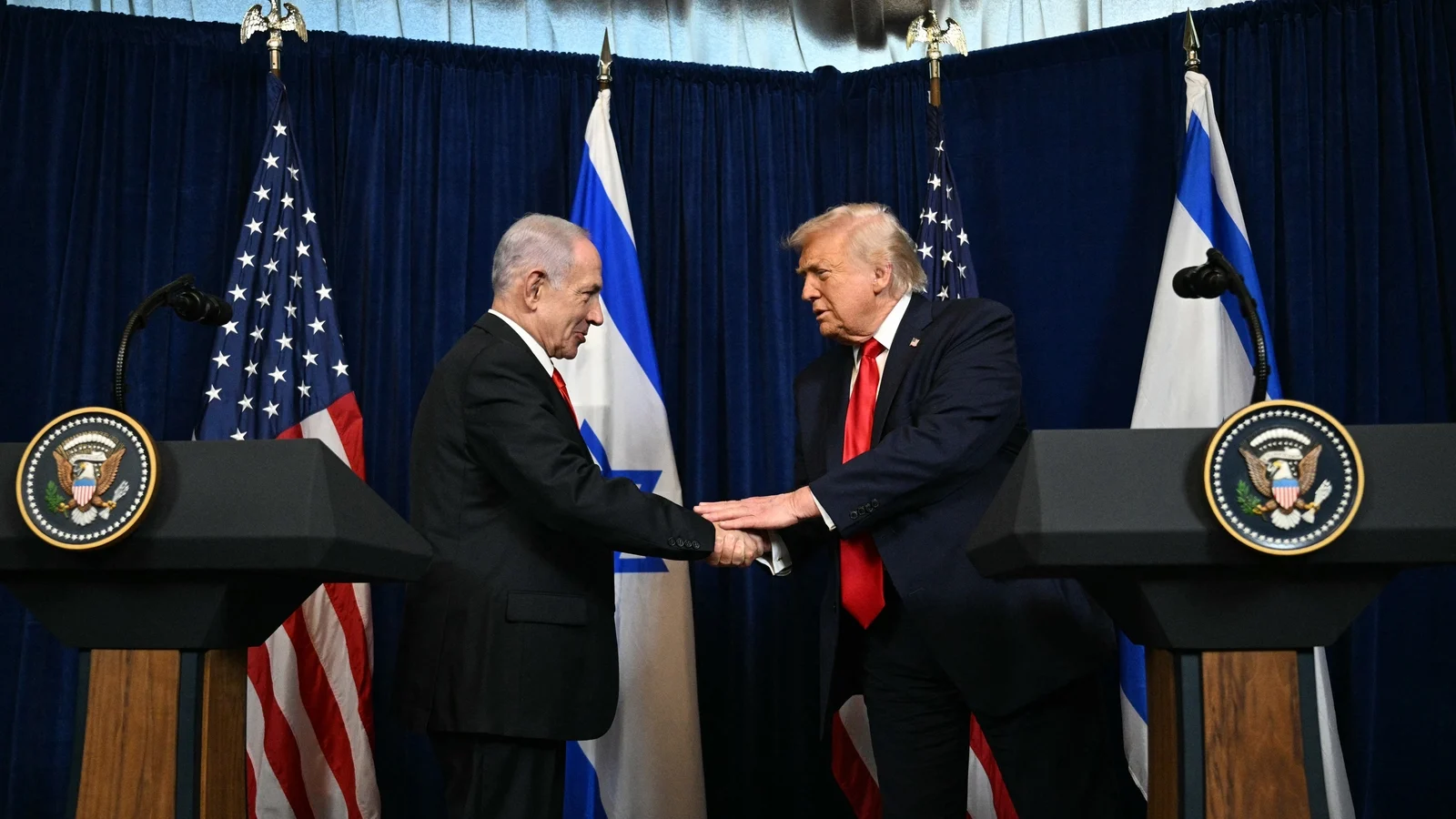
President Donald Trump welcomed Israeli Prime Minister Benjamin Netanyahu to his oceanfront club, and the two men sat for talks that read like a map of the region’s most combustible lines: Iran’s nuclear ambitions, the fragile ceasefire in Gaza, and the uneasy disarmament of Hezbollah in Lebanon. As the cameras clicked, the president’s words were blunt and unmistakable: if Iran rebuilt its nuclear or long-range missile capabilities, “we’re going to have to knock them down. We’ll knock them down. We’ll knock the hell out of them.”
That vow — raw and belligerent, delivered with a sheen of theatrical certainty — is more than campaign rhetoric. It is a distillation of a larger anxiety: the fear that deterrence will fail and that the Middle East, already scarred by years of war, could be pushed into a new, wider conflagration.
Where the Worry Comes From
The backstory is familiar by now. In June, U.S. forces struck at sites tied to Iran’s nuclear program, an operation the White House has described as destroying Tehran’s enrichment capacity. Tehran, for its part, has been at pains to insist publicly that it is no longer enriching uranium at any declared facility — an assertion meant to signal openness to diplomacy even as regional rivalries hum beneath the surface.
Israeli intelligence officials have warned privately and publicly that Iran is trying to rebuild elements of its long-range missile supply chain — weapons that could soon threaten cities across Israel. The stakes are high: the 7 October 2023 Hamas attack that killed some 1,200 people remains a searing memory, and the hostage crisis that followed left 251 people taken; all but one have since been returned, alive or dead.
“We can’t play catch-up,”
said one former Israeli military planner who asked not to be named. “If Iran is reconstituting the infrastructure, you cannot sit back and wait for the first missile to land before you respond.”
Whether Tehran is, in fact, rebuilding at the speed Israel fears is partly an intelligence question and partly a political one. Iranian officials insist they have ceased enrichment — a stance designed for the international audience — while also conducting missile exercises and showcasing resilience. Last month, Tehran announced another round of military drills, underlining how military signaling remains central to the dispute.
The Ceasefire, the Hostages, and the Moral Calculus
Netanyahu’s visit to Florida came at a delicate moment for the U.S.-brokered ceasefire between Israel and Hamas. The agreement, which began its first phase in October, slowed the bloodshed and produced the difficult work of releasing hostages and exchanging conditions. Progress has been uneven.
“There can be no second phase without the first being fulfilled,” President Trump told reporters, echoing a sentiment voiced in grief by hostage families. Trump and Netanyahu repeatedly returned to the human face of the bargain: the last unreturned person, Ran “Rani” Gvili, remains a pivot point for many Israeli leaders, who say they will not move fully into the next stage until they know what happened to him.
“Every family I spoke with is asking for one thing,” said Miriam Cohen, a volunteer with a Tel Aviv support group for hostage families. “They want dignity. They want closure. They want to know that politicians are not bargaining away their loved ones for abstract gains.”
Netanyahu has said he is in no hurry to advance the ceasefire until the Gvili case is resolved; the family has been meeting with senior U.S. envoys while they wait. It’s a reminder that beneath grand strategy sit people whose lives have been ruptured in immeasurable ways.
Lebanon’s Ceasefire: A Test of Disarmament
To the north, the quiet along the Lebanon-Israel border has been precarious. A November 2024 deal, backed by Washington, was meant to end more than a year of hostilities between Israel and Hezbollah and to begin a process of disarming the powerful Iran-backed group in southern Lebanon. Official Beirut says the disarmament effort is close to completion within the year-end deadline, but independent observers and Israeli officials say progress is partial and fragile.
“Disarmament is not only a technical job; it’s political and social,” explained Lina Haddad, a Lebanese civil-society activist. “You cannot simply take weapons out of communities that feel existentially threatened without offering security or a political framework.”
Israel, saying it sees Hezbollah reconstituting its strength, has carried out near-daily strikes in Lebanese border regions to keep the group off balance. The result is a patchwork of ceasefires and flare-ups, each one a reminder that the end of one battle line doesn’t erase the forces that fed it.
Diplomacy, Domestic Politics, and the Weight of Personality
There are other layers to this visit. Trump’s effusive praise of Netanyahu — “If you had the wrong prime minister, Israel would not exist,” he said — was as much a domestic flourish as a strategic endorsement. Political theater is always part of high diplomacy in Washington and Palm Beach; this time it carried echoes of past administrations’ alliances, and of the personal chemistry between leaders who trade bluster and assurance.
The two also touched on an eyebrow-raising claim about a potential pardon. Trump said Israeli President Isaac Herzog had told him he planned to pardon Netanyahu of corruption-related charges. Herzog’s office quickly pushed back: there had been no conversation between the two presidents on that subject since a pardon request was submitted, the statement said. A political whisper, amplified on a gilded lawn.
Experts put it this way:
“The Middle East remains a theater where domestic politics and international strategy blur,” said Dr. Amina Soltani, a Middle East policy scholar. “When leaders use bold language about striking another state, they are also signaling to domestic constituencies that they are strong, decisive. The risk is that the rhetoric can become a self-fulfilling prophecy.”
What to Watch Next
- Iran’s trajectory: whether Tehran’s public claims about enrichment hold against intelligence reporting about missile and weapons logistics.
- The ceasefire’s Phase Two: whether the parties and their international backers can translate ceasefire pledges into tangible steps, including the return or accounting of hostages.
- Hezbollah’s disarmament: whether Lebanon can reconcile community security with the broader goal of removing heavy weaponry from civilian areas.
These are not merely items on a diplomatic docket. They are the markers of whether the region tilts toward cold containment or hot escalation.
Final Thoughts — A Question for the Reader
Standing in Mar-a-Lago, under the spray of Florida sun, two leaders negotiated lines of red and green that will determine lives thousands of miles away: whether a young man’s remains return to his grieving parents, whether a city will be threatened by a missile, whether a fragile ceasefire will become a durable peace. Can diplomacy, bolstered by credible deterrence, hold long enough to forge something more permanent? Or will the next misstep — miscalculation, mistrust, or miscommunication — open a door that is very hard to close?
These are not theoretical questions. They are urgent, and they demand more than slogans. They demand patience, intelligence, and the kind of honest conversations that don’t always play well on camera but might save lives. The world will be watching. And what do you think should happen next?