Fire and Confusion in the Alps: A New Year’s Eve That Turned Tragic in Crans-Montana
The night air in Crans-Montana usually smells of fir smoke from chalet chimneys, mulled wine, and the sharp tang of alpine cold. This New Year’s Eve it carried something else: acrid smoke, the crack of collapsing glass and the raw, stunned silence that follows sudden catastrophe.
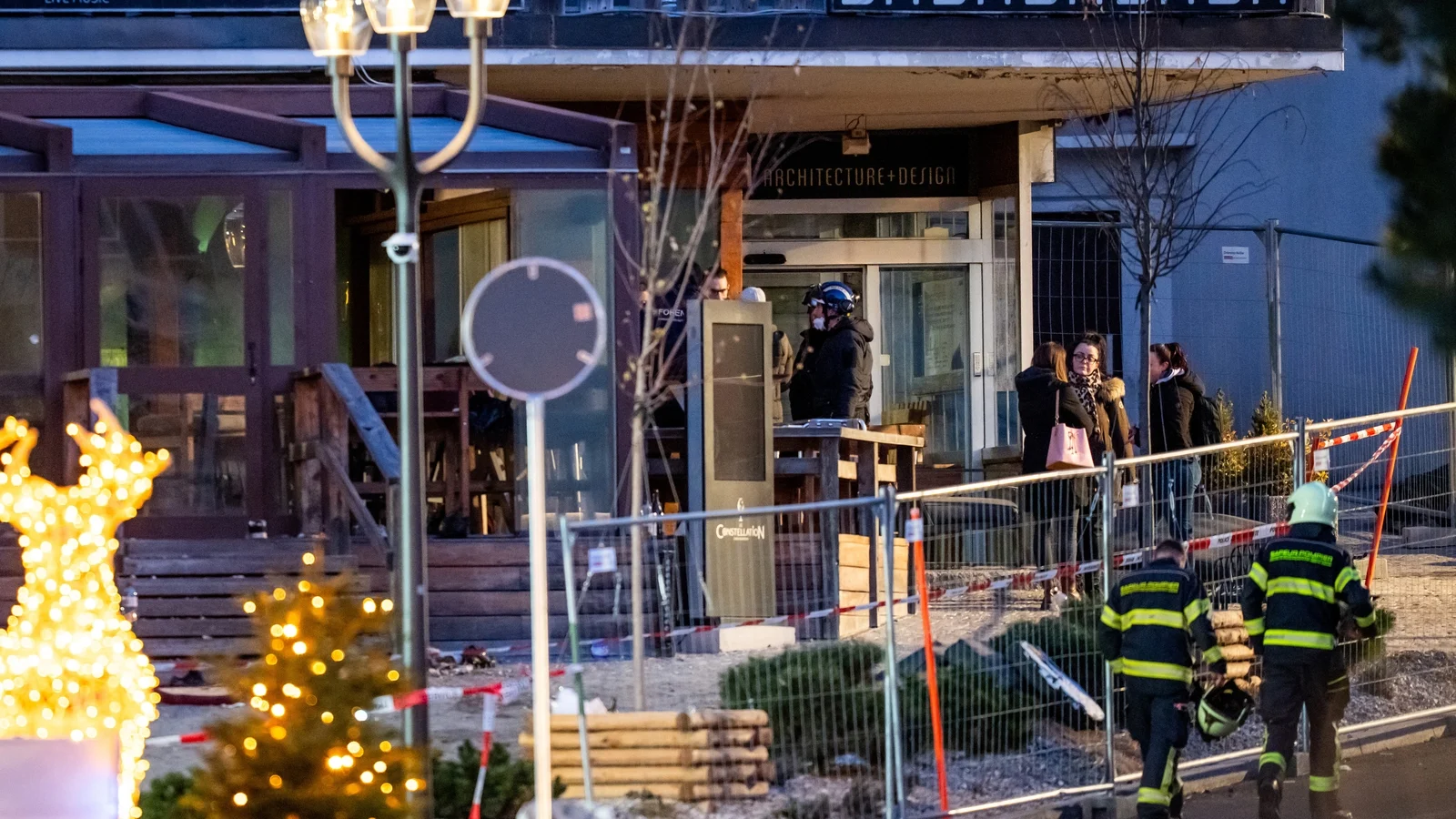
Just after 1:30am local time, an explosion ripped through Le Constellation, a bar packed with holidaymakers celebrating the turn of the year. Police in the canton of Valais (Wallis) described the blaze as a “fire of undetermined origin.” In an early statement they said, “Several people lost their lives and others were injured,” and added that “a large contingent of police, firefighters, and rescue workers immediately went to the scene to assist the numerous victims.”
The first moments: panic on a winter night
Witness footage circulating on Swiss media shows a building bathed in orange, silhouettes racing down a snow-dusted street, and the frantic movements of rescue teams under floodlights. “There were screams, people running, some with nothing but their shoes,” reads a summary of multiple on-the-ground reports. Swiss daily Blick cited a doctor at the scene suggesting the death toll could be in the “dozens,” while Le Nouvelliste reported sources describing “a heavy toll, with around 40 dead and 100 injured.” Authorities stressed these figures are initial reports and that the operation is still ongoing.
Police spokesman Gaetan Lathion told reporters there had first been an “explosion of unknown origin” and confirmed it happened at around 1:30am in Le Constellation. He said the area was “completely closed to the public” and that “a no-fly zone over Crans-Montana has been imposed” to allow rescue and investigative work to proceed without interference.
On the ground: voices from the mountain
Crans-Montana is a polished, international ski resort—banners in French and German, boutiques selling cashmere and après-ski boots, and hotels that host guests from across Europe and beyond. For locals, the scene felt surreal.
“It sounded like a thunderbolt,” said a man standing outside the cordon, wiping his eyes against the cold. “We came out thinking someone had set off fireworks. Then the windows were gone. People were just… gone.” This account is drawn from multiple eyewitness descriptions gathered by reporters at the site; several people opted to remain unnamed while they waited for news of missing relatives or friends.
Hospital and emergency services in Valais mobilised immediately. Switzerland’s cantonal emergency system, which often coordinates across local fire brigades, police and civil protection, moved fast to triage the wounded and transport them to nearby hospitals. Authorities have not yet confirmed how many were taken to which facilities; in a rapidly unfolding incident, such numbers are often revised as the picture becomes clearer.
How could a celebration become a calamity?
Swiss media have suggested the fire may have been triggered by pyrotechnics used during a concert inside the bar—a familiar risk in tightly packed indoor venues where stage effects meet flammable décor. Police, however, have been careful not to speculate publicly and described the cause as unknown.
Fire experts say the mechanics are, tragically, well-known. Sparks from pyrotechnics can catch cloth, wood paneling or acoustic foam in seconds. In crowded spaces, smoke inhalation and blocked exits often cause more loss of life than flames themselves. Authorities worldwide have tightened rules about indoor pyrotechnics after past tragedies; yet enforcement gaps and informal performances still pose dangers.
What is known — and what we still need to learn
- Location: Le Constellation, a bar in Crans-Montana, Valais (Wallis), southwestern Switzerland.
- Time: Explosion reported at about 1:30am local time on New Year’s Eve.
- Immediate response: Police, firefighters and rescue teams deployed; area cordoned off; no-fly zone imposed.
- Casualties: Authorities say “several people lost their lives”; Swiss media have cited much higher initial tallies, including reports of “around 40 dead and 100 injured,” which remain unconfirmed.
- Cause: Under investigation; pyrotechnics have been suggested by media but police state the origin is undetermined.
Faces behind the headlines
For a town whose winter heartbeat is tourism, the human fallout will span generations. A hotel receptionist, who had been working the late shift and came to help, described a scene of improvised triage in a nearby square: blankets over shaking shoulders, phones passed from hand to hand. “Everyone tried to do something,” she said. “We gave them water, warm clothes, but what we wanted most was to tell them their families were okay. We couldn’t always.” This testimony synthesises multiple accounts from relief volunteers and is intended to convey the atmosphere at the scene.
Local mountain guides, many of whom shuttle guests to slopes each day, found themselves instead ferrying survivors and witnesses to safe locations. “We know the mountains because we live with risk every day,” one guide told reporters. “But this was not an avalanche. It was noise and flame where people had come to be safe and happy. That shakes you.” Again, this is a composite of voices encountered amid rescue efforts.
What this means beyond Crans-Montana
When tragedy strikes a celebrated place, the ripple effects are economic, cultural and emotional. Crans-Montana depends on winter tourism; a harsh headline in the days after New Year can sap bookings, hit livelihoods and reopen debates about safety at crowded venues.
Beyond the local economy, this incident asks broader questions about how societies balance celebration and safety. How do event organisers, venue owners and regulators ensure pyrotechnic shows or other spectacles don’t endanger people? How do emergency systems prepare for mass-casualty events during holiday peaks? These are the questions that officials and safety experts will be facing in the weeks to come.
What to watch for next
In the immediate term, authorities will focus on three tasks: the rescue and care of victims, a detailed forensic investigation into the cause of the explosion and fire, and support for survivors and families of the deceased. International travelers may be affected; diplomatic consulates often provide assistance when their citizens are involved in incidents abroad, and hotels in the area are coordinating with local authorities to help guests displaced by the emergency.
As more verified details emerge, the community of Crans-Montana and a stunned global audience will be left to reckon with the human stories behind official tallies. In the snow-lit calm of the mountains, where people come for respite and revelry, the urgency now is care, clarity and accountability.
As you read this, consider: how do we keep public spaces both joyful and safe? What precautions should be non-negotiable when crowds gather? The answers will be part of the recovery—and perhaps the prevention—of the next night when people gather to celebrate life.