Smoke on the Mountainside: A New Year’s Night That Turned Tragic in Crans-Montana
The bells and fireworks that usually mark the turn of the year in alpine towns were replaced, in Crans-Montana, by sirens and a hush that felt too large for a ski resort used to laughter and the clink of glasses.
In the small hours of January 1, a blaze ripped through Le Constellation, a popular nightclub and bar tucked into the fashionable slopes of this Swiss resort, leaving a community reeling. Local authorities now speak of a disaster that claimed around 40 lives and injured close to 100 people—most seriously—though investigators caution that the numbers remain provisional as forensic teams work and families wait for news.
What happened that night
It was 1:30 a.m. when the first calls came in. Witnesses remember an ordinary, crowded New Year’s Eve scene—music loud enough to sting, coats discarded, a mix of tourists and locals pressing into the warmth. Then, almost without warning, heat licked the ceiling.
“We thought someone had set off a firework inside,” a young woman who escaped via a narrow staircase told reporters. “Then the ceiling was on fire. It spread so fast. One second we were dancing, the next we were scrabbling for an exit and choking on smoke.” She asked to be identified only as Emma.
Other onlookers described a similar sequence: a spark or flame meeting dry wood in a basement-level room, a sudden rush of smoke, and then chaos. Italian diplomats on the scene said local officials told them the blaze may have been sparked by a firework let off inside the bar. Two patrons told French television that a bottle containing birthday candles had been held up too close to a wooden ceiling, igniting the blaze. Authorities, however, have been careful not to declare a final cause and continue to treat the episode as an accidental fire while a criminal inquiry proceeds.
Scenes of rescue and improvised care
Outside, the mountain air was mercilessly cold—an unforgiving contrast to the furnace inside the bar—and that contrast itself compounded injuries. Paramedics and volunteers hustled victims from the doorway into makeshift triage areas: a nearby bar, the marble lobby of a UBS bank, and even the pavement outside the venue became emergency rooms for the night.
“We set up blankets and used tablecloths as stretchers. There was no time for ceremony,” said a waiter at a nearby restaurant who asked not to be named. “Ambulances were arriving, leaving, then arriving again. People were in shock. Some had burns. Others were just stunned and shaking in the cold.”
Dominic Dubois, a local resident who stood on the snowy street and watched the procession of emergency vehicles, described “ambulances coming back and forth as much as possible” and a scene of people clustered together—some comforting, others searching frantically for missing friends and relatives.
Official response and the toll of uncertainty
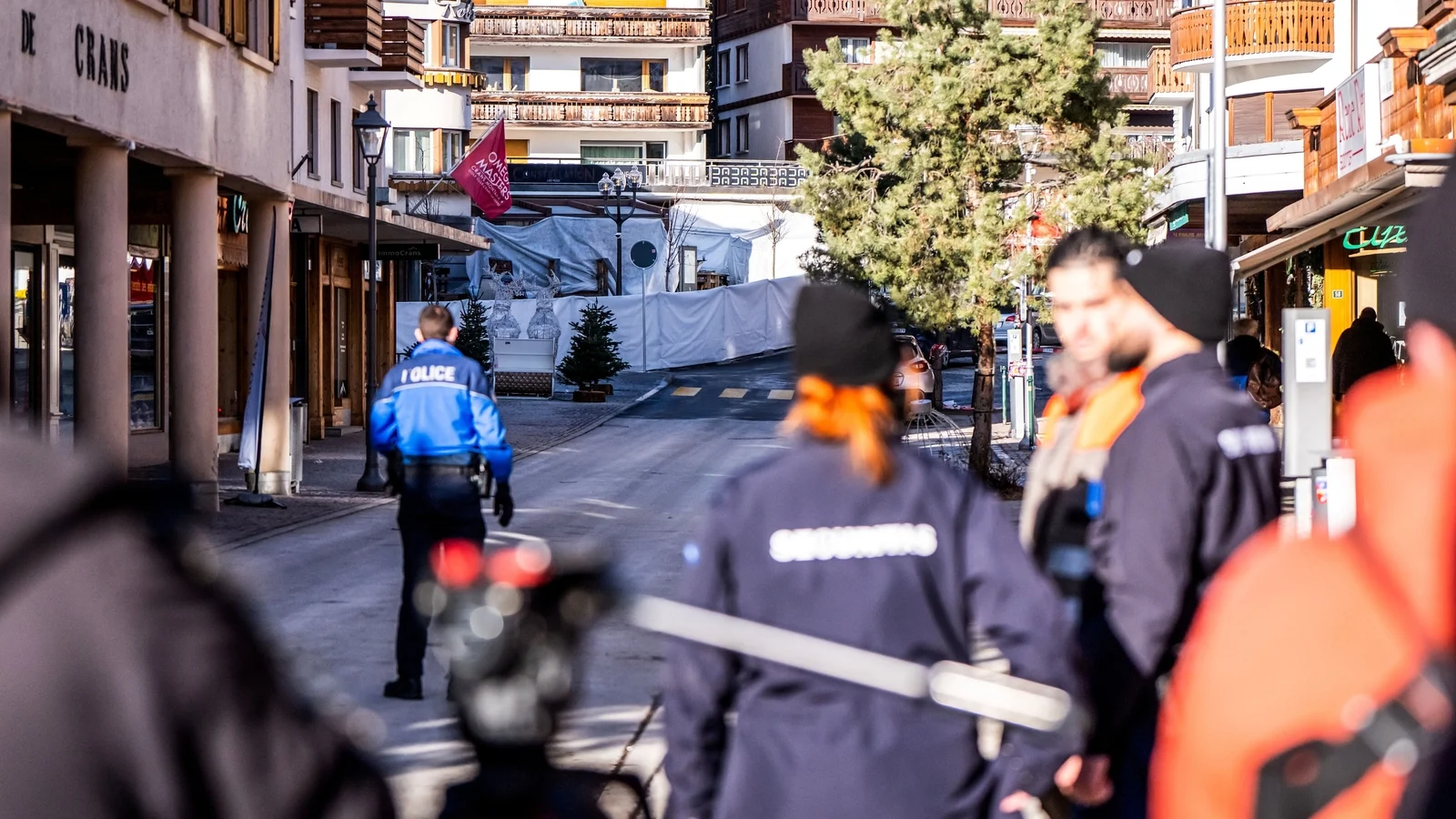
Authorities deployed an extraordinary response: ten helicopters and around 40 ambulances, a no-fly zone over Crans-Montana, and hundreds of personnel drawn from regional services. Patients were transferred to hospitals in Sion, Lausanne, Geneva and Zurich. Forensic teams erected white screens and tents in front of Le Constellation as investigators began the grim task of identification.
“The first responders arrived at a scene of chaos,” Stéphane Ganzer, head of security for Valais canton, told reporters. “It was a complicated operations theatre. We have mobilized every available resource.”
Frederic Gisler, the canton’s head of police, acknowledged how raw the situation felt. “Our count is about 100 injured, most seriously, and unfortunately tens of people are presumed dead,” he said, adding that some of the victims are from outside Switzerland. Swiss Federal President Guy Parmelin called the events “heartbreaking” and spoke of a mourning that stretched beyond the canton to the nation as a whole.
Why the investigation matters
Local prosecutor Beatrice Pilloud confirmed a full investigation is underway. “For now we are considering this a fire and not an attack,” she said, emphasizing the careful, methodical work that must follow to understand how the blaze began and why it spread so rapidly.
Understanding the cause is not merely forensic curiosity. It will shape policy debates about building materials, fire-safety measures in nightlife venues, the permissible use of pyrotechnics in enclosed spaces, and enforcement of capacity limits—issues that millions of people who frequent bars and clubs worldwide take for granted until they don’t.
Faces, names, and the small rituals of grief
In the town’s streets, the mood was electric with anxiety rather than celebration. Families gathered in hotel lobbies. The Italian ambassador reported dozens of compatriots converging on the resort seeking word of missing relatives. Hotel clerks, ski instructors, and café owners offered hot drinks and couches to the bewildered.
“We are a place that hosts joy—weddings, races, mountain adventures,” said Anne-Claude Fournier, who runs a chalet rental office. “Tonight we are also a place that shelters sorrow. People who come here for snow and sunlight found themselves running from flames.”
Local cultural details offer human relief amid the statistics: the scent of burning pine is a nightmare against a town whose winter mornings usually smell of raclette and coffee; the old wooden chalets, so treasured for their warmth, are now being scrutinized for their vulnerability to fire.
What this means beyond Crans-Montana
We should not hold this tragedy up as an isolated horror. Less than a year ago, a nightclub fire in North Macedonia claimed dozens of lives. Each such incident becomes part of a chorus demanding safer spaces for public life—places where entertainment and human connection do not carry hidden risks.
Fire safety is technical: sprinkler systems, clearly marked exits, building materials, trained staff and strict enforcement. It is also social: the decisions of a single person to light a candle, the tolerance of a crowd for risky stunts, the assumption that venues have taken every precaution. When those assumptions fray, the consequences can be devastating.
Public health experts note that burns are among the most difficult injuries to treat and identify. “In mass-casualty incidents, identification and family notification can take days or weeks,” said Dr. Laila Kramer, a trauma specialist. “For the survivors, both physical and psychological rehabilitation can last a lifetime.”
Questions to sit with
As readers around the world scroll through headlines, what do we want public spaces to be? How do we balance spontaneity and joy with safety and preparation? Are our local laws and the will to enforce them enough to prevent another night like this?
There are no easy answers. What is clear is that crises like the one in Crans-Montana stretch beyond a single venue or jurisdiction. They ask for cross-border cooperation on emergency response, clearer norms about entertainment safety, and an urgency to care for survivors and bereaved families who are left with a loneliness that no statistic can fully portray.
Simple facts to keep in view
- Around 40 people are reported dead and close to 100 injured after a fire at Le Constellation, Crans-Montana.
- Authorities deployed ten helicopters and roughly 40 ambulances; victims were taken to hospitals in several Swiss cities.
- Investigations are ongoing; officials treat the incident as an accidental fire while examining evidence about a possible pyrotechnic source.
- Forensic work and family notifications are underway; the count and nationalities of victims remain subject to official confirmation.
In closing
On the slopes above Crans-Montana, ski lifts keep turning, and the alpenglow is indifferent to human sorrow. Down in the valley, though, the rhythms of a town built on hospitality have been interrupted. People will return to their jobs and to their slopes, but many will carry a new vigilance, a new grief, and a hunger for answers.
For those who lost loved ones, the rest of us can offer nothing but solidarity and attention. For communities around the world, this should be a prompt: to recheck emergency exits, to insist on accountability for public venues, and to remember that a single careless spark can change the course of many lives.
What would you look for the next time you step into a crowded bar, a concert hall, or a festival tent? How can we, as patrons and policymakers, make joy safer?