An Interrupted Journey: When the Skyways of the Gulf Go Quiet
On a bright Saturday morning in Melbourne, a small Irish family sat with suitcases packed, passports at the ready and a quiet, sinking realization: their long-awaited trip home was not happening.
“We would’ve been on the plane right now,” Brian Sullivan told me over the phone, his voice a mix of disbelief and weary resignation. He is a Dublin native who has lived in Australia for 21 years. He and his wife had been looking forward to showing their three children—ages six, nine and eleven—what St. Patrick’s Day looks like when seen through the green-lit windows of Parnell Street and the buzz of a hometown parade.
Instead they took a refund. Etihad offered to cancel and reimburse, and they accepted. What was supposed to be a roughly €6,000 family reunion now looks like a logistical and emotional scramble: rebookings that ballooned to an estimated €16,000, routes rerouted through unfamiliar hubs, and the difficult calculus of safety versus longing.
The Hub That Was: Why the Gulf Matters
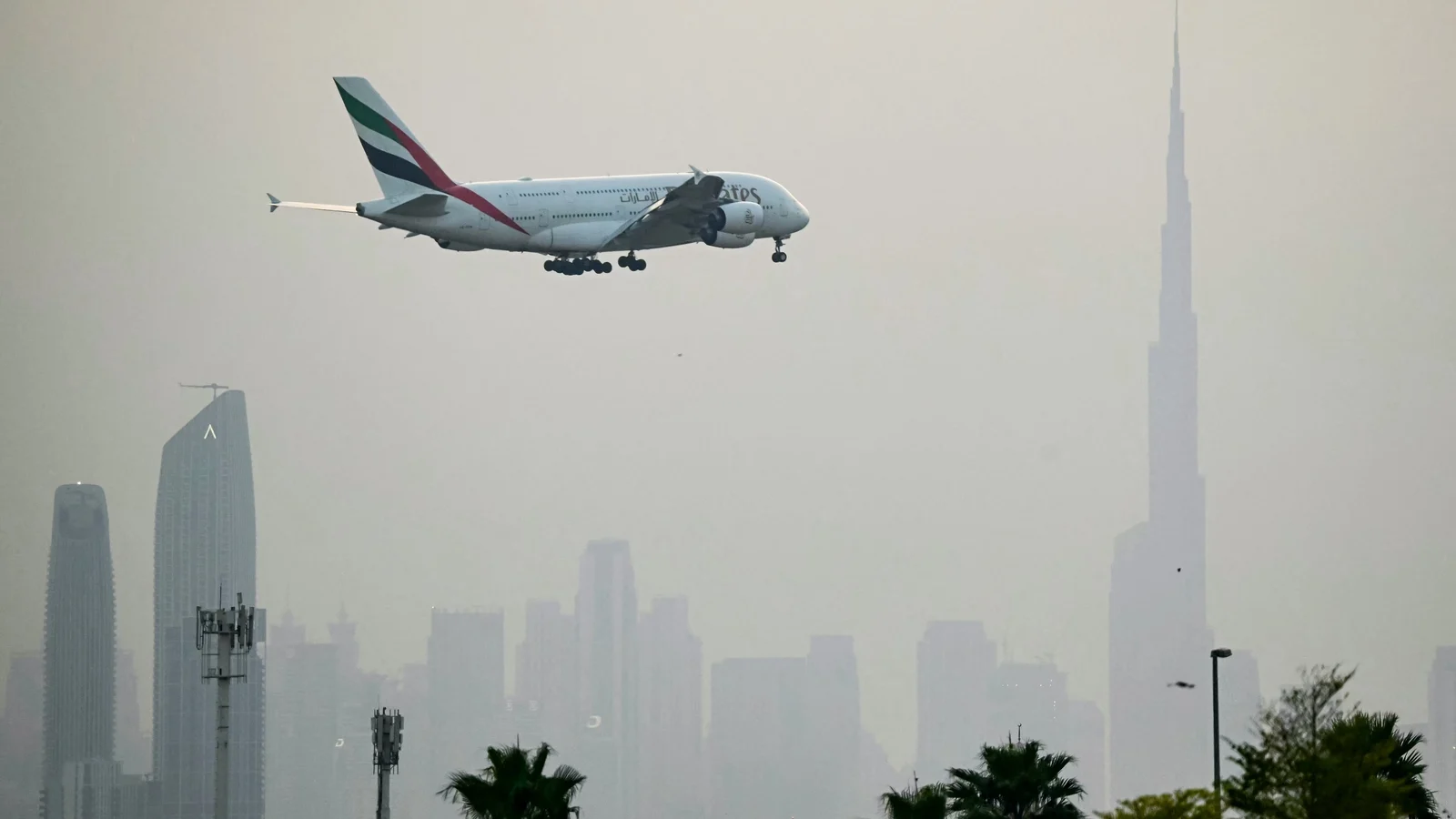
For decades, the Middle East has quietly stitched together the globe. Dubai, Abu Dhabi and Doha became more than glittering skylines; they are the connective tissue of modern long-haul travel. Combined, Emirates, Qatar Airways and Etihad normally carry more than half of passengers traveling between Europe and Australia, New Zealand and the Pacific Islands.
That network has frayed. Tracking services like Flightradar24 show Etihad operating at around 15% of its pre-conflict capacity. Qatar maintains a limited schedule—no Dublin-Doha connections are in place—and even Dubai, the busiest air hub on the planet, has scaled back. Emirates is running at roughly 60% of its usual activity.
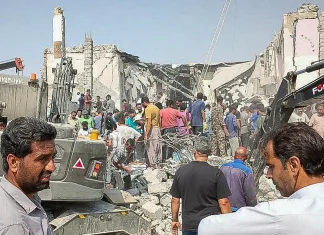
For passengers like Brian, the presence of rockets overhead is not an abstract headline; it is a tangible risk that changes how families weigh travel decisions. “There’s no way we’re going to get on the plane when there’s rockets flying around in the air in that area. Not a chance,” he told me. “Statistically we’ll probably get through, and nothing might happen, but what’s the point in taking the chance?”
From Two Stops to an Uncertain Journey
Before the Gulf’s ascent as a hub, long-haul travel from Australia to Europe typically funneled through Southeast Asia—Singapore and Bangkok—or via one of Europe’s big capitals. Paul Hackett, CEO of Click&Go and Vice-President of the Irish Travel Agents Association, reminded me of the shift: “Before the UAE opened up as a hub, Australia mainly funnelled through Singapore and Bangkok. People went Dublin-London, Dublin-Frankfurt or Dublin-Paris to Singapore and Bangkok and then on.”
That older map still exists, but it is less convenient. For many families the idea of adding extra stops—a night in a transit hotel, the stress of another airport—is now mixed with anxiety about airspace and the cost implications of longer routings.
Alternatives, Costs, and Practical Choices
Travelers are improvising. Some are booking through Southeast Asia—Singapore, Bangkok—while others explore North American connections where geography allows. Thai Airways and similar carriers have seen sudden upticks in passengers seeking these circuitous routes.
But alternatives are not free of trade-offs. For Brian, a re-route through Singapore and Frankfurt slows the trip and requires different visas, hotel nights and childcare juggling. For others, the choice is financial. When Gulf capacity reduces sharply, market laws kick in: fewer seats, higher demand.
- Emirates’ one-way fares from Dublin to Sydney via Dubai were, at one point, available for about €600—tempting, but not for everyone.
- Rebooking mid-crisis can multiply costs—Brian cited a potential jump from €6,000 to €16,000.
- Some families are opting to postpone reunions altogether to avoid risk or expense.
Fuel, Hedging and the Economics of Uncertainty
There is another unglamorous engine behind all this: jet fuel. Prices have surged rapidly—jet fuel prices reportedly doubled to roughly $160 a barrel since early March in the wake of geopolitical shocks. Airlines respond in different ways. Some raise fares, some trim capacity, some try to absorb costs. KLM announced it would raise long-haul fares citing fuel costs; Qantas, Air New Zealand, SAS and Thai Airways followed suit.
Hedging—the financial strategy of locking in fuel prices ahead of time—has become a shield for some. Air France has about 62% of its fuel hedged; Lufthansa around 77%. IAG (owner of Aer Lingus) is hedged at 62% for 2026. Ryanair, according to Davy Group analyst Stephen Furlong, has “the best hedging position” with roughly 80% covered through March 2027.
“Some airlines are more exposed than others but ultimately they’re going to try and pass the cost through to the consumer,” Furlong told me. Travel analyst Anita Mendiratta added a market reality: “Removing a significant portion of that capacity from the system quickly reduces consumer choice and can push prices higher. Carriers from the Gulf have historically offered fares 20–30% lower than many competitors—take that away, and prices rise.”
Tourism, Jobs and a Ripple That Travels Far
The fallout is not merely a weekend disrupted. Middle East tourism is a multi-hundred-billion-dollar industry—roughly $367 billion annually before the crisis—and analysts warn of substantial losses. Consultancy Tourism Economics estimates between 23 and 38 million fewer visitors to the Gulf this year, costing the region up to $56 billion.
Local industries feel the sting. Cruise lines, travel agencies and hospitality workers are now revising forecasts. Click&Go cancelled Dubai cruises for the month and scrambled to rebook customers. Mr. Hackett described the avalanche of worried calls: “We’re doing lots of reassuring. Clients want to know if their trips to Oslo next month are safe, or whether a cruise for 2028 is still on. There’s an emotional labor here that you can’t price.”
Wider Ripples: Supply Chains, Migration, and Geopolitics
When the skies change, so do supply chains. Freight routes shift, costs rise, and industries—from perishable food to high-tech manufacturing—feel delays. There is an undercurrent of longer-term consequence: might airlines and passengers permanently de-emphasize the Gulf as a hub? Could new routings and investments reshape global aviation maps? It’s an open question with enormous stakes for labor markets and national economies.
What Does This Mean for the Traveler?
For families like Brian’s, decisions now are deeply personal as well as practical. He is hoping to bring his children back to Ireland for Halloween instead; a later, somewhat safer plan. “Maybe a stop-over in Singapore and Frankfurt then,” he said, turning pragmatism into a small reassurance.
For the occasional traveler, this moment offers choices—and some uncomfortable truths. Do you chase the shortest itinerary at any cost? Or do you value predictability and safety, even if it means longer flights, new routings, and higher fares? Who pays when geopolitics intersects with our private calendars?
Perhaps the more uncomfortable question is this: are we prepared for an era in which transit hubs can be disrupted not by storms but by geopolitics? And what does resilience look like—in policy, in airlines’ balance sheets, in how families plan reunions?
Looking Ahead
There are no neat endings yet. Airlines will continue to adapt—balancing hedges, adjusting schedules, and juggling demand. Travelers will keep deciding between risk and reunion, cost and comfort. And cities like Dubai and Doha will watch closely: their status as global crossroads hangs on the fragile architecture of stability and open skies.
As you read this, consider your next trip. Would you reroute to avoid unstable airspace? Would you pay more to fly via a different hub? The answers will shape travel patterns and economies for months, perhaps years, to come.
For Brian and thousands like him, the story is painfully simple: plans changed, flights canceled, and a longing for home postponed. But beneath that personal displacement lies a larger narrative—about connectivity, vulnerability, and the surprising ways a distant conflict can touch our doorsteps, or, in this case, our departures boards.