Father, Son, and the Specter of 2026: Brazil’s Political Tempest Reignited
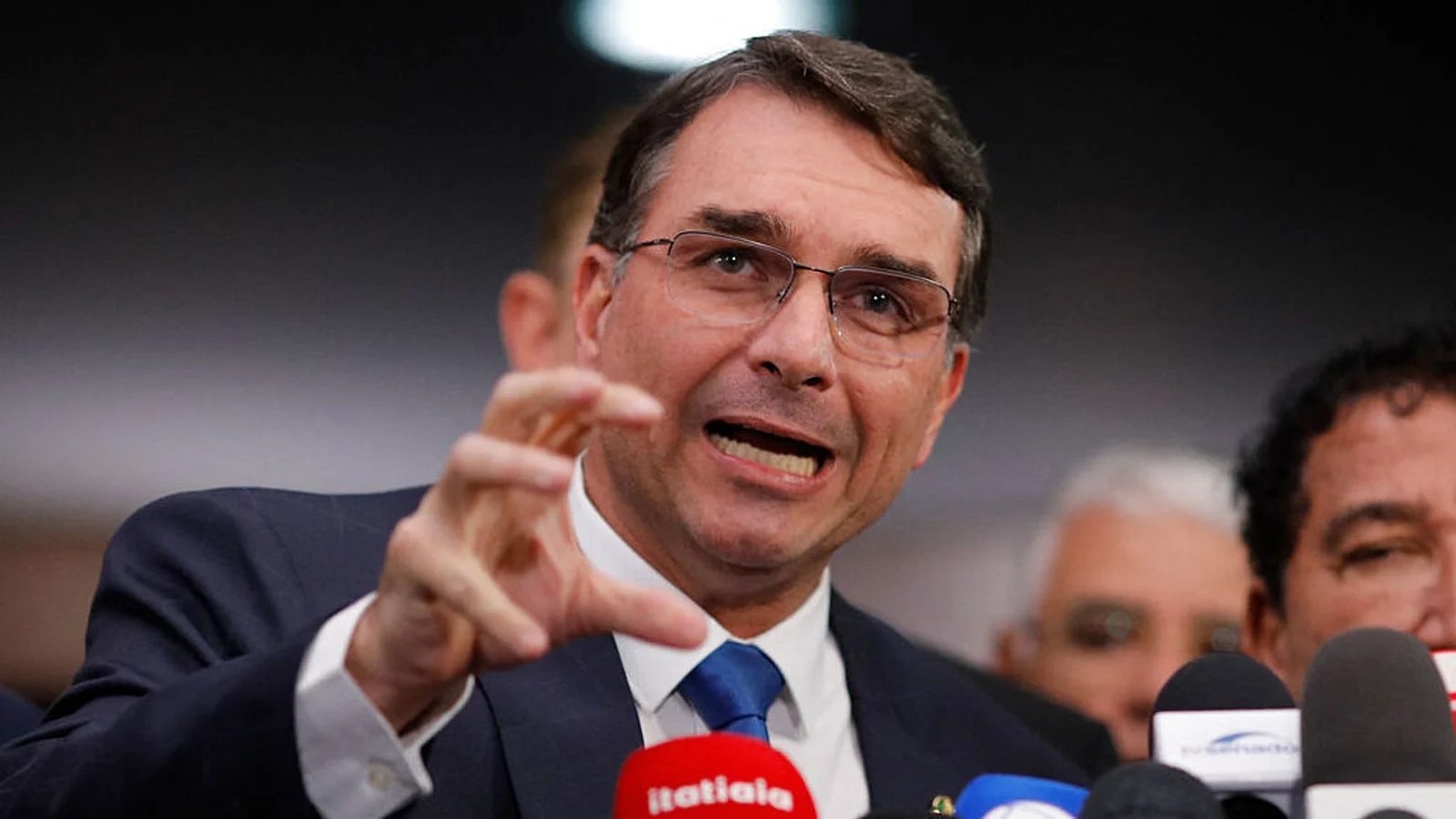
There are moments in politics when a single phrase can act like a flare in the night — a bright, sudden signal that redirects attention and shifts calculations. This week, that flare came from inside the Liberal Party: Jair Bolsonaro, the polarizing former president of Brazil, has signaled support for his eldest son, Senator Flavio Bolsonaro, as a 2026 presidential hopeful. The confirmation — relayed by party leader Valdemar Costa Neto, who said he had “heard from the senator that the former president had ‘ratified his candidacy'” — landed like a stone thrown into still water. Ripples raced across markets and into living rooms from Rio to Brasília.
Markets, Mood and Momentum
The reaction was immediate and measurable. Brazil’s real slipped roughly 2% against the U.S. dollar, while the Bovespa benchmark fell near 3% as traders reassessed political risk. For a country still finding its economic footing after years of upheaval, a perceived change in the race’s dynamics translates fast into money flow and investor confidence.
Why? Because some investors had been banking on the idea that Jair Bolsonaro — barred from running by the Superior Electoral Court (TSE) in June 2023 — might throw his weight behind a candidate with executive experience and a reputation for market-friendly governance. Names like São Paulo Governor Tarcisio de Freitas, a former transport minister, were discussed in financial circles as plausible challengers to President Luiz Inácio Lula da Silva.
“The market sees Flavio as a weaker candidate than Tarcisio in a race against Lula,” said Laís Costa, an analyst at Empiricus Research, reflecting a widely held view on institutional risk and electability that helped set the tone for traders.
From Brasília’s Corridors to the Streets
The theatre of this development is itself telling. CNN Brasil reported that Bolsonaro — currently serving a prison sentence following a conviction linked to efforts to overturn the 2022 election — offered public backing for his son during a visit to federal police offices in Brasília. Whether inside a courtroom corridor or outside a polling booth, politics in Brazil often happens in public spaces where symbolism is as potent as policy.
Walk through Brasília’s Esplanada, and the city’s modernist avenues feel like a stage built for national drama. Statues and ministries cast long shadows; plazas that once hosted celebratory rallies now double as platforms for protest. For Brazilians who remember the 2018 insurgent ascendancy of Jair Bolsonaro, the idea of a Bolsonaro scion seeking the presidency again resurrects questions about the durability of Brazil’s democratic norms and institutions.
Legal Limits, Long Shadows
It is important to remember the legal context framing this story: Jair Bolsonaro was disqualified from running in 2023 after the TSE found his conduct during the 2022 election to be incompatible with the rules that govern Brazil’s electoral process. Later that year, he was sentenced to 27 years and three months in prison related to attempts to subvert the election outcome. Those courtroom outcomes are not mere footnotes; they are constraints that reshape how supporters organize, how rivals strategize, and how the electorate perceives legitimacy.
But law and politics, while intertwined, do not always move in lockstep. A banned political figure can remain a galvanizing force; their endorsements can carry symbolic weight and organizational muscle. The rise of family dynasties in politics is a global phenomenon — from the Kennedys in the United States to the Gandhis in India — and Brazil’s moment now prompts the same question many democracies face: how do institutions respond when political passion outlives legal restrictions?
What This Means for 2026
The Brazilian political map for 2026 is now being redrawn, stroke by delicate stroke. Luiz Inácio Lula da Silva, who reclaimed the presidency in 2022, remains the headline figure of the left. Across the aisle, names on the center-right and right have been circulated by pundits and investors — each carrying different policy platforms, governing pedigrees, and levels of electoral appeal.
Flavio Bolsonaro would bring to a campaign the family brand that propelled his father to office: muscular rhetoric, strong law-and-order messaging, and the loyalty of a specific slice of the electorate. But brand does not always equal breadth. Analysts worry about his ability to sway undecided voters or to attract moderate conservatives who prioritize economic stability and governance competence.
Voices and Vibes: More Than Headlines
On a humid afternoon in a neighborhood market in São Paulo, vendors barked out prices beneath the flapping tarps. Their conversations ranged from the purely practical — the price of beans, the uncertain season for coffee — to the political. “Politics decides whether I can expand my stall or if inflation eats my margins,” one small-business owner told a local reporter. While not a direct quote from the campaign, it captures the practical stakes many Brazilians consider when they weigh their votes.
Meanwhile, in Brasília, a civil servant expressed weariness: the relentless cycle of crisis and counter-crisis has frayed patience. “People are exhausted by spectacle. They want solutions,” she said, asking to remain unnamed for fear of professional repercussions.
Culture, Memory and the Long View
Brazil is more than its political theater. Samba halls, church pews, coastal fishing communities and Indigenous territories all register the country’s turbulence in different gauges. The political debate about 2026 will be filtered through these lenses — economic concerns for the urban middle class, security worries that dominate outskirts and favelas, and the rights of Indigenous peoples and environmental activists scrutinizing every stance on the Amazon.
Consider the Atlantic coast towns where fishing is livelihood and identity. A policy that promises infrastructure might win praise in one bay; an environmental rollback could provoke lasting opprobrium in another. These are the local textures that national campaigns must navigate, or risk being dismissed as tone-deaf.
Questions to Carry Forward
What does it mean for a democracy when a political family seeks renewal despite legal vignettes that should constrain its leaders? How do investors and ordinary citizens reconcile short-term market jitters with the deeper pulse of civic life? And perhaps most pointedly: what kind of country do Brazilians want to build for themselves in the next decade?
As the 2026 horizon approaches, Brazil’s story will not be written in spreadsheets alone. It will be written in conversations at kitchen tables, on buses, in town halls and in the courtroom corridors where law and politics collide. The coming months will test not only the strategic acumen of political operators but the resilience of institutions and the patience of a public that has seen drama become almost routine.
For now, a father’s blessing for his son has reignited debate, volatility and hope — sometimes in equal measure. Keep an eye on the headlines, yes. But also listen to the marketplaces, the neighborhoods, the cafés. That’s where we will find the real contours of Brazil’s next political act.